




Single-story houses with covered porches, one brick and one light-colored siding, behind a trimmed hedge and lawn, beneath large oak trees draped with Spanish moss.

Heat Pump Maintenance in Brunswick, GA

Tell us about the job

Takes about a minute. No obligation.

Tune-up, service, or cleaningHeat PumpGlynn County, GA
Step 1 of 2

What ZIP code is the job in?

A heat pump here moves heat both ways, and in Brunswick it gets worked from both ends. The dew point averages 74°F across June, July and August, which ranks among the highest in the country. Air that heavy means the system has to pull more moisture out of your house just to keep it feeling right, not just cool it. That extra load falls on the same parts year after year. A coil or a motor that would hold up fine somewhere drier starts showing wear sooner here.

Your heat pump switches to cooling in April and stays on it through October.

Get it checked in March, before that seven-month run starts.

A heat pump run down here burns more power, and that power already costs more

Power here costs 15.85 cents per kilowatt-hour
Climate zone 2A
Cooling runs April through October

Half the homes in Glynn County were built in 1988 or later, so a lot of the heat pumps out there are still well within their working life. That's worth something. A system that's running on its original parts, or close to it, holds up a lot better with a yearly check than one left to run on its own. The muggy summers here mean small wear shows up sooner than it would elsewhere, even on newer equipment. Catching that early is a lot easier than catching it after the compressor's been straining for a few summers straight.

Get it looked at before the heat finds the weak part

A worn coil or a weak capacitor doesn't announce itself. It just makes the system work harder until something gives out, usually on a hot afternoon when you need it most. A technician can catch that kind of wear before the summer load hits it.

Find a contractor
A gray air-source heat pump mounted on a concrete pad next to a house with gray vinyl siding, surrounded by gravel and flanked by green shrubs and white hydrangea flowers.

Still within its working life, worth keeping that way

A yearly check matters more while the system is still young. A technician can catch a coil or a motor starting to wear before it turns into a breakdown, and on a newer system that's usually all it takes to keep things running the way they're supposed to. Skip a few years of checks and small wear turns into a compressor working harder than it should, year after year, until it's not a small fix anymore.

The signs are easy to miss

A heat pump rarely quits outright. It loses capacity first, so the house takes longer to cool or warm and the air coming out of the vents feels weaker than it used to. You might notice the outdoor unit running longer than it used to, or the system short cycling, kicking on and off in quick bursts instead of running a steady stretch. Ice forming on the outdoor coil in weather that shouldn't cause it, a hissing or gurgling sound near the lines, or a burnt smell when the fan kicks on are all worth a call before they turn into a no-cool or no-heat day.
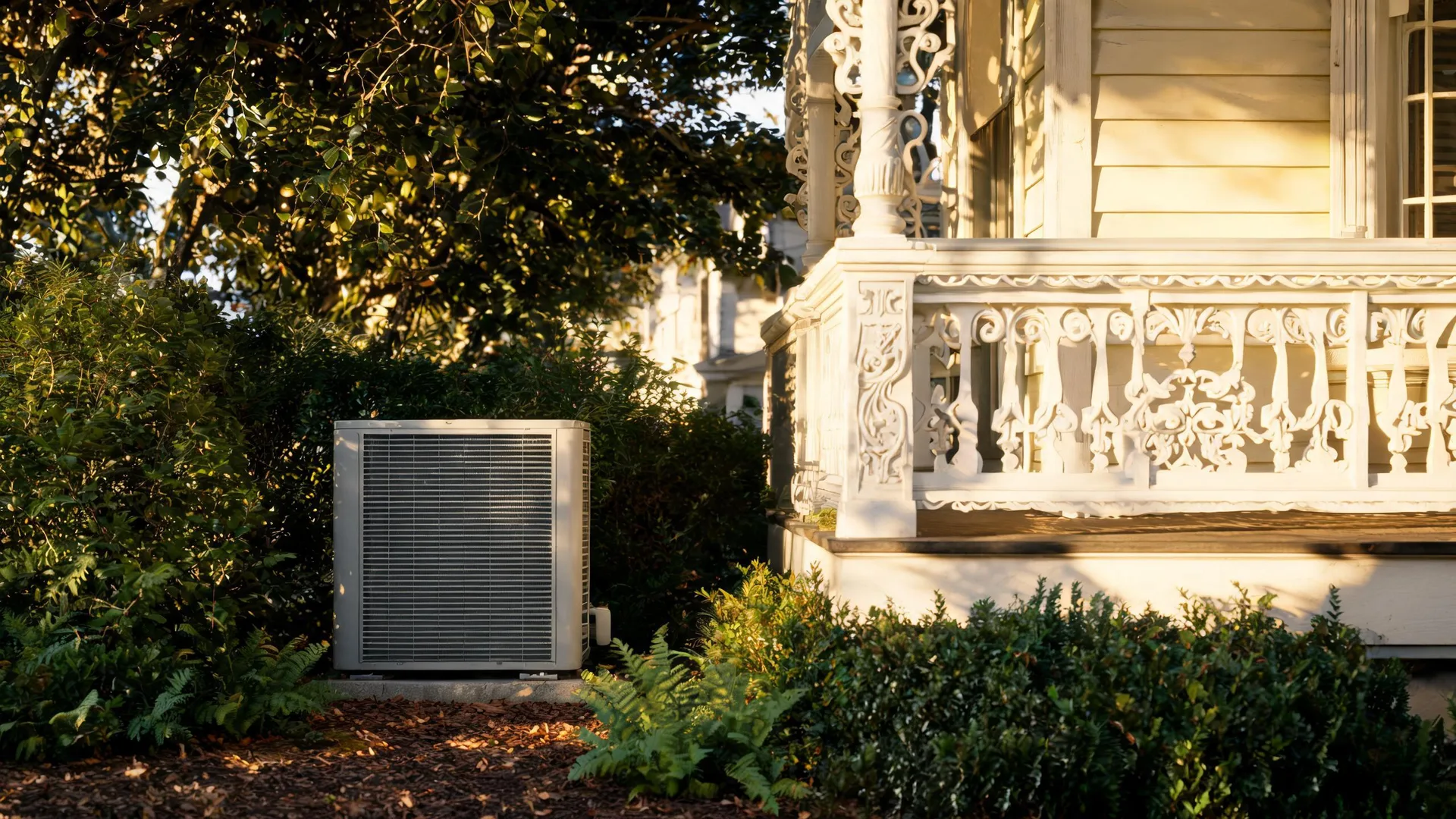
What a check catches early

A technician checks refrigerant charge, tests the capacitor and contactor, and cleans the outdoor coil so it can actually shed heat the way it's supposed to. They'll check the reversing valve, since that's the part that lets the system switch between heating and cooling, and a stuck one shows up as heat when you wanted cool or the other way around. Catching a weak capacitor or a coil losing its grip on heat transfer during a routine check means fixing a small part on a mild day instead of waiting for it to take the compressor down with it.

Most of what wears on a heat pump happens where you can't see it. Refrigerant pressure drifts slightly low and the system keeps running, just moving less heat per cycle than it should. A capacitor weakens and the compressor still starts, but it draws harder doing it. None of that trips a breaker or throws a code. A technician checks refrigerant charge against what the system is supposed to hold, not just whether it cools. They test capacitor output under load, since a capacitor can read fine sitting still and fail the moment the compressor asks something of it. They'll pull the blower wheel and check it for a coating of dust that's choking airflow without you ever hearing a change in the sound it makes. Electrical connections get checked too, since a loose one builds heat at that joint every time the system runs, long before it ever causes a failure you'd notice.

A tune-up starts outside, at the condenser. The coil gets cleaned so it can shed heat instead of holding onto it, and the fan motor gets checked for play in the bearings. Inside, the technician pulls the blower wheel and checks it for a buildup that's choking airflow, then checks static pressure through the ducts to see if the system is breathing the way it should. Refrigerant charge gets checked against what the system is rated for, not just whether cold air is coming out. The capacitor and contactor get tested under load, since both can look fine sitting still and fail the moment the compressor asks something of them. On a heat pump specifically, the reversing valve gets checked too, since that's the part switching the system between heating and cooling, and a sticking valve shows up as one or the other failing to work right. Electrical connections get tightened, because a loose one builds heat at that joint every time the system cycles.