Two single-story houses, one brick and one with pale siding, both with covered porches, sit behind a mowed lawn and a trimmed hedge, framed by large oak branches draped with Spanish moss under an overcast sky.

Heat Pump Maintenance in Augusta, GA

Tell us about the job

Takes about a minute. No obligation.

Tune-up, service, or cleaningHeat PumpRichmond County, GA
Step 1 of 2

What ZIP code is the job in?

Keep the filter clean

A dirty filter chokes airflow across the indoor coil, and a heat pump that can't move air has to run longer to do the same job. Check it monthly and rinse or replace it when it looks gray instead of white. This is the one thing a homeowner can do that actually prevents a service call.


Keep the outdoor unit clear

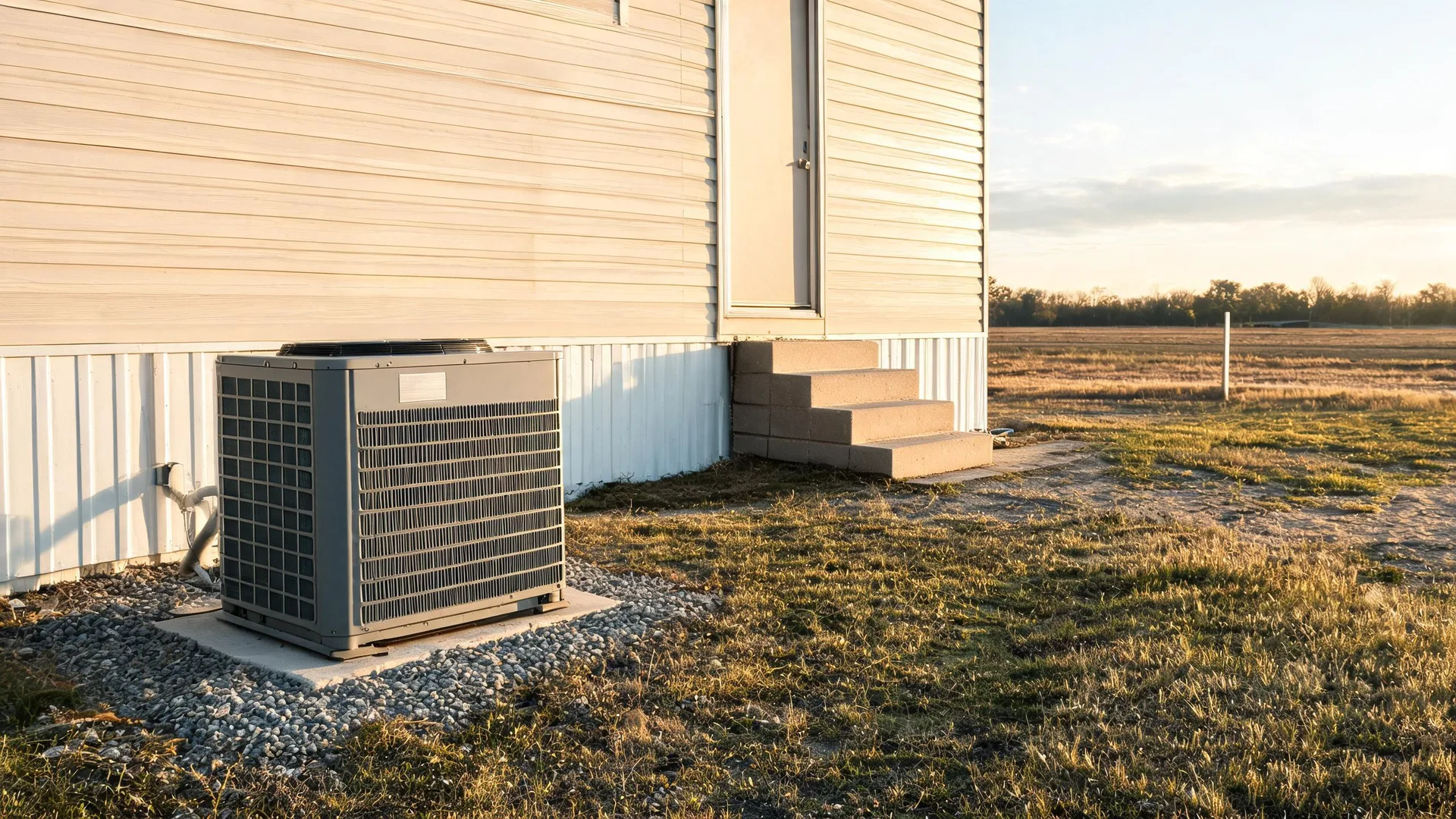
The outdoor unit needs open space around it to pull air through the coil. Leaves, pine straw and grass clippings pile up against the cabinet and block that airflow just like a dirty filter does. Walk out and look at it every so often, and clear anything stacked against the sides.

A heat pump in Richmond County starts working for heat in November.

October is the month to get it checked, before it has to carry the cold.

Half the homes here were built by 1980, which means half are newer, and a newer heat pump still needs a yearly check to stay that way

Half the homes here were built by 1980
Power costs 14.08 cents a kWh statewide
Climate zone 3A
Storm season tests the outdoor unitRichmond County logged 118 severe weather events from 2015 to 2024.

If your heat pump came with a newer build here, a yearly check is still worth keeping on the calendar. A technician will check refrigerant charge, test the capacitor, and clean the outdoor coil, the kind of wear that builds up even in a system that's only a few years old. Catching a weak part during a scheduled visit beats finding it when the system quits on a cold morning. Newer doesn't mean maintenance-free, it just means the visit is about keeping it running well instead of nursing it along.

Book it before the season

It starts running hard in the first month of the season here. Book the check the month before.

Find a contractor
A dark gray heat pump unit mounted on a concrete pad next to a house with gray siding and a stone veneer wall.

It runs every month of the year, with no season off to catch up

A heat pump never gets an off season. It heats all winter and cools all summer, so the only rest the compressor gets is in spring and fall. Skip the yearly check and small problems don't go away, they just run unwatched. A refrigerant charge that's a little low makes the compressor work harder to move the same heat, and it stays that way until someone measures it. A coil that's coated in dust or grime can't transfer heat as well, so the system runs longer to reach the same setpoint. Run it that way for years and the compressor is the part that ends up paying for it, because it's the one part nothing else in the system can take over for.

A reading beats a glance

A quick visit gets you a filter swap and a look at the thermostat. A thorough one gets you numbers. The refrigerant charge gets checked against what the system calls for. The capacitor gets tested under load. The temperature split across the indoor coil gets measured and written down. Anyone can tell you the unit looks fine. Only a reading tells you if it actually is.

The reversing valve gets checked, not just the thermostat

A heat pump has one part a furnace or straight AC doesn't have. The reversing valve is what switches it between heating and cooling. A short visit runs the system in whichever mode it's already in and calls it done. A thorough one cycles the valve both ways and confirms it switches clean. A valve that's starting to stick won't show up until the day you need the other mode and don't get it.

Most heat pump trouble shows up before the system actually quits, if you know where to look. Air coming out the vents that feels barely warm, when it used to feel hot, often means the system has quietly dropped into backup heat and stayed there. Short cycling, where it kicks on and off every few minutes instead of running a steady stretch, points to a sensor or a control board losing track of what the system is doing. Ice on the outdoor coil that doesn't melt off during the defrost cycle means that cycle isn't working right anymore. A hiss or a gurgle from the lines usually means refrigerant where there should be none, or air where there should be refrigerant. None of these stop the system cold right away. They just make it work harder and longer to do the same job, and that's the part a yearly check catches before you're the one who notices from a cold room.

A full tune-up starts with the filter and works inward from there. The technician pulls the panel and checks the blower wheel for dust buildup, since a caked wheel moves less air no matter how clean the filter is. Electrical connections get tightened, because a loose connection generates heat and that heat degrades the connection further over time. The condensate drain gets flushed, since algae and dust narrow it slowly until it backs up and shuts the system down on its own safety switch. The contactor gets inspected for pitting, a sign it's arcing instead of closing clean. Each of these is a small thing on its own. Left alone, they're how a heat pump that was running fine a few months back is the one that won't switch over when the cold hits.