






A white Southern-style house with a wraparound porch photographed at night, surrounded by Spanish moss-draped oak trees lit by landscape lights.

Heat Pump Installation in Rome, GA

Tell us about the job

Takes about a minute. No obligation.

New system or replacementHeat PumpFloyd County, GA
Step 1 of 2

What ZIP code is the job in?

Floyd County saw 115 severe weather events between 2015 and 2024, most of it damaging wind. That outdoor unit will sit through a lot of that. Ask the installer about mounting and placement that keeps it clear of falling limbs and away from the path water takes off the roof. A heat pump is also your heat source, so an outage means losing heat and not just air conditioning. Statewide, almost a third of households lost power for a full day or more in 2024. Worth asking what backup options exist for a stretch like that.

7 months
October through April, your system heats
5 months
May through September, it cools
34°F
the average winter night it heats against
89°F
the average summer afternoon it cools against
Isometric grey-toned illustration of a cutaway house showing interior rooms, ceiling ductwork and an air handler, connected by lines to an outdoor condenser unit beside the building.
Your system heats October through April and cools May through September.

NOAA nClimDiv, 1991–2020 normals

Electricity heats 55.1% of homes in Floyd County, more than gas and propane combined.

A heat pump replacing an electric system does not need new wiring or a new fuel line run to the house.

September gets it installed before heat season starts in October

Cooling runs May through September
Heat runs October through April
95 damaging wind events from 2015 to 2024

Georgia electricity ran 14.08 cents per kilowatt-hour in 2024, below what a lot of the country pays. That changes how you should think about efficiency ratings. A higher SEER2 model will cost less to run, but with power this cheap the monthly difference is small, and it takes longer for the higher sticker price to pay for itself. That doesn't make efficiency worthless. It means fit and reliability deserve more of your attention than the rating on the sheet. Ask the installer to size the heat pump to this house, not to the biggest number in the lineup.

A new system here has to meet Georgia's minimum, and it can qualify for a federal credit

Any heat pump going in here has to clear 14.3 SEER2 for cooling and 7.5 HSPF2 for heating, the federal minimum for this region. A new system also qualifies for a federal tax credit. Get this one installed and both are settled.

Find a contractor
A man seen from behind in a dark jacket and tan work pants climbs wooden porch steps toward a dark blue front door, carrying a worn canvas tool bag in his right hand, with a potted shrub in a blue planter beside the entry.
A gray heat pump outdoor unit mounted on a concrete pad next to a residential house with lap siding and stone accents.

It runs every month of the year, so sizing has to be exact

A heat pump runs in both directions, all year, so it never really gets a season off like a furnace does. That changes what the installer has to size for. Too big and it short cycles, turning on and off instead of running a long, steady stretch, which wears the compressor and leaves the house clammy in summer. Too small and it runs flat out on the coldest and hottest days and still falls behind. Getting that size right, to the house itself rather than to a rule of thumb, is most of what separates an installation that lasts from one that doesn't. The ductwork matters just as much. A heat pump moves a different volume of air than what was there before, and ducts sized for the old equipment can choke it, so an installer worth hiring checks that before setting the new unit down on the old pad.

A load calculation, not a square footage chart

Sizing a heat pump right means working through a room by room load calculation, checking insulation, window area, ceiling height and how the house faces the sun. Square footage alone tells an installer almost nothing, because houses that look alike from the outside can need very different amounts of heating and cooling depending on how they're built.
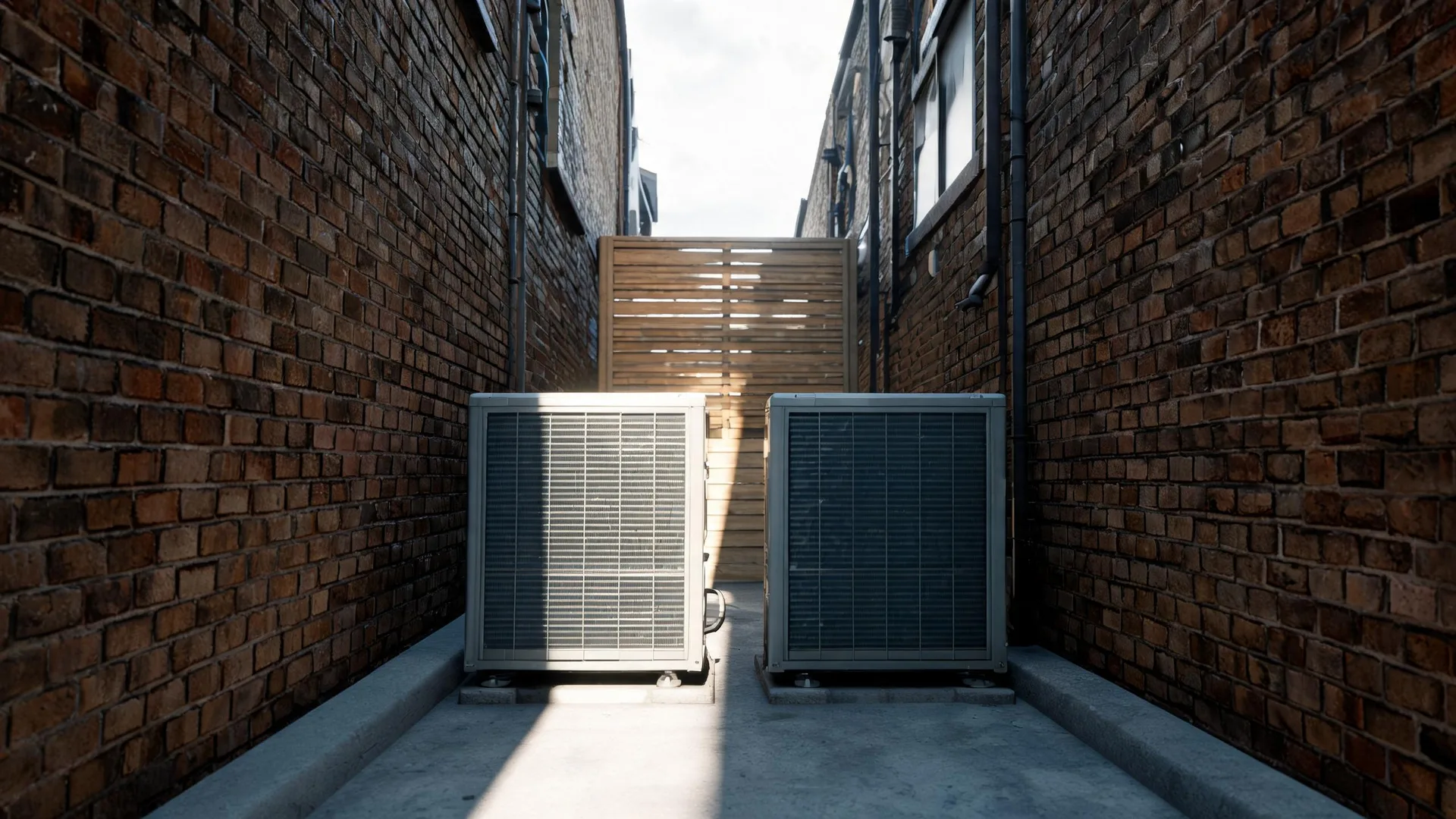
Oversized fails differently than undersized

A heat pump that's too big cycles on and off instead of running a long, steady stretch, so it never pulls the moisture out of the air that a full cycle would. One that's too small just keeps running and still can't keep up on the coldest or hottest days. Matching the unit to the house is what avoids both.

The rating on the label comes from a lab test run under a set range of conditions, not from whatever your attic or crawlspace actually puts the system through. Units with the same rating can still behave differently once installed, because ductwork, refrigerant charge and airflow across the coil all affect what the equipment delivers. A unit charged wrong or starved for airflow won't hit its rated efficiency no matter what the sticker says. That's why the number is worth comparing between models but shouldn't be the whole decision. Ask how the installer checks charge and airflow once the system is running, because that's what decides whether you get what the label promised.

The old equipment comes out first, indoor and outdoor together, since a heat pump replacement is rarely just a one-side swap. Setting the new line set takes real time, because reusing old lines without checking them for contamination or the wrong size can undo good work done everywhere else that day. Once the outdoor unit and air handler are in place, the system gets evacuated to pull moisture and air out of the lines before any refrigerant goes in, and that step can't be rushed without costing efficiency down the road. Then comes the charge itself, weighed in and checked against the manufacturer's numbers for that line length. Before the crew leaves, the system should run a full cycle in both directions, heating and cooling, with airflow and temperature checked at the vents. Skip that last check and the first cold night becomes the test instead of that afternoon.