An unfinished basement featuring exposed ceiling joists, a metal HVAC unit with round ductwork, a hanging light bulb, and scattered boxes and debris along the left wall.

Furnace Repair in Thomasville, GA

Tell us about the job

Takes about a minute. No obligation.

RepairFurnace or heatingThomas County, GA
Step 1 of 2

What ZIP code is the job in?

A dirty flame sensor is the most common no-heat call

The flame sensor tells the control board that the burners actually lit. A coating of soot or oxidation on it can make the board think there's no flame even when there is, so the furnace shuts itself down a few seconds after startup. It's a quick thing for a tech to clean or replace, and furnaces that short-cycle like this almost always come back to normal once it's done.

Age brings a different kind of failure

On an older furnace, watch for the heat exchanger cracking, the draft inducer motor wearing out, or the igniter failing for good instead of just getting weak. These parts don't get cleaned back to health. Once one of them goes, the question isn't what to repair, it's whether the furnace is worth repairing at all.

5 months
November through March, your furnace is on duty
41°F
the average winter night it heats against
1 winter storms
in ten years, the nights a failure hurts most
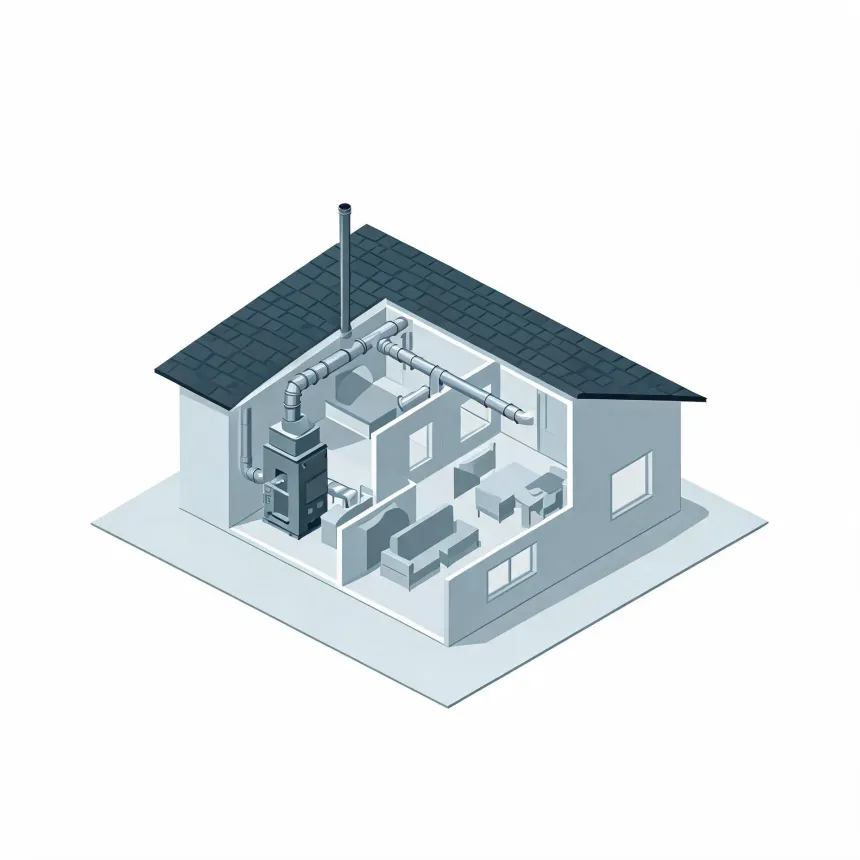
Isometric cutaway illustration of a single-story house with a dark shingled roof, showing a furnace with a flue pipe and branching ductwork running through interior rooms furnished with a sofa, table and chairs.
Your furnace works hardest from December through February.

NOAA nClimDiv, 1991–2020 normals

A furnace in Thomas County only has to carry five months of the year, November through March.

A furnace with a light load like that is usually still in decent shape, so the repair call is more often about a part than a worn-out machine.

Half the homes here were built in 1987 or later, so the furnace is often newer too

Half the homes here were built by 1987
Heat runs November through March
Winter nights average 41°F

If your furnace took a hit during a storm, the outdoor parts of the system usually show it first, not the furnace itself. Hail dents a condenser's fins. Wind-driven debris can bend them or crack a fan blade. None of that stops a furnace from heating, so the system can run all winter without any sign something's wrong. A tech can check the outdoor unit in a few minutes while out for anything else. Worth asking for if a storm came through since the last time anyone looked at it.

Storms here are hard on a furnace before you notice

Thomas County has logged 129 severe weather events over the past ten years, including 104 damaging wind events. An outdoor unit left in that path can take damage that doesn't show up as a problem right away. If yours has been through a storm, have it looked at even if the heat still comes on.

Find a contractor
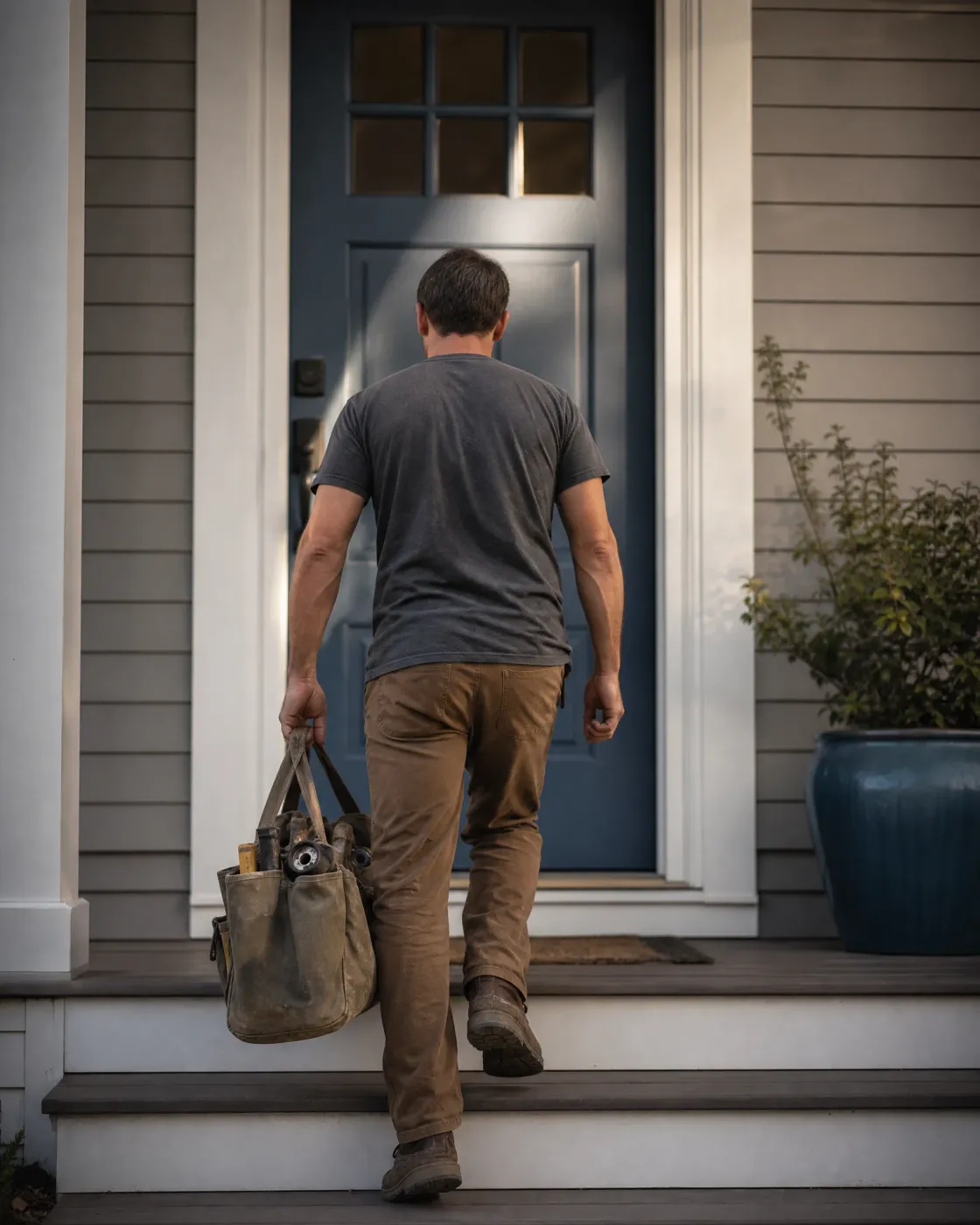
A man in a gray t-shirt and brown work pants carries a canvas tool bag up porch steps toward a blue front door of a house with gray siding.
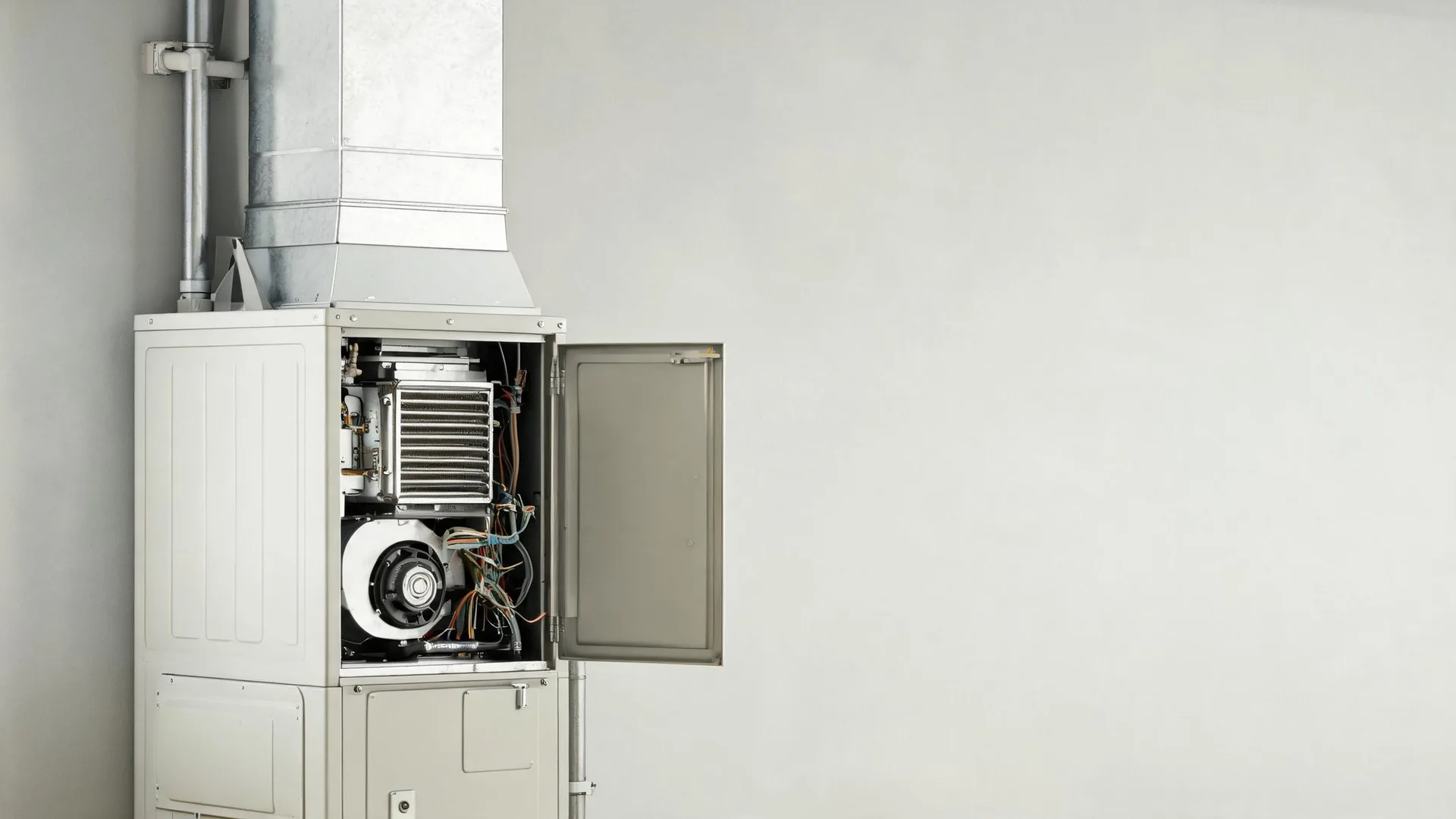
A gray gas furnace with attached ductwork and piping installed in an unfinished concrete basement.

A newer furnace is worth fixing

If your furnace came with a newer house here, that points toward fixing it rather than replacing it. The time-lapse above shows the stretch it has to run most winters. A furnace that young has most of its working life still ahead. The exceptions are the same ones that show up on any furnace, a cracked heat exchanger or a draft inducer motor worn through. Ask the tech straight out which one you've got before you decide anything.

Short cycling means something is cutting the flame off early

A furnace that fires up and quits after a few seconds, then tries again, is shutting itself down on purpose. The control board does that when a safety switch tells it something is wrong, a flame sensor not seeing fire, a limit switch reading too much heat, a pressure switch not satisfied. The furnace is protecting itself. It needs a tech to find which switch is tripping and why.

Sounds and smells tell you where to look

A boom at startup usually means gas is building up before it lights, instead of lighting right away, and that points to the igniter or the burners. A squeal points to the blower motor or its bearings. A burning dust smell the first time it runs after sitting is normal and clears on its own. A smell that lingers, or anything like rotten eggs, means stop running it and get a tech out.

Before you call, check the filter. A filter clogged with dust chokes off the airflow a furnace needs, and some furnaces will shut down on purpose rather than run without enough air moving across the heat exchanger. Next, look at the thermostat. Make sure it's set to heat and not just fan, and if it runs on batteries, swap them out before you assume the furnace itself is at fault. Check that the switch on the furnace itself, or the one on the wall near it, is flipped to on. Also look at your breaker panel. A tripped breaker will stop a furnace cold with no warning signs at all. None of these take more than a few minutes, and ruling them out first means the tech spends the visit on the real problem instead of the thermostat batteries.

A diagnostic call starts before any panel comes off. The tech asks what the furnace was doing right before it quit, whether it was blowing cold air, cycling fast, or not responding at all. Then the covers come off and the gauges come out. Static pressure across the filter and coil, gas pressure at the manifold, temperature rise through the heat exchanger. These numbers either match what the furnace was built to run at or they don't, and that gap points straight at the failing part. A tech will also run the furnace through a full cycle rather than just glance at it, because some failures only show up once the burners have been running a few minutes and the heat exchanger has warmed up. By the end you should hear exactly which part failed and why, not just that something did.