An unfinished basement containing a metal furnace with ductwork, exposed wooden joists on the ceiling, cardboard boxes, a coiled cable, and a single hanging incandescent bulb.

Furnace Repair in Stonecrest, GA

Tell us about the job

Takes about a minute. No obligation.

RepairFurnace or heatingDeKalb County, GA
Step 1 of 2

What ZIP code is the job in?

The tech watches it fail before touching it

A furnace diagnosis starts with questions and a look at the system as it tries to run, not a teardown. The tech wants to see the actual fault, whether that's the igniter failing to glow, the flame sensor dropping signal, or the blower not kicking on. Pulling the panel before watching it try to fire can hide the exact thing that's going wrong.

The cause takes longer to find than the symptom

A furnace that won't stay lit might point to a dirty flame sensor or a failing gas valve, and the only way to tell them apart is testing, not a guess. The tech checks voltage at the parts that control ignition and airflow, then traces the fault back to whichever one is actually failing. That's what decides whether the fix happens on the spot or a part needs ordering.

6 months
November through April, your furnace is on duty
35°F
the average winter night it heats against
58%
of homes here heat with gas, so most furnaces here burn gas
3 winter storms
in ten years, the nights a failure hurts most
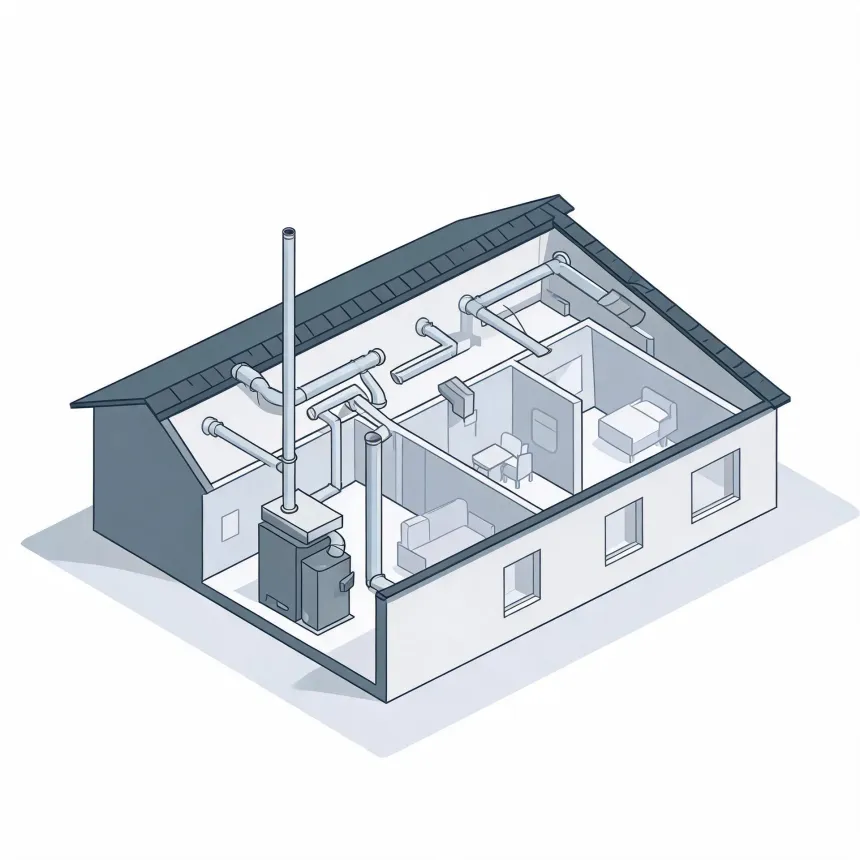
Isometric line illustration of a single-story house cutaway showing interior rooms with furniture, ductwork or piping running along the ceiling, and a boxy furnace unit with a tall vertical flue pipe.
Your furnace works hardest from November through March.

NOAA nClimDiv, 1991–2020 normals

A cracked heat exchanger gets worse every time the furnace fires.

Shut it down and get it looked at, rather than running it until a part fails outright.

Stonecrest furnaces get tested in November, the first cold snap of the year

Heat runs November through April
Winter nights average 35°F
Climate zone 3A
A newer furnace is worth fixingHalf the homes in DeKalb County were built in 1984 or later.

DeKalb County has logged 165 severe weather events between 2015 and 2024, and most of those were damaging wind. An outdoor unit takes that beating year after year, hail and debris included, while the furnace sits inside away from the weather. But the furnace still depends on what's tied to it. A storm that knocks out power matters too, long enough in the worst case for a house to go cold. If a storm has come through since your furnace last ran, it's worth having it checked before you count on it.

Six months of work a year is not a hard life for a furnace

Furnaces in DeKalb County run November through April, and even then they are not working hard. Overnight lows average 35°F in December, January and February. That is not the kind of cold that pushes a system to its limit. A furnace here usually fails from age or something that got missed, not from being run into the ground. That makes most repairs worth doing.

Find a contractor
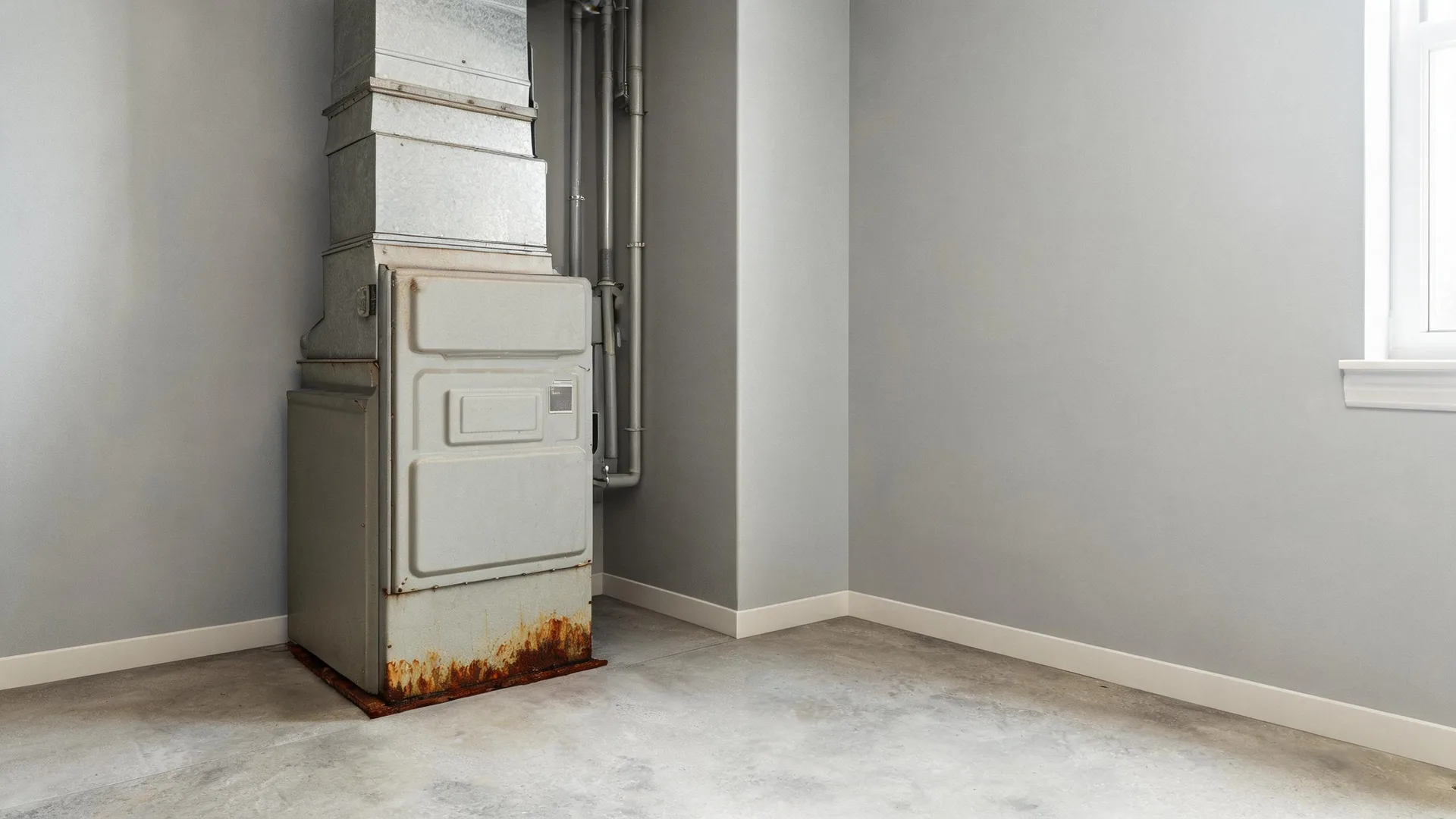
A gray residential gas furnace installed in an unfinished basement, surrounded by ductwork, a metal flue pipe, and a gas supply line.

A newer furnace still has the life to make repair worth it

If your furnace came with a newer house, there's no reason age should decide this. Half the homes in DeKalb County were built in 1984 or later, and a furnace in one of those houses likely has years left in it. The time-lapse above is what that life gets spent on, not a reason to question it. Find out what part is failing and have that fixed.

Most failures are one part, not the whole system

An igniter wears out from repeated heating and cooling until it cracks or stops glowing. A flame sensor coats with a thin film from normal combustion and quits telling the gas valve a flame is present. A capacitor weakens and the blower motor struggles to start. These are separate parts with separate failure points, and they fail on their own timeline. None of them mean the furnace itself is going bad.

What burns out usually runs the most

The blower motor runs every cycle, heating or just fan mode, so its bearings and windings see the most wear of anything in the cabinet. The hot surface igniter cycles on with every call for heat and is the most common single point of failure because of that repeated stress. Parts that only engage occasionally, like the draft inducer's pressure switch, tend to last longer simply because they're asked to do less.

An unfinished concrete basement containing a metal HVAC air handler, exposed wooden ceiling joists with sheet-metal ducts, a hanging bare bulb, copper pipes, and stacked cardboard boxes.

A new furnace would cut about $120 a year off heating for a typical DeKalb County home.

  • A new high-efficiency furnace$580 a year
  • An older furnace$700 a year

Estimates for a typical DeKalb County home, compared with an older unit built to the previous federal minimum, from EIA household energy data, Georgia fuel prices and NOAA climate normals. Your home will differ.

Repair makes sense when one part has failed and the heat exchanger is sound.

Replacement makes sense when the heat exchanger is cracked or the furnace keeps needing parts.

Most of the time, repair versus replacement comes down to which part failed and what else is starting to go. A cracked heat exchanger or a failing control board on an old unit is a different conversation than a dirty flame sensor or a bad capacitor. One is wearing out as a whole. The other is a single part doing what single parts eventually do. A tech worth listening to will tell you which situation you're in instead of just quoting a fix. If the cabinet's rusting, the heat exchanger's cracked, or you're replacing a different part every season, that pattern means more than any one repair. If it's an isolated failure on a furnace that's otherwise sound, fixing that one part is the right call.