





White two-story houses with wraparound porches and Spanish moss-draped oak trees photographed along a residential street at night.

Furnace Repair in Rome, GA

Tell us about the job

Takes about a minute. No obligation.

RepairFurnace or heatingFloyd County, GA
Step 1 of 2

What ZIP code is the job in?

Floyd County saw 115 severe weather events between 2015 and 2024. Most of that was damaging wind, 95 times in that stretch, with 3 tornadoes and a handful of hail storms mixed in. Wind and hail both come down on whatever is sitting outside, and for a furnace that usually means the flue or the electrical connections tied to the outdoor part of the system. A furnace can keep running after a storm like that and still have damage you can't see from inside the house. Statewide, close to a third of Georgia households lost power for a full day or more in 2024, and a furnace needs electricity to fire up even if it runs on gas. If a storm has come through your property recently, a check now costs less than finding out the hard way during the next cold snap.

7 months
October through April, your furnace is on duty
34°F
the average winter night it heats against
3 winter storms
in ten years, the nights a failure hurts most
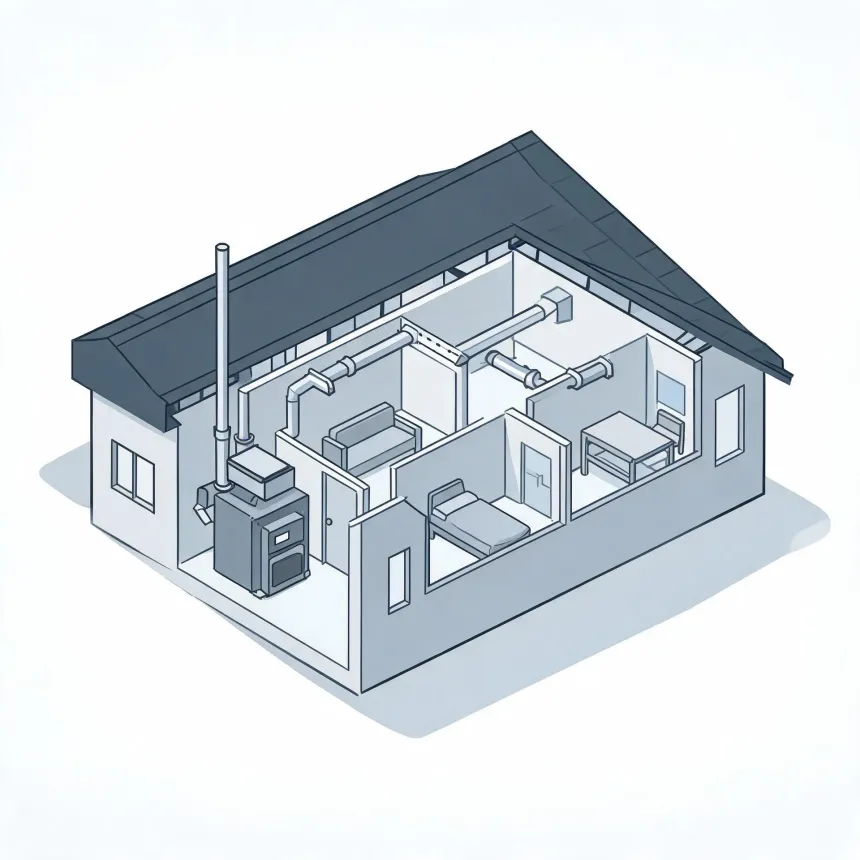
Isometric cutaway illustration of a single-story house showing interior rooms with furniture, overhead ducting, a flue pipe, and a furnace unit against an interior wall.
Your furnace works hardest from November through March.

NOAA nClimDiv, 1991–2020 normals

Check the furnace filter before anything else. A clogged one chokes airflow and can shut the system down on its own.

If the filter is clean and the furnace still won't run, check the thermostat batteries and the breaker before calling anyone.

Seven months of mild duty, not a hard winter grind

Heat runs October through April
Winter nights average 34°F
Climate zone 3A
Ready by OctoberFurnace season starts here in October, and the first cold snap is what finds the weak part.

A furnace here isn't working against the clock the way a filter or an igniter might in a place with a longer, harder winter. That matters when something goes wrong. A part that's failed after seven months of yearly runtime is more likely to be a single bad component than a system worn out from overuse. So if your furnace is acting up, there's a decent chance it's one fix, not the start of a string of them. Worth getting it looked at rather than assuming the worst.

If a storm has come through, get the furnace checked before the next cold snap

Wind and hail land on whatever sits outside, and a furnace can keep running afterward with damage you can't see from inside. Have it looked at now, before you need it to fire up on the next cold morning.

Find a contractor
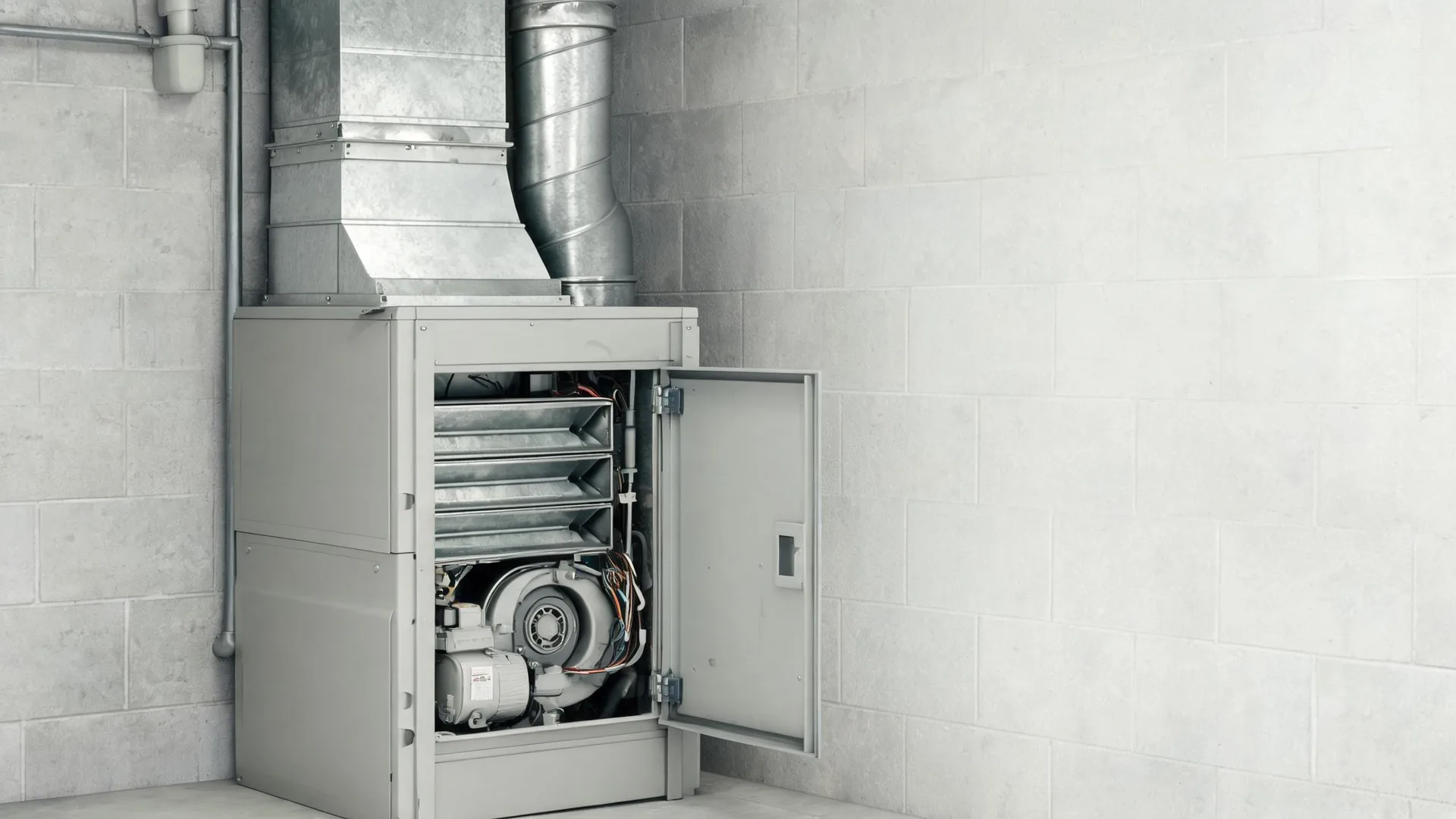
A gray residential gas furnace installed in an unfinished basement, connected to sheet-metal ductwork and PVC pipes.

What the furnace is telling you

A furnace that's about to fail usually tells you first. It short cycles, running for a couple minutes then shutting off before the house warms up, because a cracked heat exchanger or a dirty flame sensor is tripping a safety switch. It might start blowing cool air partway through a cycle, which points to the igniter or the gas valve giving out. A burner that should burn blue and instead burns yellow or flickers means it's not getting the air it needs, and that's not something to leave alone. Listen for it too. A low rumble, a bang at startup, or a screech from the blower motor are all the furnace telling you a part is wearing out before it quits for good. Any smell of gas means stop and get it looked at, not later, now. A furnace clicking as it tries to ignite and failing is often just the igniter, a cheap part, but ignoring it long enough can take the control board down with it.

Most failures start small

A furnace rarely quits outright. An igniter wears down and stops glowing hot enough to light the burners. A flame sensor coats with residue and can't tell the control board a flame is lit, so the system shuts itself down as a safety step. A blower motor's bearings wear until the motor strains to spin. Each of these is a single part failing on its own, not the whole machine giving out.
What that means for the fix

Because most furnace trouble traces back to one worn part, a repair usually means replacing that part, not rebuilding the system. The job is finding which part quit and why. A failed igniter or a dirty flame sensor is a straightforward swap. A cracked heat exchanger is a different conversation, since that part isn't meant to be patched and affects whether the furnace is safe to keep running at all.

A furnace that's struggling doesn't fix itself by staying on. Keep running it with a dirty flame sensor and the system will short cycle over and over, which puts more wear on the igniter and the control board with every attempted start. A blower motor with worn bearings will keep drawing power to force a spin it can't do smoothly, and that strain is what burns the motor out for good instead of just slowing it down. A cracked heat exchanger is the one that matters most. Running a furnace with a crack like that lets combustion gas mix into the air moving through the house, and that risk doesn't wait for a convenient time to show up. Shutting the furnace off when something seems wrong, and calling someone before running it again, is usually what keeps a one part problem from becoming a bigger one.

Age is the first thing worth weighing, not how bad this particular breakdown feels. A furnace in its first half of life is almost always worth fixing, since one worn part failing doesn't say anything about the rest of the system. Past a certain point the math changes, because a furnace old enough to need this repair is old enough to need the next one too, and the next part to go is rarely the same one just fixed. The heat exchanger is the one that settles the question on its own. If that's cracked, the furnace isn't a repair candidate at all, it's a replacement, because that part can't be patched and shouldn't be run while it's damaged. Short of that, the honest test is whether the repair fixes the furnace or just buys a few months before the next part quits.