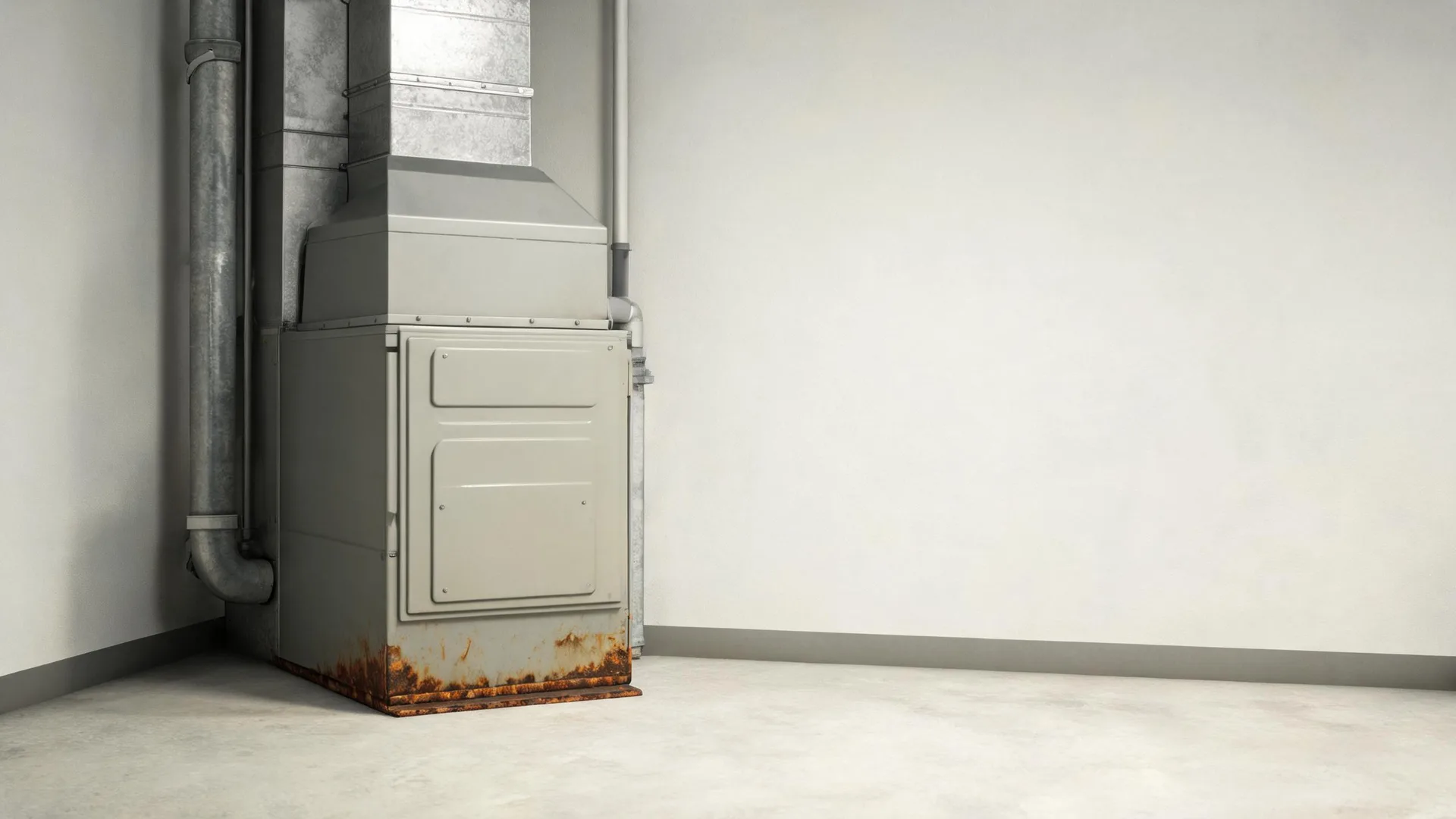
An unfinished basement interior featuring a large metal furnace unit, exposed ceiling joists, concrete walls, and scattered boxes and cables on the floor.

Furnace Repair in Rincon, GA

Tell us about the job

Takes about a minute. No obligation.

RepairFurnace or heatingEffingham County, GA
Step 1 of 2

What ZIP code is the job in?

A small problem can turn into a bigger one

A cracked heat exchanger stays small until the furnace keeps cycling heat through it and the crack spreads further with every run. A clogged flue starts as a minor draft issue, but a furnace that keeps firing against it pushes exhaust back where it shouldn't go. Neither waits for a convenient time to stop being minor.


Shutting it off can be the safer move

If a furnace is making a new noise, tripping its limit switch, or short cycling, turning it off until someone looks at it is the safer call. A limit switch trips for a reason, usually restricted airflow or a blower struggling to keep up, and running the furnace past that signal risks a cracked component or carbon monoxide escaping where it shouldn't.

5 months
November through March, your furnace is on duty
39°F
the average winter night it heats against
1 winter storms
in ten years, the nights a failure hurts most
Isometric cutaway illustration of a single-story house in gray tones, showing interior rooms with furniture, ceiling ductwork, and an exterior furnace unit with a tall flue pipe.
Your furnace works hardest from December through February.

NOAA nClimDiv, 1991–2020 normals

Furnaces in Rincon only run about five months a year, November through March.

A furnace with that short a season usually has plenty of life left in it, so repair is the call most of the time.

November is when a weak furnace shows it

Heat runs November through March
Winter nights average 39°F
Climate zone 2A

Worth fixing, most likely

Five months of real work a year is not much to ask of a furnace. Get it looked at before you decide it needs replacing.

Find a contractor
A gas furnace with attached ductwork, gas piping, and condensate lines installed in a concrete-block basement.

What to check before the furnace gets looked at

Before anyone comes out, there are a few things worth checking. Look at the filter first. Pull it out and hold it up to a light. If you can't see light through it, air isn't moving the way it should, and that alone can make a furnace short cycle or blow cool air. Check the thermostat batteries if it has a screen that looks dim or blank. Go to the furnace itself and look for a light through a small window on the control board, usually blinking in a pattern. That pattern means something to a tech even if it doesn't mean anything to you, so don't clear it, just note it. Check that the switch on the furnace itself, the one that looks like a light switch, is flipped on, and that the furnace door is seated all the way shut, since most furnaces won't run with that door loose or off. Look at the vent pipe outside where it exits the house and make sure nothing is blocking it. None of this fixes a cracked heat exchanger or a failed control board, but it rules out the simple stuff before someone drives out to look at the rest.

Most failures start with airflow

A dirty filter chokes the air coming back to the furnace, and the blower has to work harder to push heat through. That strain shows up later as a cracked heat exchanger or a burnt-out blower motor. Dirty coils and blocked vents cause the same kind of strain from different directions.

Ignition parts wear out on schedule

The igniter or the flame sensor is usually the first thing to fail, simply from being heated and cooled every time the furnace cycles on. A flame sensor coated in residue will make the furnace shut off seconds after starting, even though the rest of the system is fine. That one's a quick fix once someone's looked at it.

A furnace is a collection of parts with different lifespans, not one thing that fails all at once. The blower motor, the heat exchanger, the igniter and the circuit board all wear on their own schedule, and most of them can be replaced on their own without touching the rest. That's why a repair is usually the right call even on a furnace that's shown a few problems over the years. What changes the math is the heat exchanger. It's the one part that isn't practical to replace by itself, since swapping it costs close to what a new furnace would, so a cracked exchanger is the one failure that really does end a furnace's working life. Short of that, a tired igniter or a failing blower motor is just a part wearing out, not the system giving up.

A diagnostic visit starts with questions before any panel comes off. The tech wants to know what the furnace was doing before it quit. Did it short cycle, trip out cold, make a noise it never made before. From there it's a sequence, not a guess. Power and gas supply get checked first, since a furnace that won't even attempt to fire usually has a simple cause. If it fires but won't stay lit, the flame sensor and igniter get pulled and looked at. If airflow seems weak, the filter and blower come next. The heat exchanger gets inspected last, because that's the answer nobody wants to find first. Most visits end with a part identified, not a furnace condemned.