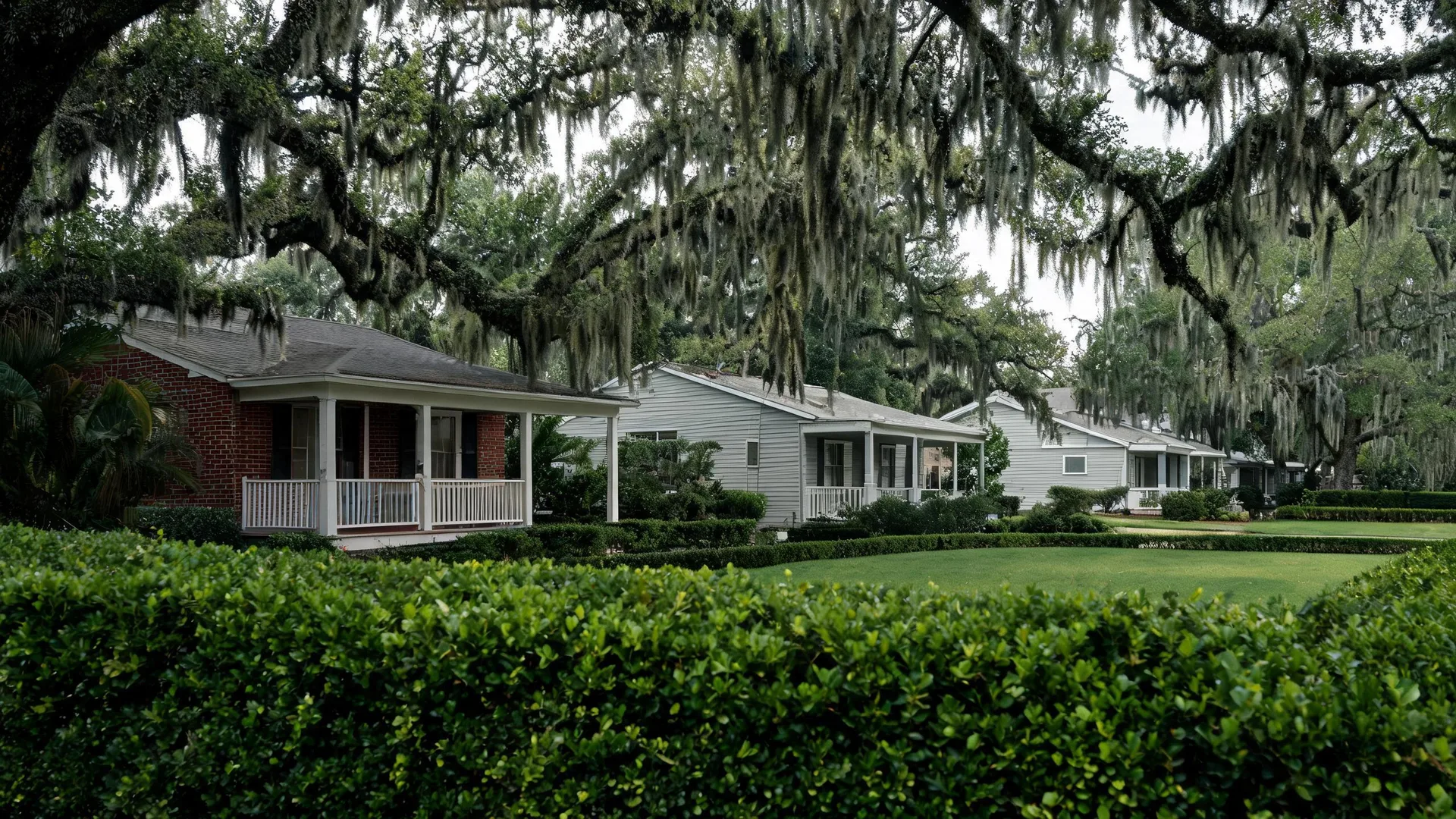
A row of single-story cottages, one brick and the others light gray siding with covered porches, behind a trimmed hedge and lawn, under large oak branches draped with Spanish moss.

Furnace Repair in Peachtree City, GA

Tell us about the job

Takes about a minute. No obligation.

RepairFurnace or heatingFayette County, GA
Step 1 of 2

What ZIP code is the job in?

Five months of work a year

Furnaces in Fayette County run from November through March. The rest of the year the system sits idle. Overnight lows average 35°F through December, January and February, which is not the kind of cold that pushes a furnace hard night after night.


What that means for your furnace

A furnace that hasn't been worked hard is usually still in decent shape underneath whatever's acting up right now. When something goes wrong on a unit like that, the cause is more often a part that's aged or been skipped on maintenance, not a system worn out from years of strain. That's the kind of problem worth fixing.

5 months
November through March, your furnace is on duty
35°F
the average winter night it heats against
64%
of homes here heat with gas, so most furnaces here burn gas
2 winter storms
in ten years, the nights a failure hurts most
Isometric line illustration of a cutaway single-story house with a shingled roof, showing an interior furnace connected to ductwork and a tall vertical flue pipe, plus simple furniture in the adjacent room.
Your furnace works hardest from November through March.

NOAA nClimDiv, 1991–2020 normals

Half the homes in Fayette County were built in 1993 or later.

A furnace that came with a newer house still has years in it, so a repair is usually worth making.

Storms come through often enough to check on your furnace's outdoor parts

87 severe weather events from 2015 to 2024
31% of homes statewide lost power a day or more in 2024
72 damaging wind events from 2015 to 2024
October is when to check a furnace before it has to workHeat starts in November here, and a weak part usually shows itself the first cold week.

If your furnace came with the house, check the year the house was built against when the furnace went in. That tells you which case you're in. A furnace original to a newer home hasn't logged enough seasons to be worn out, so a repair technician is usually chasing one failed part, not a system in decline. Replacing that part is the straightforward path back to heat. If the furnace was already old when the current owners bought the house, that's a different question, and worth sorting out before the technician arrives.

Get the one part fixed, not the whole system replaced

A furnace that's had an easy five months a year, winter after winter, is usually still sound under whatever's gone wrong with it right now. That makes it a problem worth calling someone out for.

Find a contractor
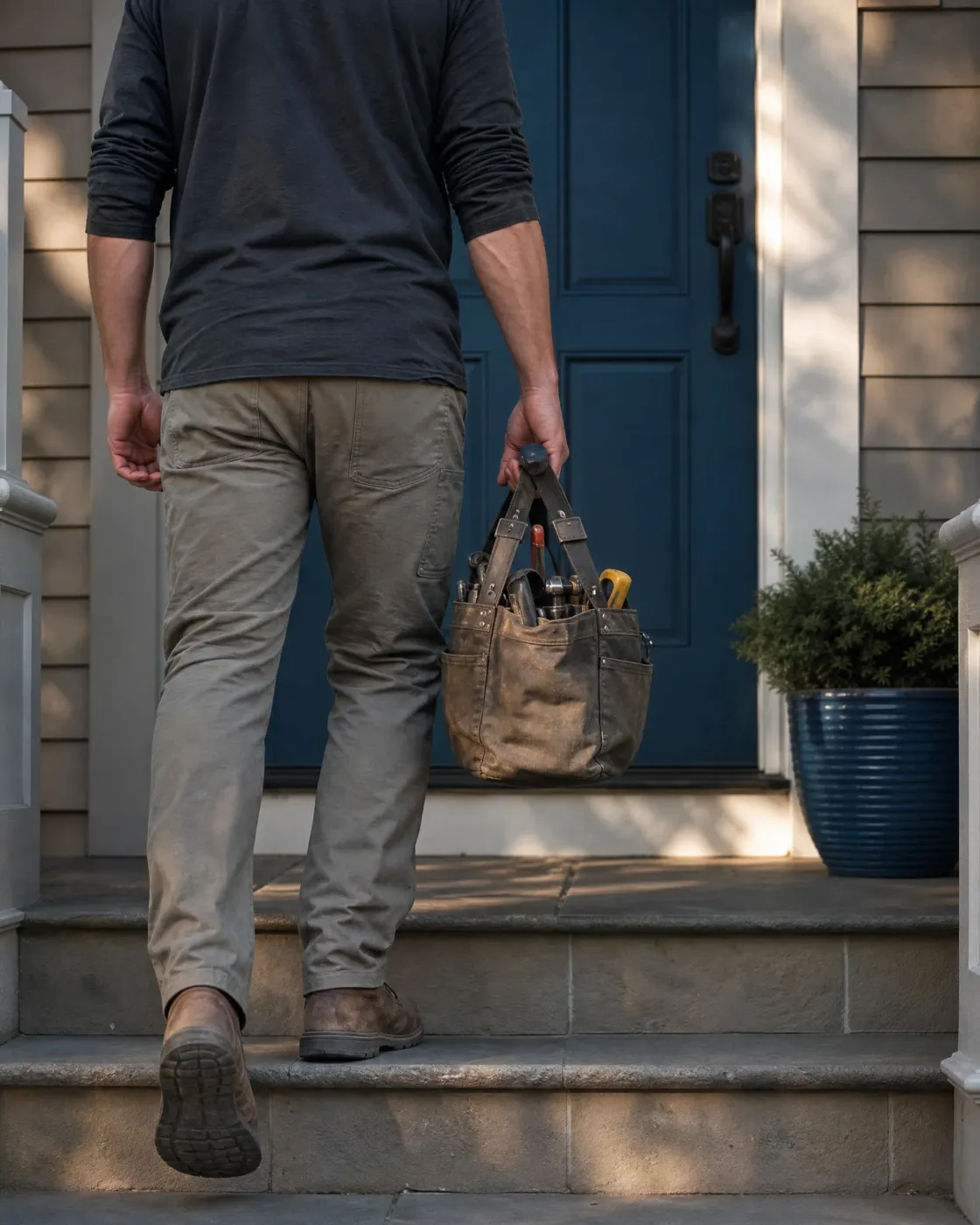
A person in a dark long-sleeved shirt and tan pants, seen from behind, carries a worn canvas tool bag up stone steps toward a blue front door with a shrub in a blue planter beside it.
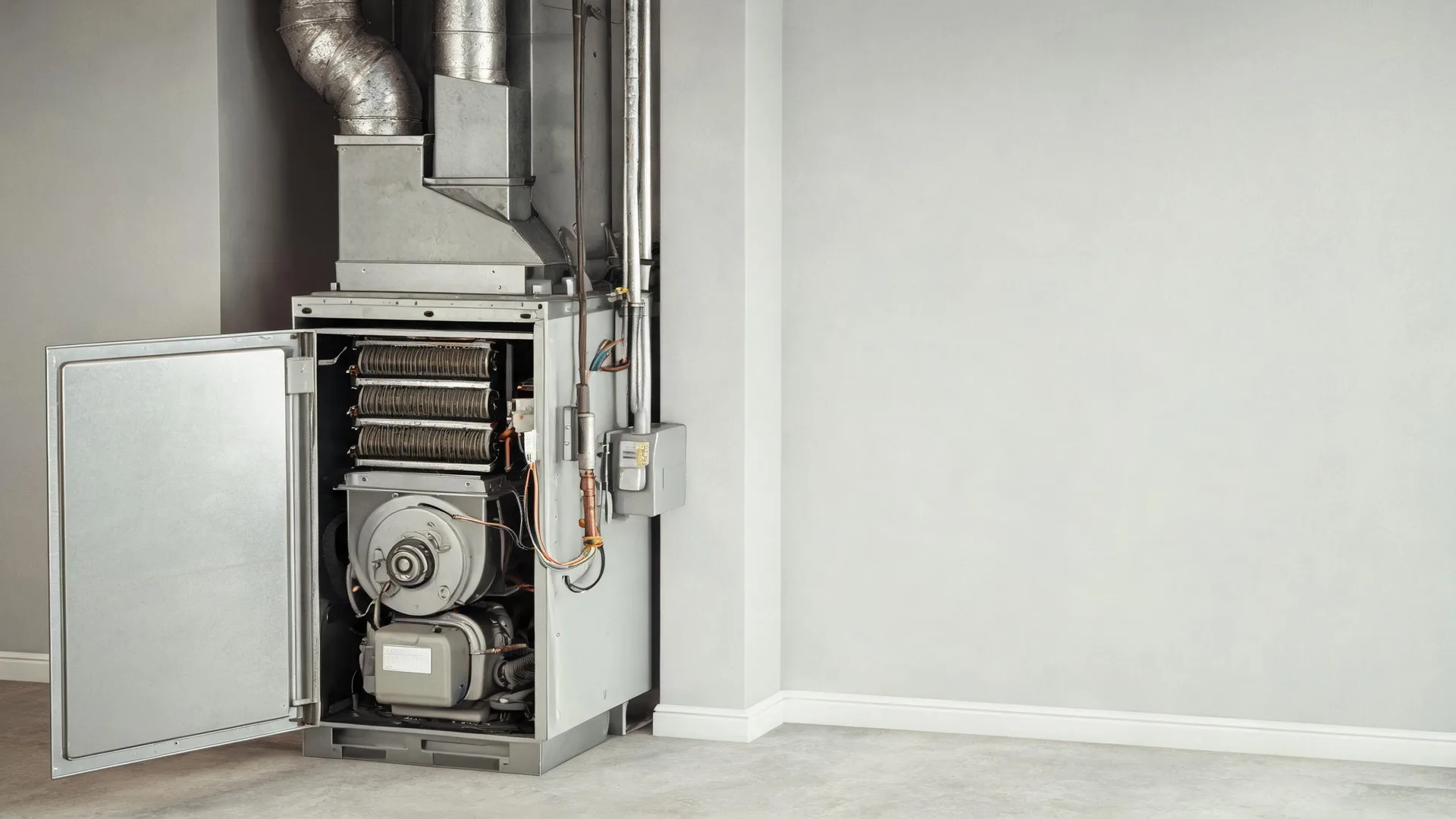
A gas furnace with attached ductwork, gas piping, and condensate lines installed in a concrete-block basement.

Furnaces fail one part at a time, not all at once

The igniter cracks after enough heat cycles, whether those cycles came easy or hard. The flame sensor collects a film of oxidation over time until it can't tell the burner is lit anymore. The capacitor that kicks the blower motor on weakens the same way, a little more each season, until the motor struggles to start. None of that is about strain. It's about age and cycles, which build up the same way in a system that's had it easy. Skipped maintenance speeds all of it along. A furnace that never gets its filter changed or its flame sensor cleaned wears through these parts sooner, and a dirty filter alone can cause trouble that looks like something else, from short cycling to a furnace that won't stay lit. That's why a technician checks the simple parts first, before anything more involved.

Check the filter before anything else

Pull it out and hold it to a light. If you can't see through it, air can't get through it either. A clogged filter can make a furnace short cycle, blow cool air, or shut off on its own, and it looks like a much bigger problem than it is.

Check the thermostat and the power first

Make sure the thermostat is set to heat and the temperature is actually above room temperature, not just sitting there. Check that the furnace switch, the one that looks like a light switch near the unit, is on, and that the breaker hasn't tripped. These take a minute to rule out before anything else.

An unfinished basement featuring concrete block walls, exposed floor joists, and a metal forced-air furnace with ductwork near a central pillar.

A new furnace would cut about $120 a year off heating for a typical Fayette County home.

  • A new high-efficiency furnace$550 a year
  • An older furnace$670 a year

Estimates for a typical Fayette County home, compared with an older unit built to the previous federal minimum, from EIA household energy data, Georgia fuel prices and NOAA climate normals. Your home will differ.

Repair makes sense when one part has failed and the heat exchanger is sound.

Replacement makes sense when the heat exchanger is cracked or the furnace keeps needing parts.

A diagnostic call starts before any panel comes off. The technician asks what the furnace was doing right before it quit. Blowing cold air is a different problem than short cycling, and short cycling is a different problem than not firing at all, so the answer narrows the search fast. Then it's the filter, the thermostat settings, and the power switch, the same things worth checking before anyone's called out. After that the panel comes off and the technician watches a full cycle. The igniter has to glow. The burner has to light off it. The blower has to kick in on time. Most furnace problems show up somewhere in that sequence, and a technician who's done this a while can usually tell within a few minutes which part dropped out, because each failure looks a little different from the others.