An unfinished basement interior showing a gray furnace unit beneath a bare incandescent bulb, surrounded by exposed joists, concrete walls, cardboard boxes, and utility pipes.

Furnace Repair in Jefferson, GA

Tell us about the job

Takes about a minute. No obligation.

RepairFurnace or heatingJackson County, GA
Step 1 of 2

What ZIP code is the job in?

Six months of work, not twelve

A furnace in Jefferson runs from November through April. The other half of the year it sits idle while the AC does the work. That's a light schedule compared to places that lean on heat most of the year, and it means less wear on the igniter, the blower motor and the heat exchanger.


What that means for the repair call

A furnace that hasn't been run hard is more likely to have a lot of life left in it. When something breaks here, it's usually one part failing from age or a skipped tune-up, not a system worn out from overwork. That makes a repair worth doing in most cases, rather than a sign the whole unit is done.

6 months
November through April, your furnace is on duty
35°F
the average winter night it heats against
4 winter storms
in ten years, the nights a failure hurts most
Isometric cutaway illustration of a single-story house showing interior rooms, furniture, a dark furnace unit with a tall vertical flue pipe, and ductwork running under the pitched shingle roof.
Your furnace works hardest from November through March.

NOAA nClimDiv, 1991–2020 normals

A technician starts by asking what the furnace is doing, or not doing, before touching anything.

That's because ignition problems, airflow problems and control problems each show different symptoms, and the symptom points to the part.

Half the homes here were built in 2002 or later, so the furnace in them usually still has years left

Half the homes here were built by 2002
Climate zone 3A
Heat runs November through April
The first cold week finds itFurnaces sit idle since April, and the first real cold in November is what finally exposes a part that was already going bad.

A furnace is really a handful of separate systems working in sequence: something has to call for heat, something has to light it, something has to push the warm air through the house, and something has to shut it all off safely. When one part in that chain fails, the rest are usually fine. A cracked heat exchanger or a failed control board is a different conversation than a bad flame sensor or a clogged filter, and a good technician will tell you which one you're dealing with before talking about cost. Age matters less than which part failed and whether it's a part that tends to take others down with it. A furnace that's had regular tune-ups and only loses one component at a time is almost always worth repairing. The exception is a system where several unrelated parts are failing within the same year or two, since that pattern usually means the whole unit is wearing out at once, not that any single repair was wrong to make.

A light workload means a repair is usually the right call

A furnace that only runs six months a year isn't the kind of system that quits for no reason. Something specific failed. Get it looked at and in most cases it's a part, not the whole unit.

Find a contractor
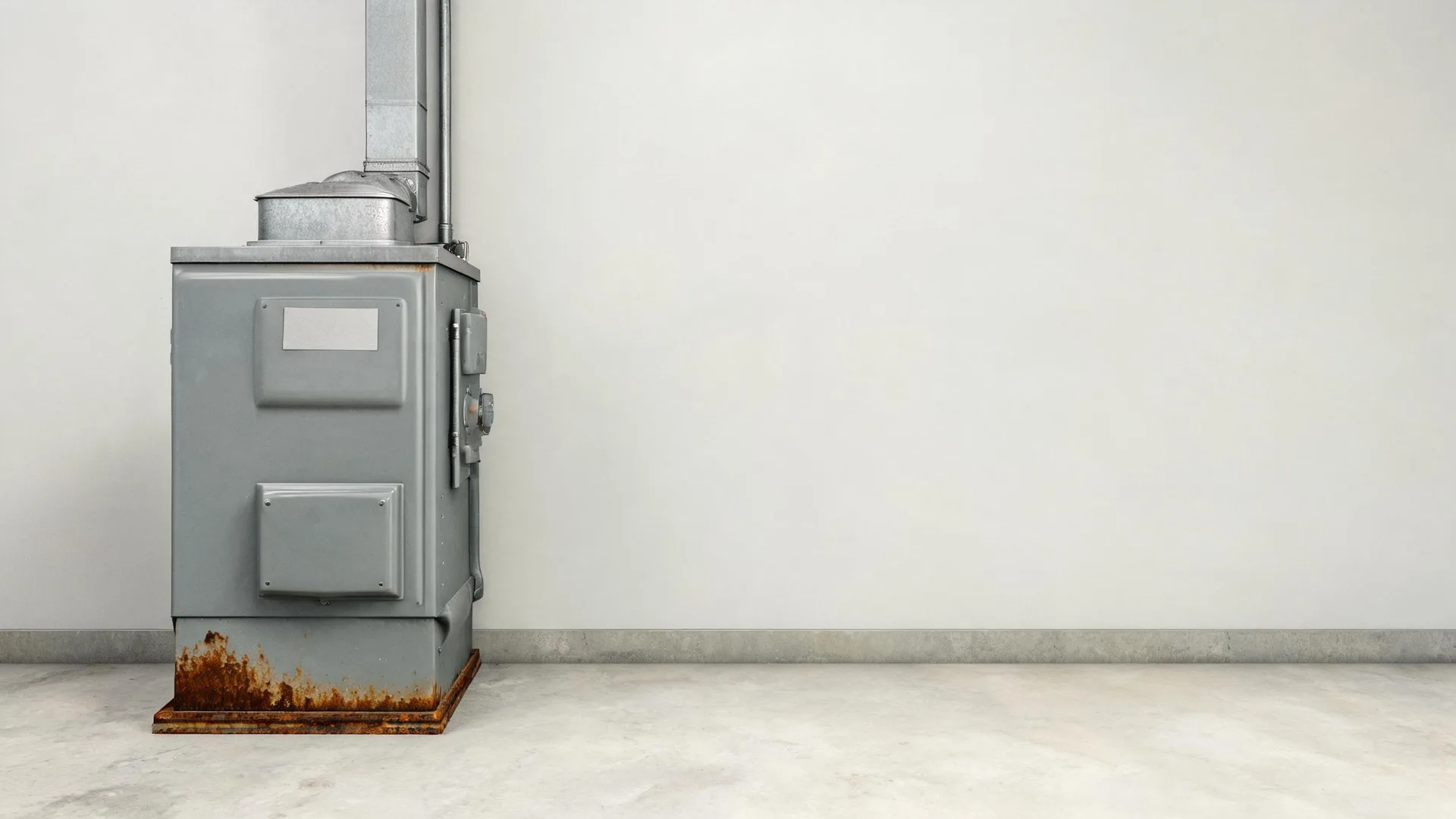
A gray gas furnace with attached ductwork and piping installed in an unfinished concrete basement.

A newer furnace is worth the repair call

If your furnace came with the house and the house is from somewhere around 2002 or later, that's worth knowing before you spend money on a repair. A newer furnace still has most of its working life ahead of it, so fixing the part that failed is money spent on a system that's going to keep earning it back. Ask whoever comes out how old the unit is and what shape the rest of it is in. If the answer is one failed part on a furnace that's been running fine otherwise, that's a straightforward repair, not a decision to lose sleep over.

A small problem can take out a bigger part

A cracked heat exchanger gets worse with every hour the blower pushes air past it. A dirty flame sensor makes the burner shut off sooner each cycle until it won't stay lit at all. A clogged filter starves the blower motor of airflow, and that motor can overheat trying to push through it. None of these start as emergencies. Left alone, each one spreads to a part that was fine before.

Shutting it off doesn't fix anything, but it buys time

Turning the furnace off stops the damage from getting worse, it just doesn't make the broken part work again. If the furnace is tripping a limit switch, shutting off, or making a new noise, that's it telling you to stop running it until someone looks at it. Waiting a few days for a technician is fine. Running it in that condition for the whole season usually isn't.

Most furnace trouble shows up the same way, well before anything quits for good. The air coming out feels cooler than it used to, or the furnace runs longer to reach the same temperature on the thermostat. Short cycling is another one: it fires up, runs a minute or two, shuts off, then starts again, instead of running a full steady cycle. A burner that lights with a pop or a bang instead of a smooth whoosh is worth mentioning to whoever comes out, since that usually means fuel is building up before ignition instead of catching right away. Rattling, screeching or a new sound that wasn't there before almost always means a moving part, like the blower motor or the inducer, is wearing out. A thermostat that seems unresponsive, or rooms that heat unevenly, can also trace back to the furnace rather than the thermostat itself. None of these mean the furnace is done. They mean something specific is going wrong, and it's easier to fix early than after it forces a shutdown.

Before calling anyone, there are a few things worth checking, and none of them need tools. Start with the thermostat: make sure it's set to heat, not cool, and that the set temperature is actually above room temperature. Check the air filter next, since a filter clogged with dust can choke the blower and make the whole system struggle or shut down early. Look at the furnace switch, too, the one that looks like a light switch near the unit or at the top of the basement stairs. It's easy to bump off by accident, and it kills power to the whole system when it's flipped. If the furnace has a standing pilot, see if the pilot light is actually lit. Last, check the breaker panel. A tripped breaker will stop the furnace cold, and resetting it is safe to try once. If the furnace still won't run after that, or it runs but something sounds or smells wrong, that's the point to stop checking and call someone.