





Two white Southern-style homes with wraparound porches lit by landscape lighting at night, flanked by live oak trees hung with Spanish moss.

Furnace Repair in Griffin, GA

Tell us about the job

Takes about a minute. No obligation.

RepairFurnace or heatingSpalding County, GA
Step 1 of 2

What ZIP code is the job in?

A furnace nearing the end of its life tends to break in a way that feels random. The igniter goes, then a few months later it's the blower motor, then the flame sensor needs cleaning again for the third time that winter. If a contractor keeps finding a new part worn out each visit, that pattern matters more than any single repair. A cracked heat exchanger is the one problem worth asking about directly, since that part isn't meant to be patched. For most other failures, like a bad flame sensor, a failed igniter, or a stuck gas valve, repair is normal and expected, and a furnace can run well for years after. The question isn't really the age of the unit. It's whether it's failing once in a while or failing often.

5 months
November through March, your furnace is on duty
36°F
the average winter night it heats against
1 winter storms
in ten years, the nights a failure hurts most
Isometric cutaway illustration of a single-story house showing interior rooms with a dark furnace unit, connected ductwork, a vertical flue pipe through the roof, and simple furniture, on a white background.
Your furnace works hardest from November through March.

NOAA nClimDiv, 1991–2020 normals

Furnace here only has to run about five months, November through March.

Five months a year is a light workload, so a repair usually makes sense before replacement does.

November is when a weak furnace finally gets found out

Heat runs November through March
Winter nights average 36°F
Climate zone 3A

Overnight lows here average 36 degrees across December, January and February. That's not the kind of cold that pushes a furnace to run flat out for hours just to hold the house steady. A furnace doing light work like that tends to cycle normally and wear evenly, which is part of why a repair holds up well here. If yours has been reliable up to now, fixing what broke is usually the right call, not a sign to start shopping for a new one.

Half the homes here were built in 1985 or later

Half the homes in Spalding County were built in 1985 or later. If your house falls on that side, your furnace likely isn't old enough to be the real problem on its own. A system with life left in it is usually worth fixing when something breaks.

Find a contractor
A gray residential gas furnace installed in an unfinished basement, surrounded by ductwork, a metal flue pipe, and a gas supply line.

One part failing isn't the same as the furnace failing

A furnace installed with a newer build hasn't had the years to rack up multiple failures. If this is the first thing to go wrong, that's normal wear on one part, not a system falling apart. Get it fixed and expect it to keep running.

Most failures start with ignition, not the furnace itself

The igniter sits in the path of every startup cycle, so it takes the most wear of any part in the furnace. It can crack or weaken with age and stop glowing hot enough to light the gas. A flame sensor runs a close second. It reads the flame to confirm it's burning clean, and a thin coat of residue on the rod is enough to make the furnace shut itself down as a safety measure.
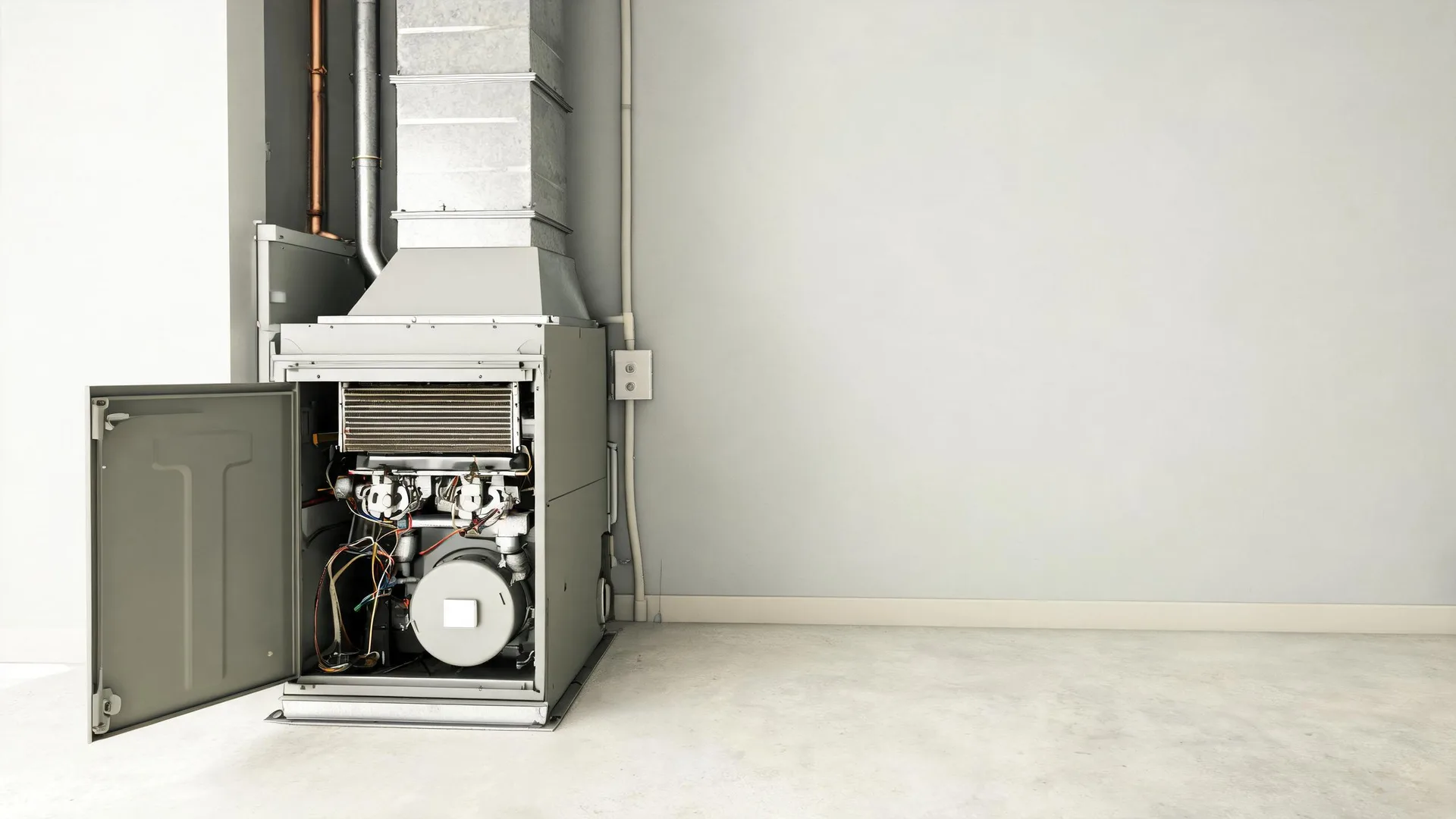
The blower motor and gas valve fail on a different schedule

A blower motor wears out from years of spinning, not from one bad cycle, so trouble there usually shows up in a furnace that's already been running a long stretch. A gas valve fails for a different reason. It opens and closes every single cycle, and that repeated motion is what eventually wears it out, not the furnace's age on its own.

A furnace usually tells you something's wrong before it quits outright. It might start making a noise it didn't used to make, a rattle, a screech on startup, a hum that lingers after it should've gone quiet. It might short cycle, running for a few minutes and shutting off before the house warms up, which often points to a flame sensor or a limit switch doing what it's designed to do when something's off. A burner flame that's yellow instead of blue is worth attention, since that's a sign of incomplete combustion. Cold air blowing from the vents when the furnace is running points toward the ignition system more than anything else. And if the furnace is cycling on and off more than it used to, or taking longer to actually heat the house, that's worth a look before it leaves you without heat on the coldest night of the year.

A diagnostic visit starts with the thermostat and works back from there, checking that the call for heat is actually reaching the furnace before anything gets opened up. From there it's a look at the burner flame, the sound of the blower, and the sequence of the startup cycle from igniter to flame to blower kicking on. A multimeter checks the igniter for continuity, since a cracked igniter can look fine and still not be heating up right. The flame sensor gets pulled and inspected, since the residue that trips a shutdown is usually too thin to see without looking closely at the rod. If the furnace is short cycling, the limit switch and the condensate line both get checked, since either one can shut the system down as a safety response. The gas valve and pressure switch get tested too, especially if the furnace is trying to start but failing partway through. None of this takes the furnace apart. It's mostly testing the parts that fail most, in the order they're most likely to be the problem.