Single-story houses with covered porches sit behind a mowed lawn and a long trimmed hedge, framed by oak branches draped with Spanish moss.

Furnace Repair in Gainesville, GA

Tell us about the job

Takes about a minute. No obligation.

RepairFurnace or heatingHall County, GA
Step 1 of 2

What ZIP code is the job in?

Hall County sees real storms

Hall County recorded 106 severe weather events between 2015 and 2024, including 78 damaging wind events, 8 hail events and 3 tornadoes. Tropical storms and hurricanes reached the county 6 times in that span, and winter storms hit 8 times.

That's hard on a furnace too

Nearly a third of Georgia households went at least 24 hours without power in 2024. A furnace needs electricity to run even if it burns gas, so an outage can leave a house with no heat on a cold night. Wind and hail also reach the outdoor parts of a heating and cooling system, not just the roof or the trees.

7 months
October through April, your furnace is on duty
34°F
the average winter night it heats against
8 winter storms
in ten years, the nights a failure hurts most
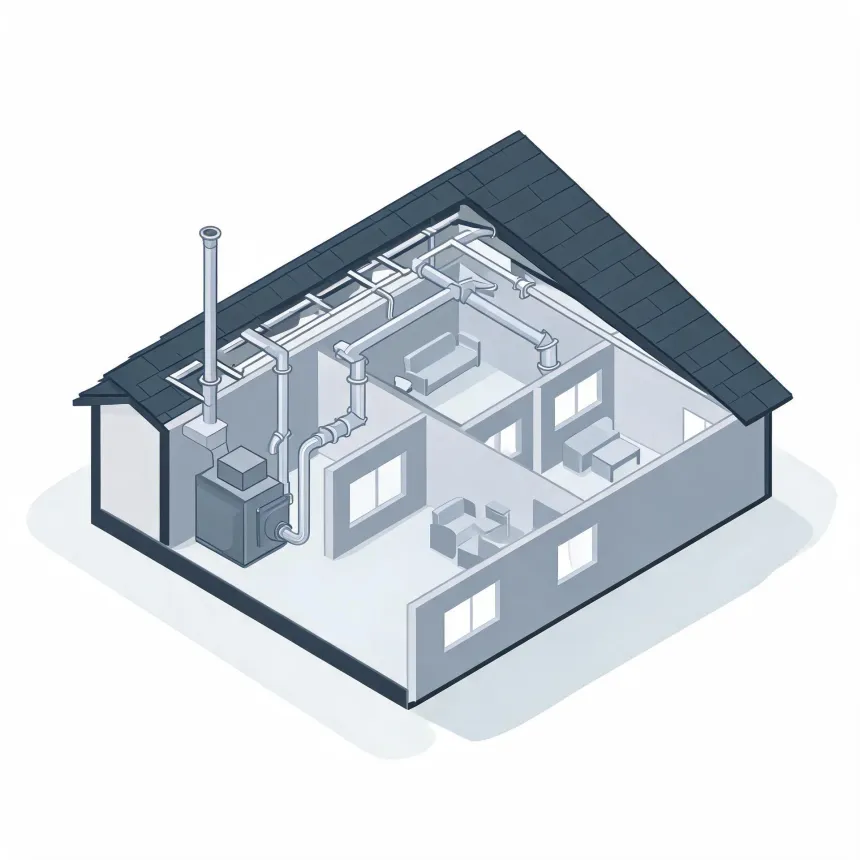
Isometric cutaway illustration of a single-story house showing interior rooms, a furnace unit with flue pipe, and branching ductwork running through the ceiling space under a dark shingled roof.
Your furnace works hardest from November through March.

NOAA nClimDiv, 1991–2020 normals

Half the homes in Hall County were built in 1996 or later.

A furnace that came with a newer house still has working life in it, and that makes repair the right call most of the time.

Seven months of heating a year is a light enough load to leave in good shape

Heat runs October through April
Winter nights average 34°F
Climate zone 3A

Furnaces here start running in October and stay on through April. That first cold snap in October is when a weak part usually fails, not in the dead of winter. A furnace that sat idle since spring gets asked to run for hours straight, and anything marginal, a cracked igniter or a failing flame sensor, shows itself right then. Overnight lows average 34°F through December, January and February, so a furnace that quits in those months has to be fixed fast. Getting it looked at in September, before the first real cold, catches the weak part on your schedule instead of its own.

After the storms pass, have the unit checked

If your outdoor unit took wind or hail in the last few years, that's worth a look even if the furnace is still running fine. A technician checking it now can catch what the storm left behind before cold weather sets in.

Find a contractor
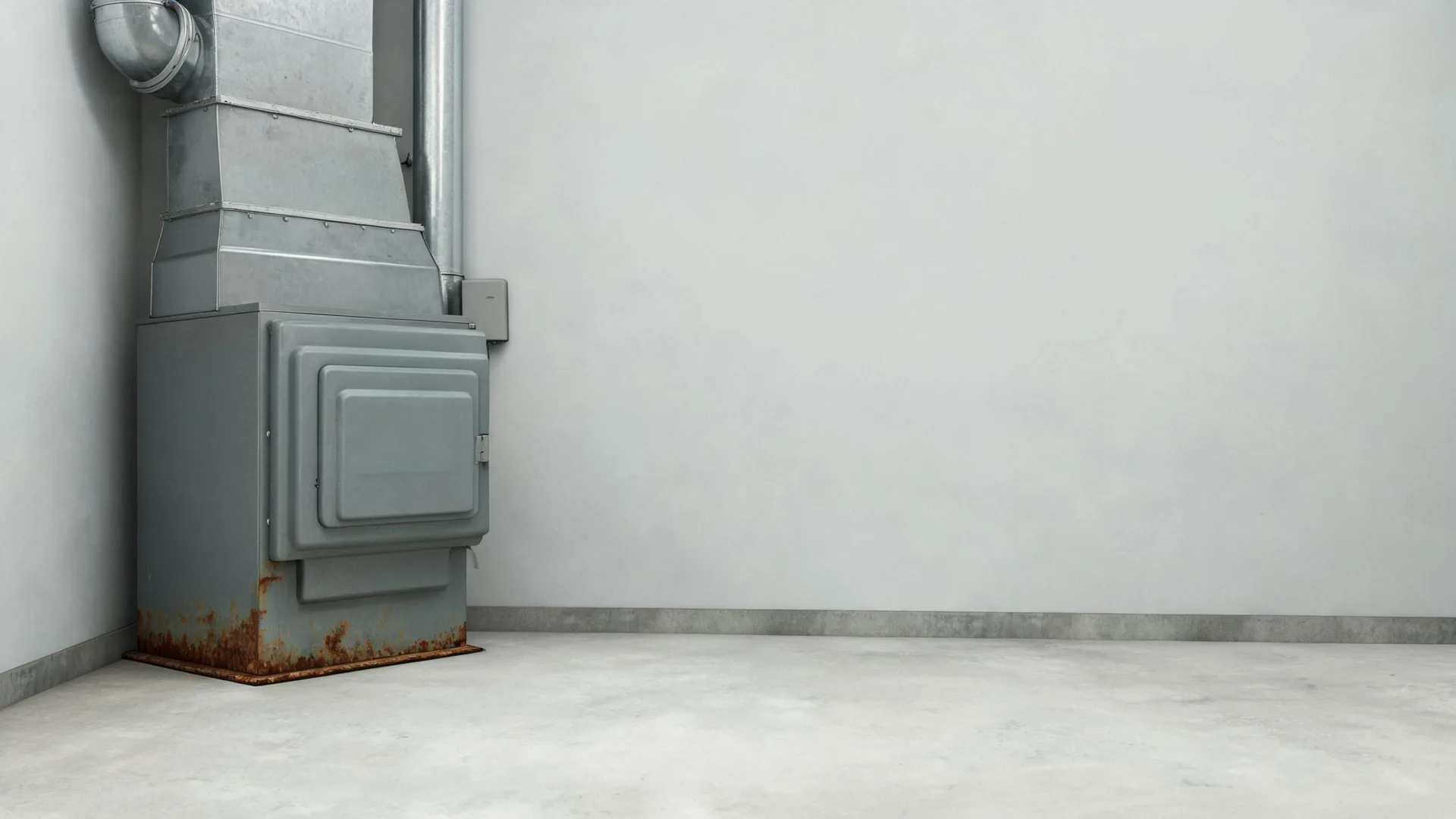
A gray high-efficiency gas furnace installed in an unfinished basement, surrounded by gas lines, a condensate drain, and sheet-metal ductwork.

A newer furnace still has years to give

A furnace that came with a house built in 1996 or later has fewer years on it, and that's what a repair call should weigh on. Watch the unit run across the day and the age stops being a guess. If a part fails, that's one part, not a sign the whole system is near the end. Replacing a furnace that still has years left over a failed igniter or a bad flame sensor is money spent for no reason.

Most failures are one part, not the system

A furnace fails when a single part wears out: the igniter cracks, the flame sensor coats over with residue, the flame sensor can't prove there's a flame and the system shuts itself down. The draft inducer motor can seize. A pressure switch can stick. None of that means the furnace is done. It means that one part needs to come out and a new one needs to go in.

Airflow problems cause damage that looks electrical

A clogged filter or a blocked vent starves the furnace of airflow, and the heat exchanger runs hotter than it should. That can trip a limit switch or crack the exchanger itself over time. The symptom shows up as the furnace cutting off mid-cycle, which looks like a control board or sensor problem, but the real cause is sitting in the filter slot or the return duct.

A furnace that shuts itself off is doing what it's supposed to do. A cracked heat exchanger, a stuck pressure switch, a flame sensor that can't read the flame right, any of those will make the control board cut the burners rather than let the furnace keep firing. Forcing it back on by resetting it over and over doesn't fix what tripped it, and it asks a strained part to keep working past the point it was built for. A draft inducer motor that's starting to seize will draw harder each time it's made to start, until it stops starting at all. A small crack in a heat exchanger spreads with every heat cycle it's put through. The parts that protect a furnace from itself only work if the furnace is allowed to shut down when they tell it to.

Seven months of heating a year is a light load, and that's already been said. What it means for a repair call is simple: when a part fails here, it's usually just that part wearing out on its own schedule, not a system that's been run hard. A cracked igniter or a flame sensor gone bad isn't a sign of a furnace in trouble. It's one part reaching the end of its life in a machine that hasn't had to work for its keep. Replace the part and the furnace underneath it is still in decent shape. That's the case for fixing it rather than second-guessing the whole unit.