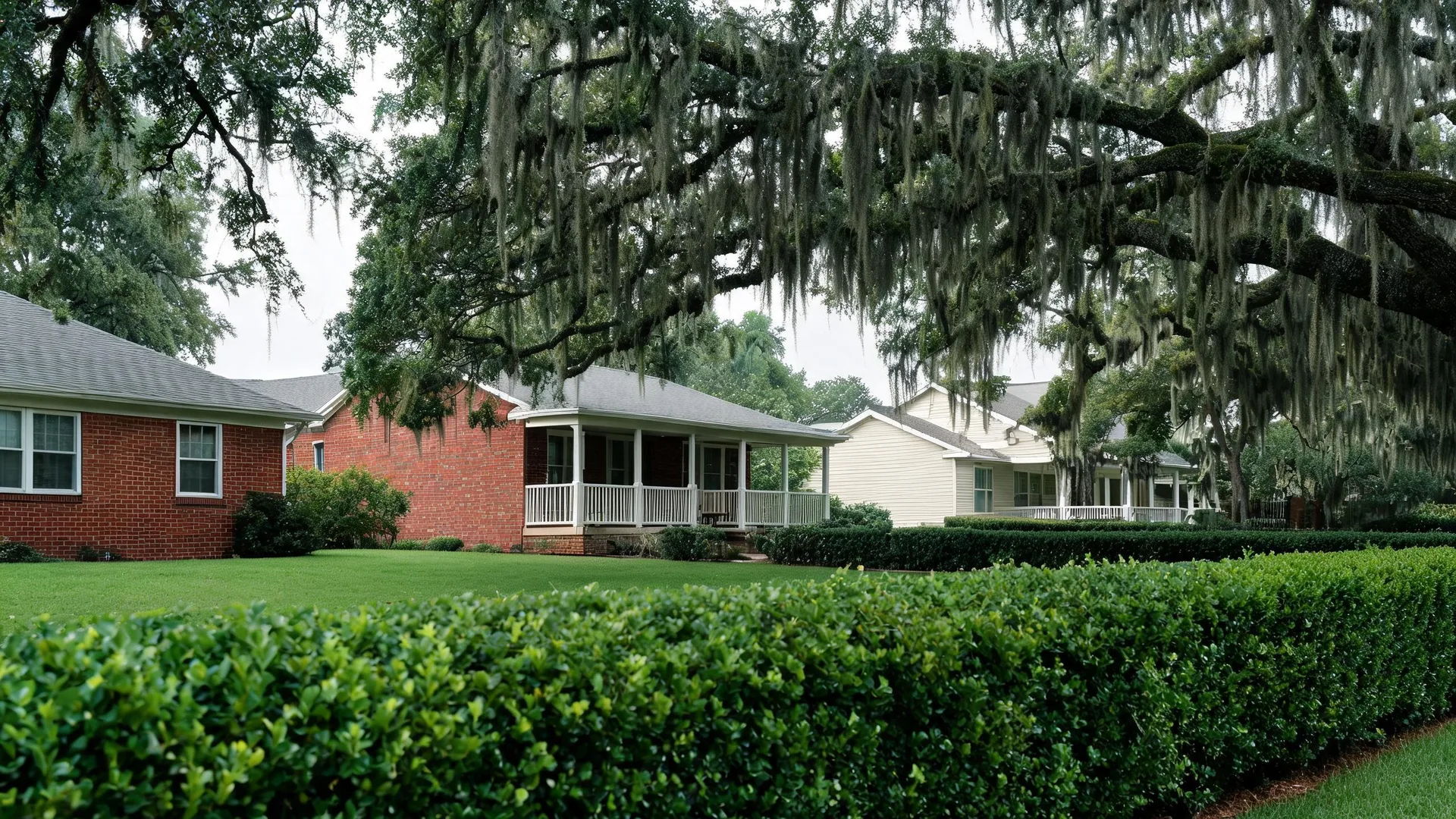
A row of single-story houses, one of red brick and others with light siding and a covered porch, behind a mown lawn and a trimmed hedge, under large moss-draped tree branches and an overcast sky.

Furnace Repair in Fort Oglethorpe, GA

Tell us about the job

Takes about a minute. No obligation.

RepairFurnace or heatingCatoosa County, GA
Step 1 of 2

What ZIP code is the job in?

The tech checks the system in order

A diagnostic visit starts with the thermostat call, then moves to the control board, the igniter or pilot, the gas valve, and the blower. Each piece either passes or points to the next step. The tech is listening for the sequence: does the inducer motor start, does the igniter glow or spark, does the burner light, does the blower kick on afterward. Wherever that chain breaks is where the problem lives.


What it means for the repair

Finding the broken step tells the tech what the fix actually is, not just what part failed. A furnace that tries to ignite and shuts off might have a dirty flame sensor or a cracked igniter. One that never starts at all might be a thermostat wiring issue or a failed control board. The diagnosis decides whether the job is a quick part swap or something bigger worth weighing against the furnace's age.

7 months
October through April, your furnace is on duty
33°F
the average winter night it heats against
4 winter storms
in ten years, the nights a failure hurts most
Isometric line illustration of a cutaway single-story house showing interior rooms with furniture, ceiling ductwork, a chimney flue, and a furnace unit outside the exterior wall.
Your furnace works hardest from November through March.

NOAA nClimDiv, 1991–2020 normals

A furnace that short cycles, strains the heat exchanger a little more each time it fires.

Letting it run through the winter instead of calling now turns a part swap into a bigger repair.

Seven months of heat a year is a light workload

Heat runs October through April
Winter nights average 33°F
Climate zone 3A

Heat comes on in October here, and that first month is when a weak part usually gives out. A furnace sits idle all summer, then gets asked to run for seven months straight starting then. If the igniter or the control board was already marginal last spring, the jump in load is what finishes it off. That's why furnaces that seemed fine in April start acting up as soon as the weather turns in the fall. Getting it looked at early in the season, rather than waiting through a cold snap, catches the weak part before it strands you without heat.

A newer home usually means a furnace worth fixing, not replacing

Half the homes in Catoosa County were built in 1993 or later. If yours is one of them, the furnace likely isn't old enough to be the real problem. Most issues at this stage are a single worn part, not a system on its way out. Fixing it now is the straightforward call.

Find a contractor
A man in a gray T-shirt and tan work pants, seen from behind, carries a worn canvas tool bag up concrete steps toward a blue front door of a house with gray siding and a potted shrub.
A gas furnace with attached ductwork, gas piping, and condensate lines installed in a concrete-block basement.

Seven months of work a year keeps the wear down

Seven months of heat a year, then the furnace sits idle the rest of the time. That idle stretch is what keeps wear down. A part that's going bad tends to show it early in the season, once the furnace is finally asked to run, rather than failing from years of steady strain. So when a furnace here starts acting up, the more likely story is one worn part giving out, not a system that's worn out all over. A tech can confirm which one it is before anybody talks about replacing the whole thing.

What's safe to check yourself

Check the thermostat first. Make sure it's set to heat and the set temperature is actually above room temperature. Check the furnace switch, it looks like a light switch on or near the unit, and make sure nobody bumped it off. Check the breaker for the furnace in the electrical panel. Check the air filter, a filter clogged with dust can choke airflow badly enough that the furnace shuts itself down. If the furnace has a standing pilot, look for the flame through the little window. If it's gone out, some have a relight instructions sticker right there.

Where to stop and call someone

Smell gas, see soot around the furnace, or hear a hard bang when it fires, shut it off and call. Don't try to relight a pilot more than once if it won't hold. If the furnace starts, runs a minute or two, then shuts off on its own, that's the control board protecting itself from something downstream, and resetting the breaker over and over just repeats the same failure. Flipping the switch back on and walking away is how a small problem gets the chance to turn into a bigger one.

Most furnace problems announce themselves before the furnace actually quits. Short cycling is the one to pay attention to: it fires, runs for a minute or two, and shuts off, then does it again a few minutes later. That's usually the control board cutting power because something downstream isn't right, often a flame sensor too dirty to prove the burner's lit. A furnace that takes several tries to light, or makes a soft thump when it does, is telling you the igniter is weak or the gas valve is slow to open. Cold air out of the vents while the blower keeps running after the burner shuts off points to a different problem, usually the limit switch. Any of these can still be a single part. Waiting through a few more cycles just gives that part more chances to take something else down with it.

Most furnace repairs come down to one part, not the whole unit. The heat exchanger is the one piece that usually decides the question, since it's the expensive part to replace and the one that can make replacement the safer call if it's cracked. Everything else, the igniter, the control board, the blower motor, the gas valve, gets swapped out on its own all the time without anyone talking about a new furnace. A tech can tell you which kind of problem you've got by testing the part that's failing rather than guessing at the whole system. If the exchanger is sound, fixing the part in front of you is usually the right move. Age matters less than what's actually broken.