Storms come through often
Bartow County logged 117 severe weather events between 2015 and 2024, including 90 damaging wind events, 12 hail events and 5 tornadoes. That's a lot of chances for an outdoor unit to take a hit.
Takes about a minute. No obligation.
Bartow County logged 117 severe weather events between 2015 and 2024, including 90 damaging wind events, 12 hail events and 5 tornadoes. That's a lot of chances for an outdoor unit to take a hit.
Nearly a third of Georgia households were without power for a day or more in 2024. A furnace that depends on electricity to run, even a gas one, stops working the moment the power does.

NOAA nClimDiv, 1991–2020 normals
Half the homes in Bartow County were built in 1994 or later.
A furnace that age still has real years left in it, which makes repair worth doing.




If your furnace came with a newer build, start with a repair call before you price out a replacement. A cracked igniter or a bad flame sensor doesn't mean the furnace is done, it means one part failed. Repair also gets heat back into the house faster than an install does, and that matters here when a storm has already knocked the power out once. Ask the tech what actually failed before you decide the whole unit needs to go.
If your furnace took a hit from wind or hail, or sat through an outage, get it checked even if it's still running. A part that's been stressed once is more likely to fail the next time the power drops.
Find a contractor
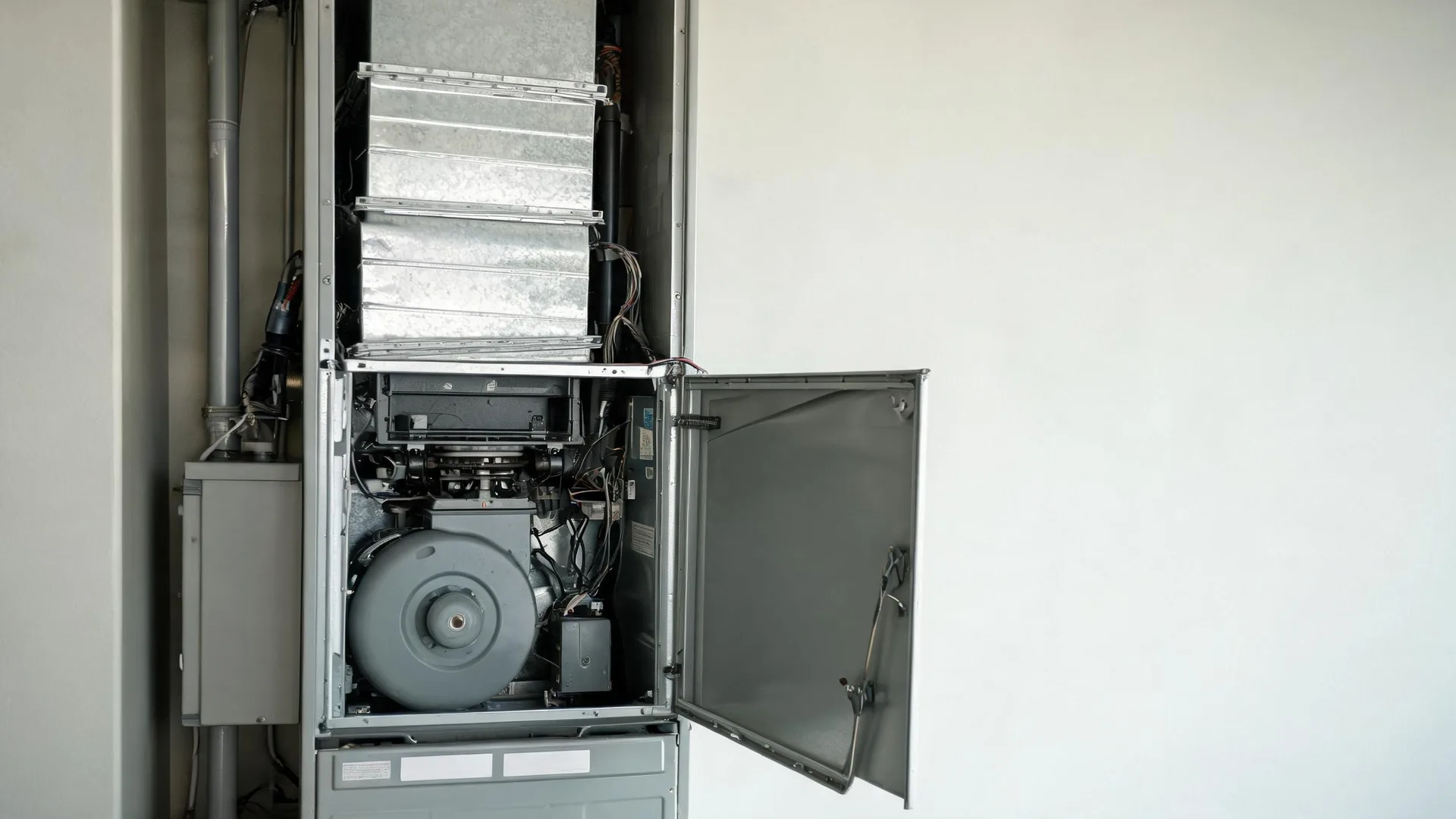
A furnace doesn't wear out the way a car engine does. There's no odometer counting down a lifespan. What actually fails is almost always one part: an igniter that cracks, a flame sensor that gets coated and stops reading, a control board that takes a power surge badly. The rest of the unit, the heat exchanger, the cabinet, the ductwork, can easily outlast several of those smaller parts. That's why the right question after a breakdown isn't how old is this furnace, it's what part gave out, and is that part replaceable on its own. Most of the time it is. Replacement starts making sense when the heat exchanger itself is cracked, since that's the part that isn't swapped out on its own, or when the same system keeps failing again a few months after a repair. One failure is a part problem. A pattern of failures is a different conversation.
A furnace that's short-cycling, making a bad smell, or tripping its limit switch is telling you to shut it down, not push through. Keep running it and a cracked heat exchanger can crack further, a failing blower motor can burn out completely, and a clogged flue can back up exhaust instead of venting it outside. One bad part often costs a repair. A cascade of parts it took down with it can cost a lot more.
A furnace that smells like rotten eggs, trips its breaker repeatedly, or sets off a carbon monoxide alarm needs to come off right away, not get a cautious once-over. Those are signs of a gas leak, an electrical fault, or incomplete combustion putting carbon monoxide into the house. Running it another day to see if it clears up on its own is how a one-part fix turns into a safety call.
Start with the thermostat. Check that it's set to heat and the temperature is actually above room temperature, and if it runs on batteries, swap them before you assume anything else is wrong. Next, look at the air filter. A filter clogged with dust chokes off airflow, and a furnace that can't pull air through will often shut itself down to protect itself. Check the return and supply vents around the house and make sure none are closed or blocked by furniture. If the furnace has a standing pilot, see whether the flame is lit, and if it's an electronic ignition system, listen for whether it's trying to start at all or just sitting dead. Check the breaker panel too. A tripped breaker will stop a furnace cold even though nothing looks wrong at the unit itself. None of this fixes a cracked heat exchanger or a failed control board, but it rules out the simple stuff before a tech ever walks in.
A diagnostic visit starts before any panel comes off. The tech asks what the furnace was doing right before it quit, whether it made a sound, a smell, or tripped anything, because that points to a handful of causes instead of all of them. Then comes a check of the basics: power to the unit, the thermostat call, the flame or ignition sequence, and airflow through the filter and ducts. From there it gets specific. A multimeter checks whether the igniter is getting voltage or the flame sensor is reading a flame. A gauge checks gas pressure. The blower gets pulled if airflow seems off, since a weak or dirty blower wheel can mimic half a dozen other problems. The point of all this is to find the one part that failed, not to start swapping parts and see what sticks.