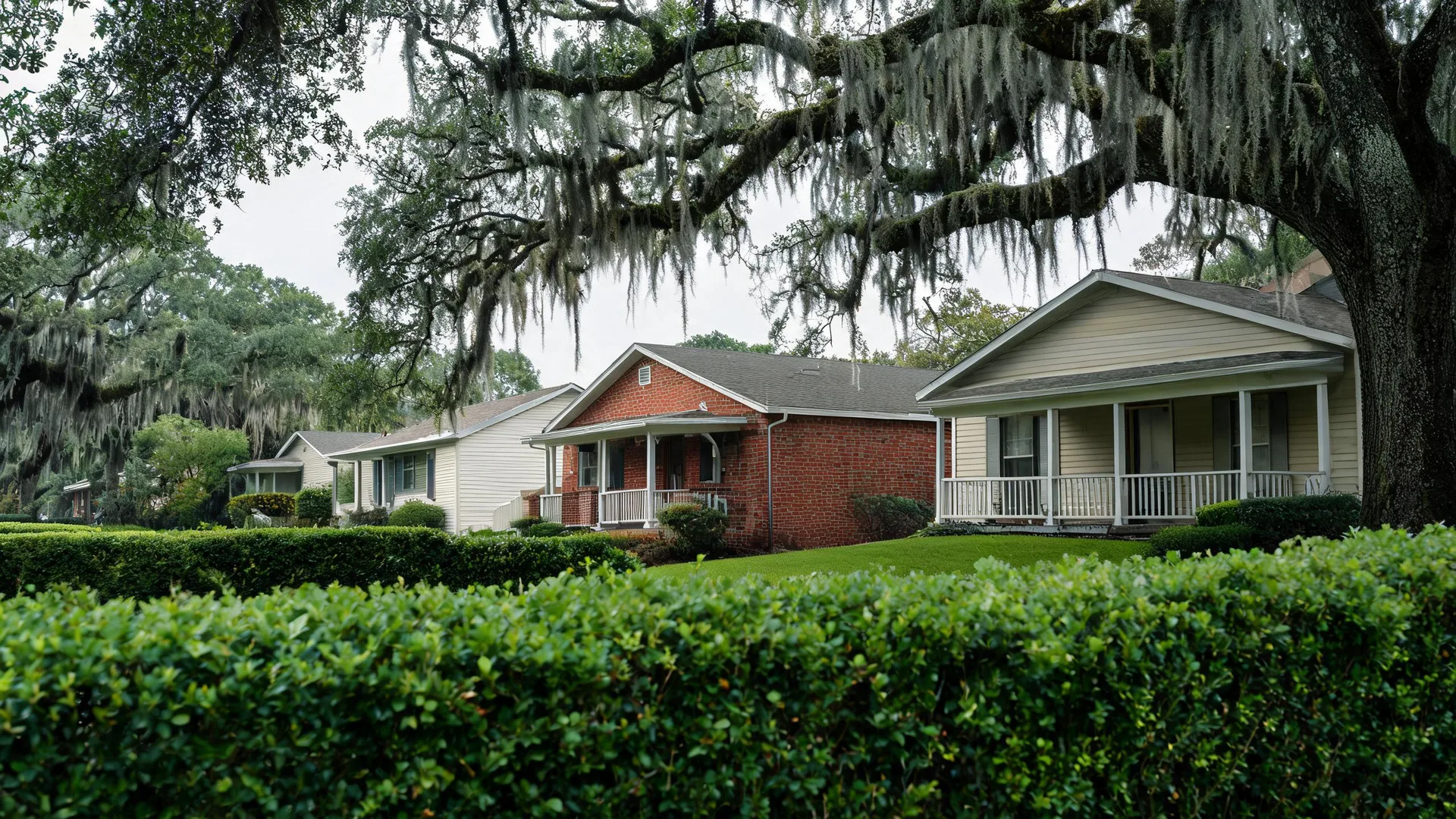
A row of single-story houses, one brick and others with light siding and covered porches, set behind a trimmed green hedge and lawn, under large oak branches draped with Spanish moss.

Furnace Repair in Albany, GA

Tell us about the job

Takes about a minute. No obligation.

RepairFurnace or heatingDougherty County, GA
Step 1 of 2

What ZIP code is the job in?

Dougherty County gets hit often

Dougherty County recorded 125 severe weather events between 2015 and 2024, including 105 cases of damaging wind, 11 hail events, 2 tornadoes, and 5 tropical storms or hurricanes. That is a lot of chances for an outdoor unit to take a direct hit.


Power doesn't always hold either

Almost a third of Georgia households, 31%, went at least a full day without power in 2024. A furnace with electric components needs that power back to run, and a long outage can leave a house with no heat until it does.

5 months
November through March, your furnace is on duty
40°F
the average winter night it heats against
Isometric line illustration of a cutaway single-story house showing interior rooms with furniture, ceiling ductwork, a chimney flue, and a furnace unit outside the exterior wall.
Your furnace works hardest from December through February.

NOAA nClimDiv, 1991–2020 normals

A cracked heat exchanger gets worse every hour the furnace keeps firing.

Shut it down and get it looked at instead of waiting out the season.

Five months of work a year is not much to ask of a furnace

Heat runs November through March
Winter nights average 40°F
Climate zone 2A
November is when weak furnaces failHomes here start heat in November, and five months of running is all the season asks.

Five months of running a year leaves a furnace with little wear to overcome. If this one is heating poorly or short cycling, the cause is more likely a dirty flame sensor, a clogged filter, or a part worn out from age than a system worked past its limits. That makes most repairs straightforward and worth doing rather than a sign the unit is done. The bigger risk here is a furnace that sits unused for months and gets ignored, not one that gets run hard. A furnace with a storm-related or power-related fault is usually still a good one to fix.

If the last storm reached your furnace, get it looked at now

A furnace with hail-dinged ductwork outside or a motor that took a power surge won't always show it right away. If your system has been through a storm or a long outage this year, have it checked before the next cold snap, even if it's still running.

Find a contractor
A gas furnace with attached ductwork, gas piping, and condensate lines installed in a concrete-block basement.

What a struggling furnace sounds and looks like

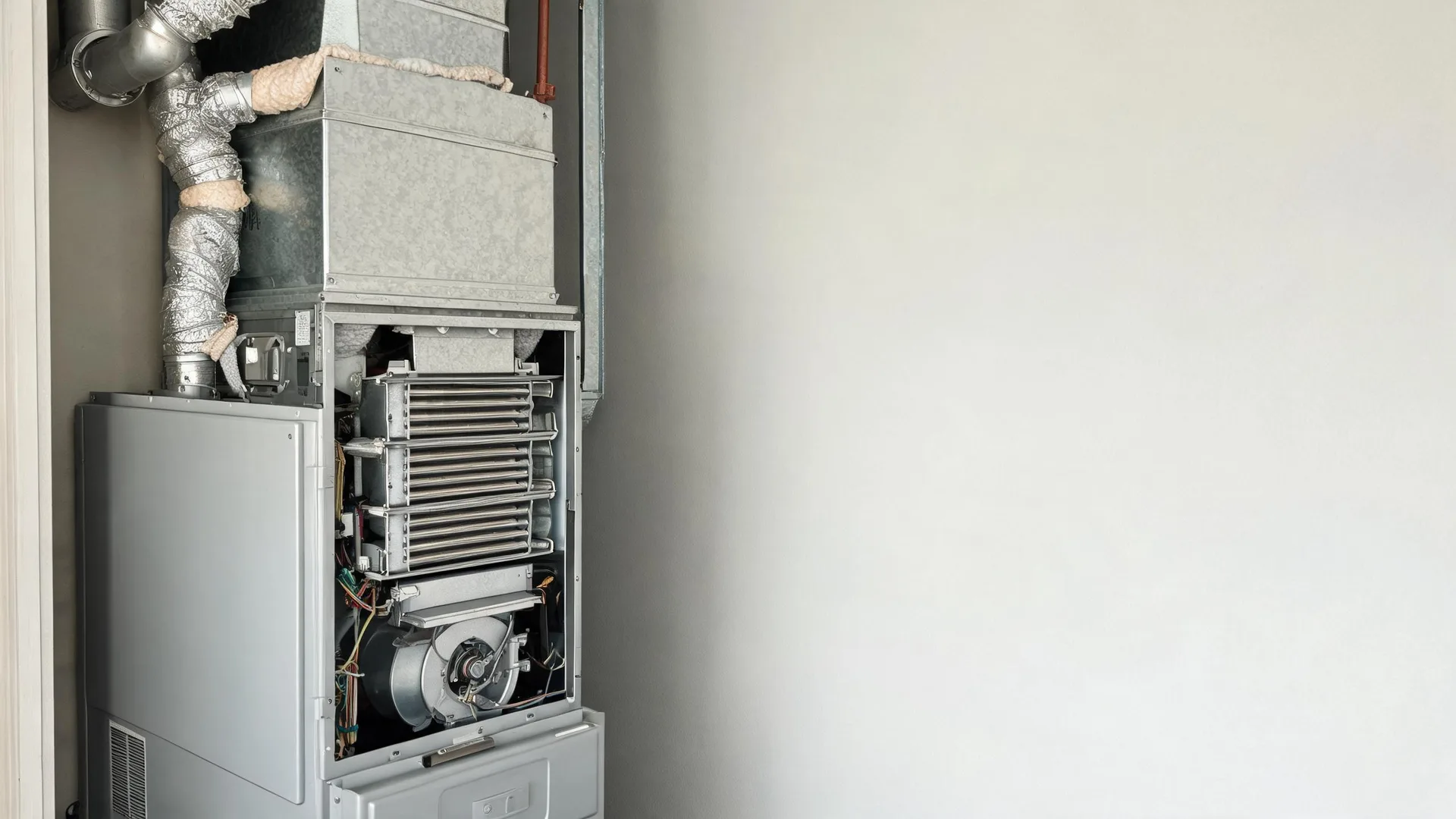
Notice the problem before the furnace quits outright. A burner that won't catch on the first try, a flame that looks yellow instead of steady blue, or a blower that kicks on and off every few minutes are all signs something's wearing out, not just dirty. Short cycling strains the ignition system every time it restarts. A furnace that runs long stretches without warming the house evenly is often pushing air past a clogged filter or failing blower. Rattling, a burning smell that doesn't clear after the first few minutes, or a pilot and burner flame that keeps going out are reasons to shut it down and have someone look rather than wait for it to stop working completely.

Most failures start small

A furnace rarely quits without warning. The igniter weakens and takes longer to catch. The flame sensor coats with residue and starts telling the control board the flame isn't there when it is. A blower motor's bearings wear until it runs noisy or seizes. Each of these fails on its own schedule, not because the whole system is worn out.

Airflow problems cause the rest

A clogged filter is behind more service calls than any single part failure. Restricted air makes the heat exchanger run hotter than it should, which shortens its life and can crack the metal over time. It also makes the blower work harder, which wears the motor faster and can trip the limit switch that shuts the burner off as a safety measure. Keeping air moving freely through the system protects nearly everything downstream of it.

A few things are worth checking before a service call. Look at the air filter first and replace it if it's gray or caked with dust, since restricted airflow causes more problems than it looks like it would. Check that the thermostat is set to heat and the temperature is actually above room temperature, not just display lit. Go to the furnace itself and see that the power switch, the one that looks like a light switch on or near the unit, is flipped on, and that the furnace door is seated shut all the way, since most furnaces won't run with the panel loose or off. If it's gas, check whether the gas valve is open and whether other gas appliances in the house are working. Check the breaker box for a tripped breaker before assuming the control board has failed. None of this fixes a cracked heat exchanger or a dying blower motor, but it rules out the simple causes first.

A diagnostic visit starts before any panel comes off. The tech asks what the furnace was doing, when it started, and whether anything changed right before, a storm, a breaker trip, a thermostat swap. Then the furnace comes apart enough to see the burners, the igniter, and the flame sensor, and the tech watches it run through a full cycle rather than guessing from a cold unit. A meter checks the voltage at the control board and the amp draw on the blower motor, since a motor can sound fine and still be pulling more current than it should. Gas pressure gets checked at the valve if the furnace burns gas, because a flame that looks weak is sometimes a pressure problem rather than a dirty sensor. The heat exchanger gets inspected for cracks or rust-through, since that's a safety issue and not just a performance one. By the end, the tech should be able to point to the one part causing the problem rather than replacing parts to see what helps.