Low-angle view across a lawn and pine-needle mulch toward a single-story brick house with a dark hipped roof and covered porch, framed by pines and a moss-draped oak branch.

Furnace Installation in Stonecrest, GA

Tell us about the job

Takes about a minute. No obligation.

New system or replacementFurnace or heatingDeKalb County, GA
Step 1 of 2

What ZIP code is the job in?

Weather here is hard on equipment

DeKalb County logged 165 severe weather events between 2015 and 2024, including damaging wind, hail and tornadoes. A furnace install is a chance to think about more than the unit itself, like where lines run and what's exposed outside.

Power doesn't always come back fast

Close to a third of Georgia households went at least 24 hours without power in 2024. A furnace needs electricity to run its blower and controls even if the fuel is gas, so an outage means no heat regardless of what's installed. Worth asking your contractor about backup options when you're already planning the system.

6 months
November through April, your furnace is on duty
35°F
the average winter night it heats against
58%
of homes here heat with gas, so most furnaces here burn gas
80% AFUE
the federal minimum any new unit must meet
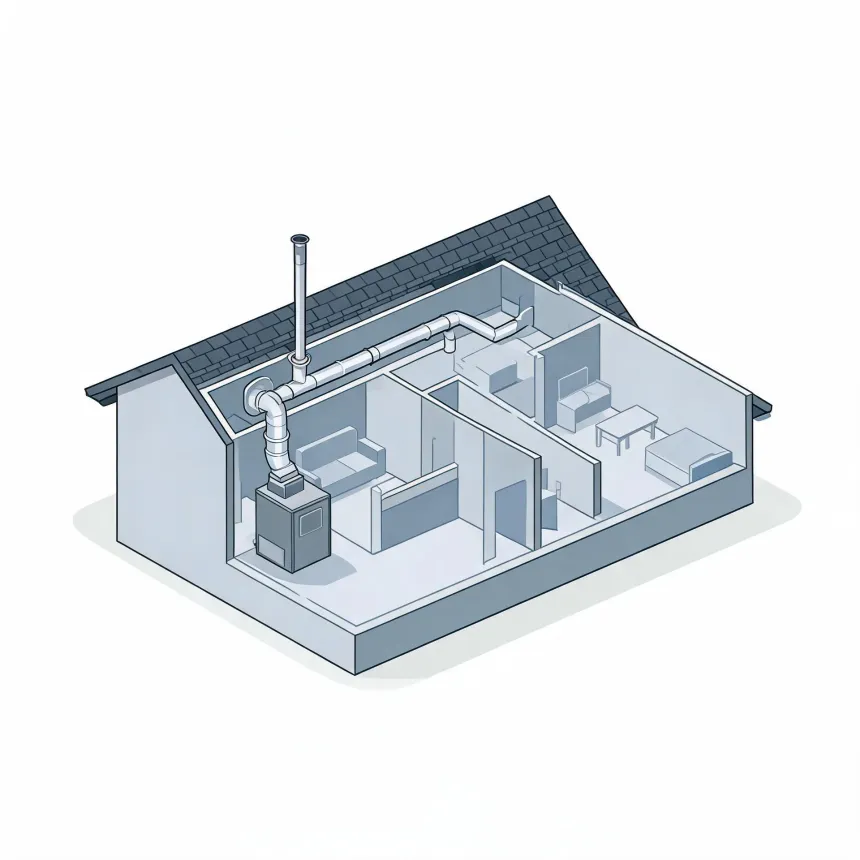
Isometric cutaway illustration of a single-story house showing interior rooms with furniture and a furnace connected to ductwork and a vertical flue pipe extending through the roof.
Your furnace works hardest from November through March.

NOAA nClimDiv, 1991–2020 normals

Natural gas in Georgia ran $17.66 per million Btu in 2024, cheaper than in most states.

A high-efficiency furnace costs more upfront and takes longer to pay back here, so picking one for reliability and fit makes more sense than chasing the highest efficiency rating.

Gas heats most of DeKalb County, and that's what a new furnace here should match

58.4% of homes heat with gas
Heat runs November through April
Winter nights average 35°F
Your furnace won't work hard hereHeat runs six months a year, and winter lows average 35°F

Heat runs here from November through April, six months of the year. October is the month to replace a furnace that's on its way out, before the first cold night forces the issue. Waiting until a furnace fails means taking whatever install date is open and whatever unit is on hand. Doing it in October means picking the unit that fits and a date that works. It also gives a contractor time to walk through the full setup, not just swap the unit, before the weather turns.

Any furnace installed here has to clear 80 percent AFUE

Any gas furnace installed here now has to clear 80 percent AFUE. That rule stands until December 2028, when new units will need to hit 95 percent. Zone 3A's mild winters mean you're not forced toward the highest-efficiency model to stay warm, but a federal credit can still make one worth the extra cost. A contractor can walk through which units qualify.

Find a contractor
A man in a beanie, dark jacket and tan work pants climbs porch steps toward a blue front door, carrying a canvas tool bag, with a potted shrub in a blue planter beside him.
A gray residential gas furnace installed in an unfinished basement, surrounded by ductwork, a metal flue pipe, and a gas supply line.

Pick for fit, not for the spec sheet

Six months of heat, with lows around 35°F, is not a hard duty cycle. A mid-range furnace will see that kind of winter through for years without strain. Put the money you'd spend chasing a higher AFUE number into the install itself, the venting, the ductwork, whatever this house actually needs.

Ask what size they calculated, not what size the old one was

A furnace sized off the last unit just repeats whatever mistake was already there. A contractor should run a load calculation on the house itself, checking windows, insulation and layout, and show you the number. If they quote a size without asking those questions, they're guessing.

Ask what happens to the vent and the gas line

A new furnace sometimes needs a different vent size or a different flue material than the old one, especially if the new unit runs more efficient. The gas line has to be rated for the furnace's input. These get missed when a quote is just for the box, so ask whether the venting and gas supply were checked against the new unit, not assumed to carry over.

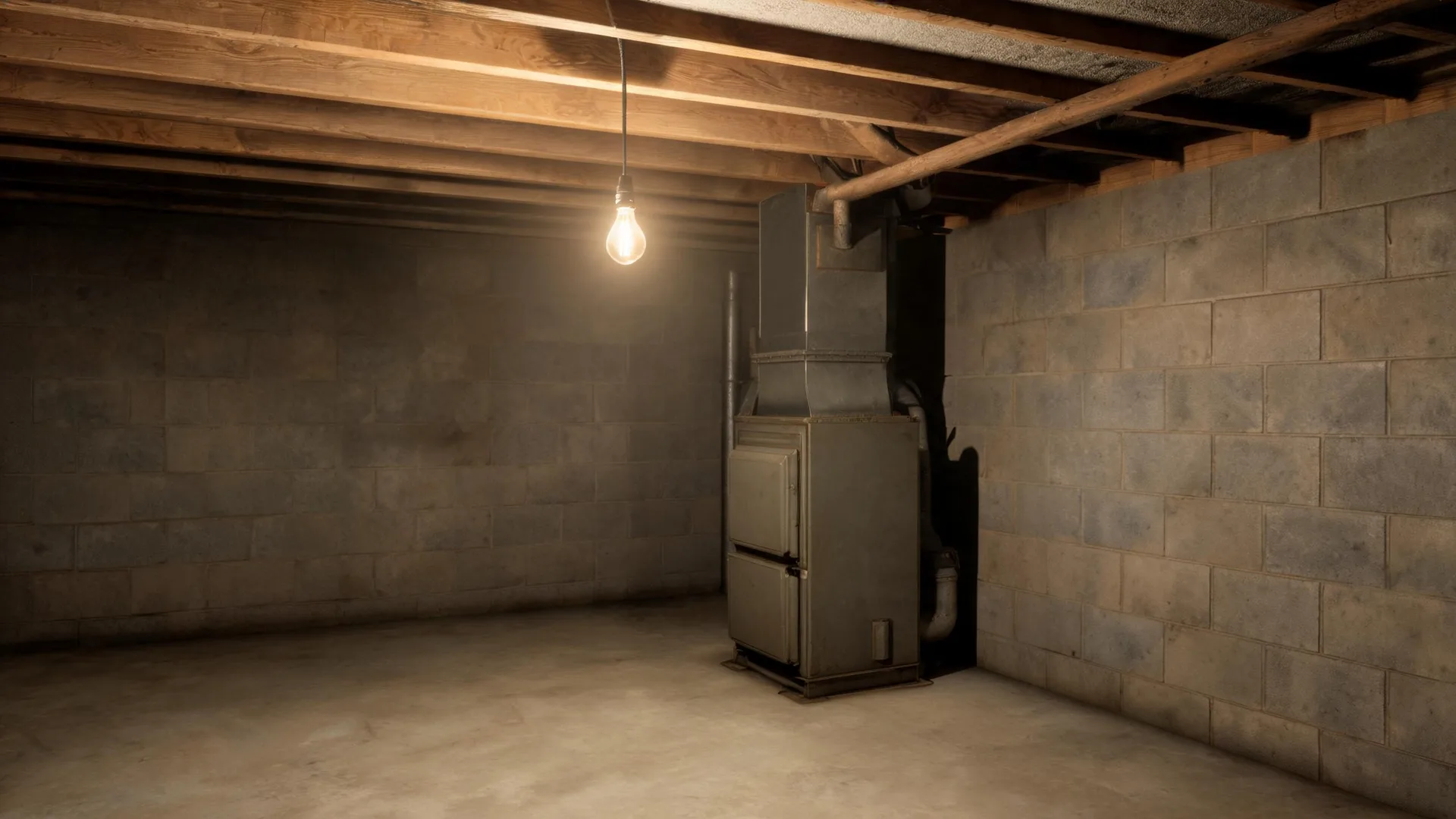
An unfinished basement containing a forced-air furnace with metal ductwork, exposed wooden ceiling joists, a hanging Edison bulb, and bare concrete floors.

A high-efficiency gas furnace would save about $100 a year to run in DeKalb County compared with a gas furnace.

  • A high-efficiency gas furnace$580 a year
  • A gas furnace$680 a year

Estimates for a typical DeKalb County home, from EIA household energy data, Georgia fuel prices and NOAA climate normals. Your home will differ.

Install day starts before anyone touches the old furnace. The contractor shuts off gas and power, then pulls the failing unit out, along with the old venting if it's being replaced too. Setting the new furnace in place, leveling it, and connecting the ductwork usually takes the bulk of the day. Gas and electrical hookups come next, then the vent pipe gets tied in and sealed. Before anyone leaves, the furnace gets fired up and run through a cycle, checking the flame, the airflow, and the temperature rise against what that model is supposed to put out. A combustion analyzer should come out at this point to check the exhaust, not just a glance at the flame through the window.