





An unfinished concrete basement containing a gas furnace with sheet-metal ductwork, utility shelving, and exposed overhead joists.

Furnace Installation in Savannah, GA

Tell us about the job

Takes about a minute. No obligation.

New system or replacementFurnace or heatingChatham County, GA
Step 1 of 2

What ZIP code is the job in?

Taking out the old furnace is part of the install, not a separate job. The crew disconnects the gas line, the vent pipe and the ductwork, then unhooks the electrical before anything gets carried out. If the furnace is in a closet or attic, getting it out can take as much care as setting the new one in place. The old vent pipe usually comes out too, since a new high-efficiency furnace vents differently and can't always share the same path out of the house. Whatever gets removed is hauled off, so the homeowner isn't left to deal with disposal.

5 months
November through March, your furnace is on duty
42°F
the average winter night it heats against
80% AFUE
the federal minimum any new unit must meet
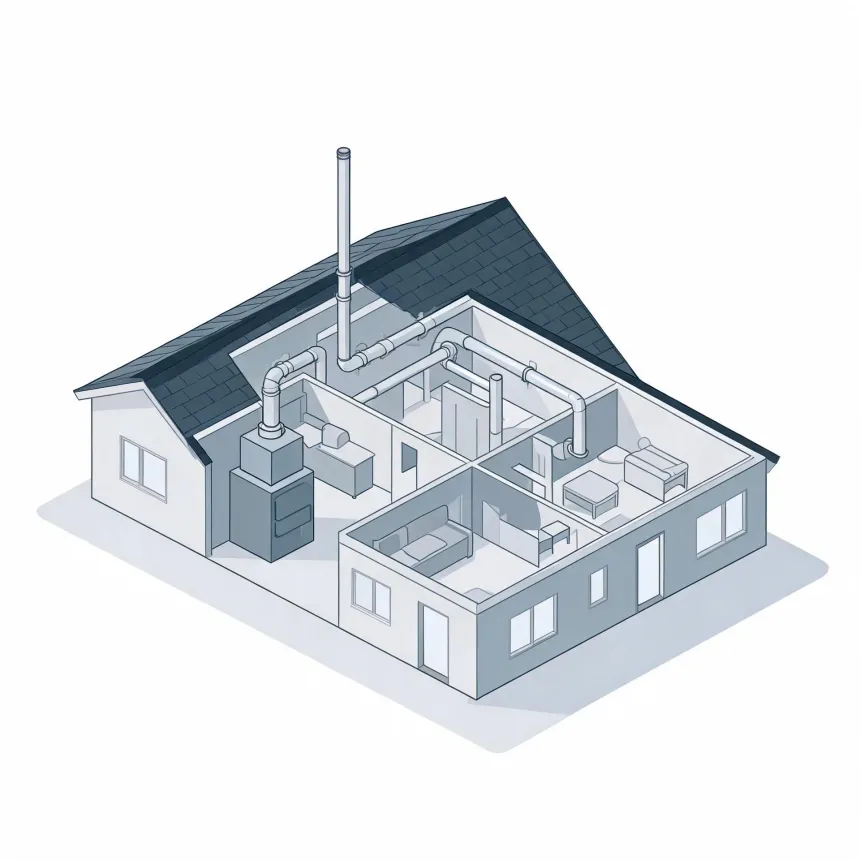
Isometric cutaway illustration of a single-story house showing interior rooms with furniture, a furnace unit connected to ductwork and a tall flue pipe extending through the roof.
Your furnace works hardest from December through February.

NOAA nClimDiv, 1991–2020 normals

Furnaces here run November through March and sit idle the rest of the year.

October is the month to put in the new one, before it has to work.

Most homes here run on electric heat, not gas

70.9% of homes heat with electricity
Heat runs November through March
Winter nights average 42°F
Your furnace won't work hard hereHeat runs November through March, and winter nights average 42°F.

Chatham County logged 343 severe weather events over the last ten years, and damaging wind caused 246 of them. That matters for where the outdoor unit ends up, since it has to sit outside through whatever comes. This county has also seen hail and tropical storms often enough that the pad and the spot against the house are worth getting right the first time. A furnace with electronic ignition needs power to start a cycle, so a storm that knocks out the lines knocks out the heat too, even with gas still running to the house. Worth asking what backup power the new system can run on, since outages here don't always clear in a few hours.

Pick the furnace that fits, not just the one that saves the most

Electricity in Georgia ran $41.27 per million Btu in 2024, cheap enough that a high-efficiency furnace takes longer to earn back the difference in cost. Put the money into a furnace that starts reliably and fits the space instead, since that's what carries you through the months it runs.

Find a contractor
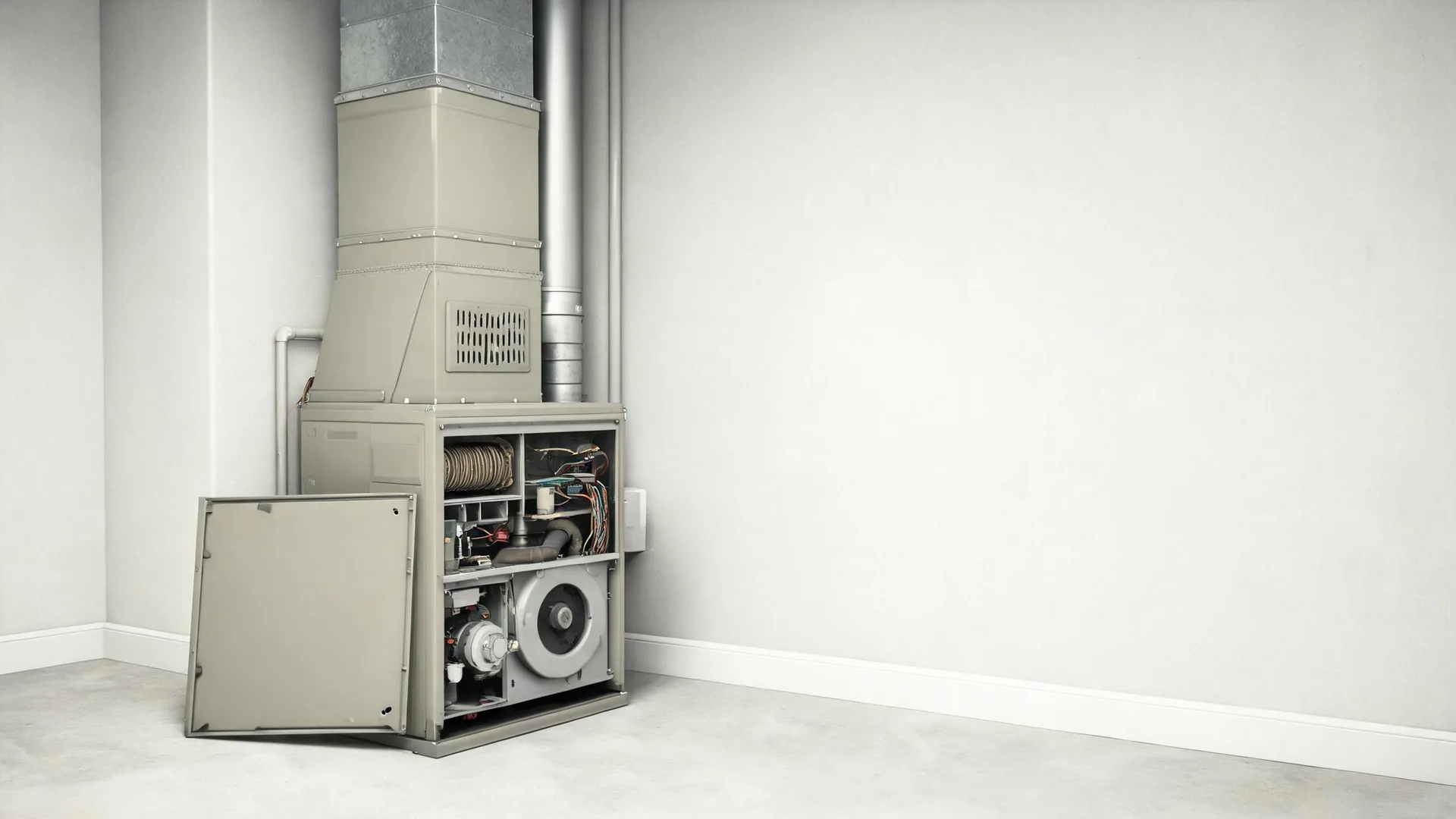
A gray high-efficiency gas furnace installed in an unfinished basement, surrounded by gas lines, a condensate drain, and sheet-metal ductwork.

The rating on the label is about every cycle, not just the cold ones

That AFUE number on the label tells you how much of the fuel burned actually turns into heat in the house, and how much goes out the flue. A furnace rated higher wastes less gas doing the same job. Where that number matters most is a furnace that runs for months without a break. One that wastes a little on every cycle wastes it on every cycle, all season. Where it matters less is a furnace that only has to carry the house through a handful of cold nights, since there are fewer cycles for the difference to add up over. A higher-rated furnace also runs differently. It vents through a plastic pipe instead of a metal one, and it drains condensate, so the installer needs a place for that water to go. That's a trade worth knowing about going in, not after.

Size comes from a room by room load calculation, not the old furnace

A contractor works out furnace size by going through the house. Square footage, window area, insulation, ceiling height, how many exterior walls each room has, it all factors in. The furnace that's coming out may have been wrong from the day it went in, so matching it isn't the goal. The calculation tells you how much heat the house actually loses on a cold night, and the new furnace gets sized to cover that.
Oversized runs worse than undersized

A furnace that's too big heats the house fast, shuts off, then starts again a few minutes later. That short cycling keeps the heat exchanger from ever reaching a steady temperature, and it wears the ignition system down faster than normal use would. It also means the blower never runs long enough to move air evenly through every room. A furnace sized to the load runs longer, steadier cycles, and that's what actually keeps a house comfortable corner to corner.

When you're comparing quotes, ask what stage each contractor sized the furnace at, not just what brand they're pushing. A quote built before anyone measured the house isn't sized yet, it's a guess with a price on it. Ask what happens to the vent pipe and whether the furnace needs a condensate drain, since that changes where it can go and what the install involves. Ask how the warranty splits between the furnace parts and the labor to replace them, because those often come from different places and run different lengths. And ask what the furnace needs to run at all, since a furnace with electronic ignition won't start a cycle without power, no matter how much gas is behind it.

Installation day starts with the load calculation already done and the equipment already on site, so the work that day is physical, not diagnostic. The old furnace comes out first, then the ductwork gets checked at the connection point, since the new furnace may have a different sized opening than the old one. The gas line gets connected and pressure tested before anything is fired up. Electrical and low voltage wiring get run to the thermostat, and if the new furnace vents through plastic pipe, that run gets cut and glued new, not reused. Once it's hooked up, the furnace gets fired and run through a full cycle so the technician can check the flame, the airflow and the temperature rise against what the furnace is rated for. That test run is what tells you the install was done right, not just that the furnace turns on.