




A gas furnace with sheet-metal ductwork and PVC pipes installed in an unfinished basement.

Furnace Installation in Gainesville, GA

Tell us about the job

Takes about a minute. No obligation.

New system or replacementFurnace or heatingHall County, GA
Step 1 of 2

What ZIP code is the job in?

Hall County saw 106 severe weather events between 2015 and 2024. Most of that was wind, 78 events, with 3 tornadoes, 6 tropical storms or hurricanes, and 8 winter storms mixed in. Statewide, close to a third of Georgia households lost power for a day or more in 2024. A new furnace installation is a chance to plan around that instead of finding out the hard way. Where the system sits and how it's protected matters when wind and ice are a regular part of the year here, not a rare event.

7 months
October through April, your furnace is on duty
34°F
the average winter night it heats against
80% AFUE
the federal minimum any new unit must meet
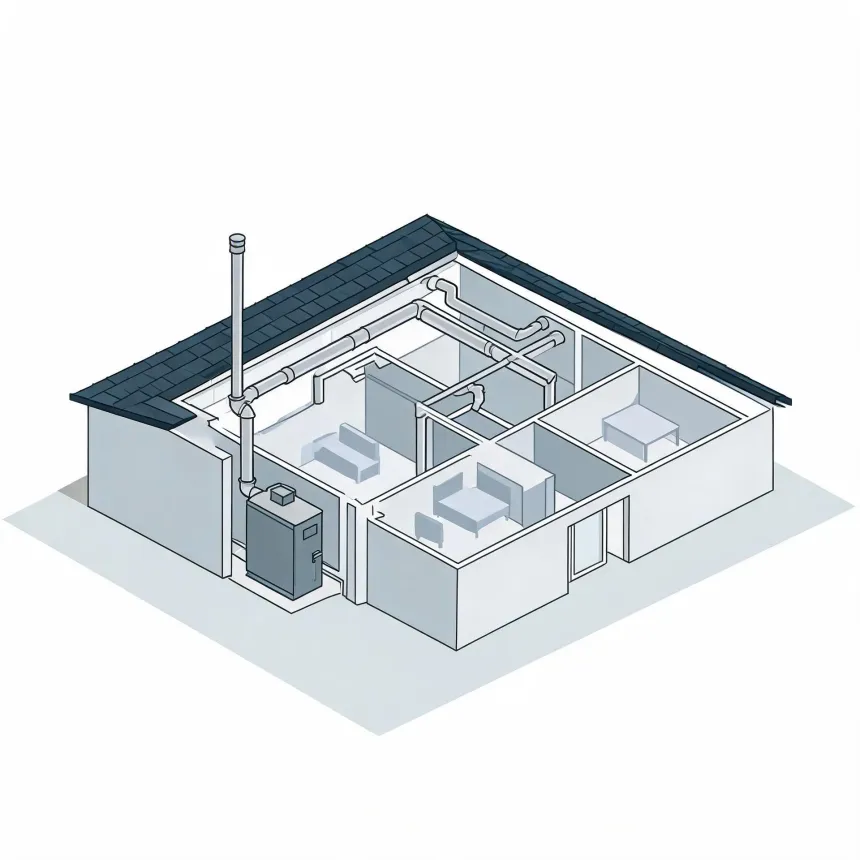
Isometric line illustration of a cutaway single-story house showing interior rooms with furniture, ceiling ductwork, and an exterior furnace unit with a tall flue pipe.
Your furnace works hardest from November through March.

NOAA nClimDiv, 1991–2020 normals

Furnaces here start running in October.

Get the new one in before September runs out.

Seven months of work a year, not twelve

Heat runs October through April
Winter nights average 34°F
Climate zone 3A

Any furnace installed here has to clear a federal efficiency floor, not just pass a local inspection. Units built from November 19, 2015 on must turn at least 80 percent of the gas they burn into heat over the winter. That's the number to look for on the unit you're buying, not just the one the installer quotes you. The floor is set to climb to 95 percent, but only for furnaces manufactured on or after December 18, 2028, so anything bought before then still falls under the 80 percent rule. Hall County sits in climate zone 3A, a warm zone with a short, mild winter, and the furnace going into your house has to meet that standard regardless of how light the season runs.

Plan this installation with the outages in mind

Ask the installer where the new furnace and any outdoor equipment will sit and what shields them from wind and hail. Ask what happens to your heat if the power drops for a day, since that's a real possibility here and not a rare one.

Find a contractor
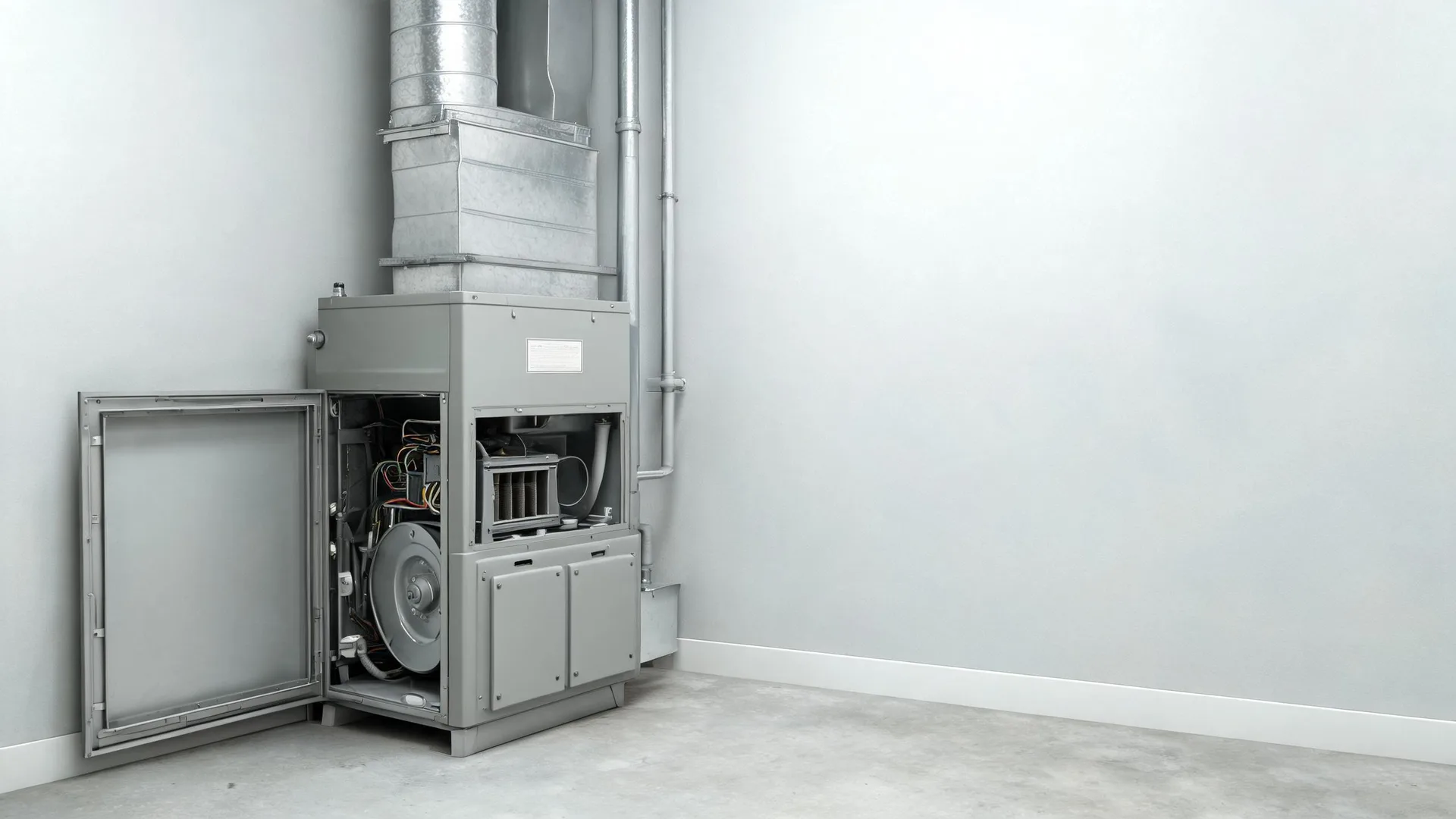
A gray gas furnace with attached ductwork and piping installed in an unfinished concrete basement.

A system sized for the work it'll actually do

Seven months of work a year is light duty for a furnace. The parts inside aren't fighting a long season, so a well-built standard model holds up fine here. You don't need to pay for the highest efficiency tier on the market to get a system that lasts. Put that money instead toward where it sits and how it's installed, since that's what decides whether it keeps running when a storm comes through.

The rating only measures burned gas, not comfort

The efficiency number on the label tells you how much of the gas the furnace burns turns into heat instead of going out the flue. It says nothing about how evenly that heat spreads through the house, how quiet the unit runs, or how long the blower lasts. A higher number on the sticker doesn't mean a better match for your house, just less gas wasted per cycle.
A higher rating adds parts that can fail

The jump to a higher efficiency tier usually means a second heat exchanger and a condensate system to drain the moisture that design pulls out of the exhaust. Those parts need a drain line kept clear and sloped right, and a trap that can freeze or clog. A standard-efficiency furnace skips that hardware, so there's less there to maintain and fewer ways for a small problem to stop the heat.

Ask what each system needs to start up again after it loses power, not just whether it runs well once it's going. A furnace needs electricity to fire the igniter, run the control board, and push air through the blower, even if the fuel itself is gas. Some control boards go through a longer startup check every time power is restored, so ask how the unit you're considering behaves after a cut, not just a normal morning. Ask too what backs it up: a transfer switch or standby generator can carry a furnace through an outage, but only if the furnace was wired with that in mind during installation. If the plan is to add a generator later, ask now whether the furnace being installed can be connected to one without rework.

Electricity heats about two in three homes in Hall County, gas most of the rest. That split matters when you're picking a replacement furnace, since the hookup already in your house usually decides what goes back in. A gas furnace needs a gas line run to it and a flue to vent exhaust out of the house. An electric furnace needs neither, just a breaker sized for the draw. If your house already heats with one of these, staying with it is the simpler job, with less work tied to the install itself. Switching fuels is possible, but it's a bigger project than swapping one furnace for another.