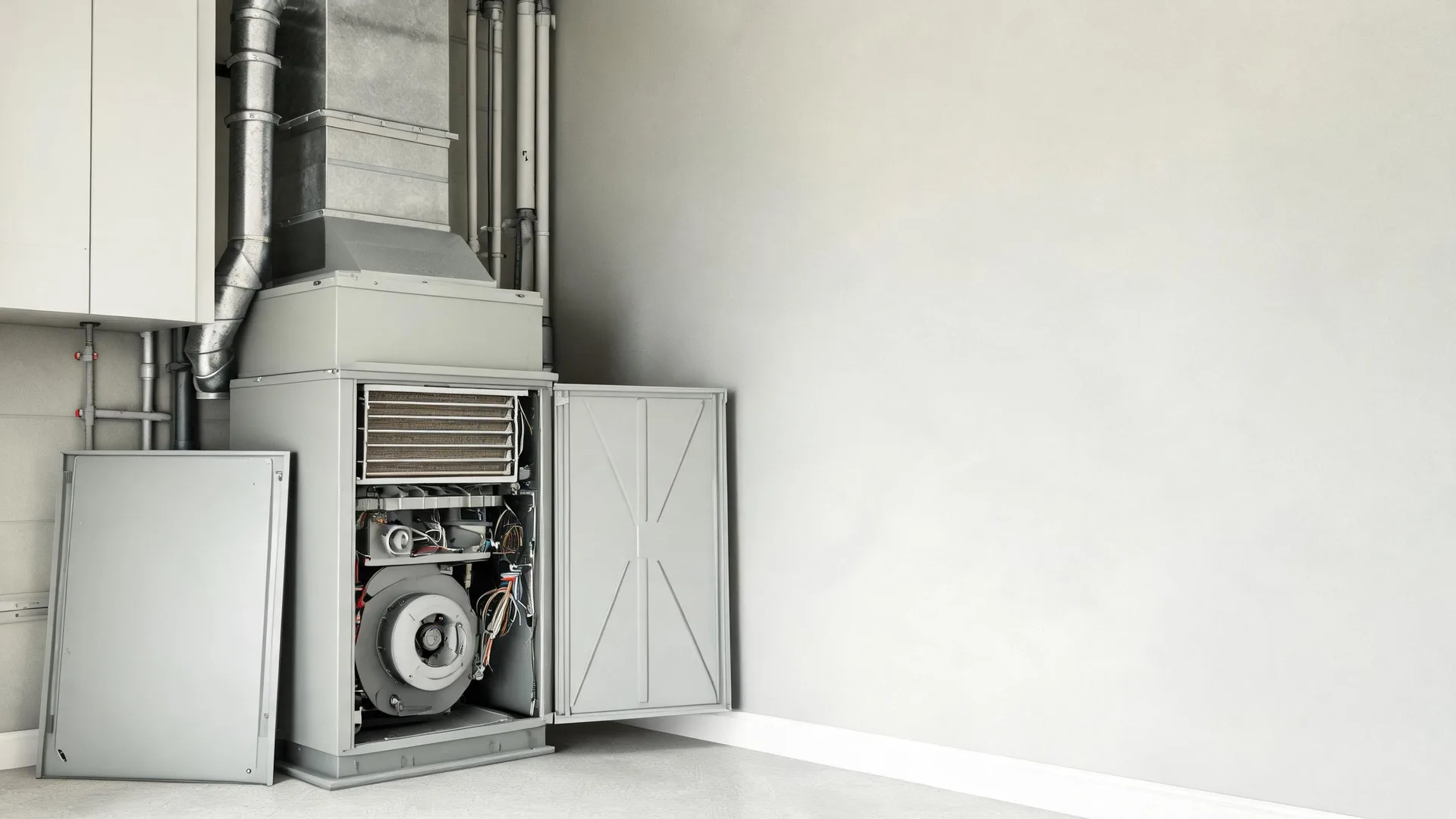
A bare concrete basement containing a gray gas furnace with metal ductwork and a vertical flue pipe, lit by a single hanging bulb.

Furnace Installation in Columbus, GA

Tell us about the job

Takes about a minute. No obligation.

New system or replacementFurnace or heatingMuscogee County, GA
Step 1 of 2

What ZIP code is the job in?

Storms come through Muscogee County often

Muscogee County recorded 74 severe weather events between 2015 and 2024. That includes 51 damaging wind events, 14 hail events, 4 tornadoes and 3 tropical storms or hurricanes. A furnace installed here shares the property with equipment that has to survive that.

Power doesn't always hold through a storm

Nearly a third of Georgia households, 31%, went at least 24 hours without power in 2024. Most homes in this county heat with electricity, so a long outage means no furnace until the power comes back. That's worth planning for before the install, not after.

5 months
November through March, your furnace is on duty
37°F
the average winter night it heats against
80% AFUE
the federal minimum any new unit must meet
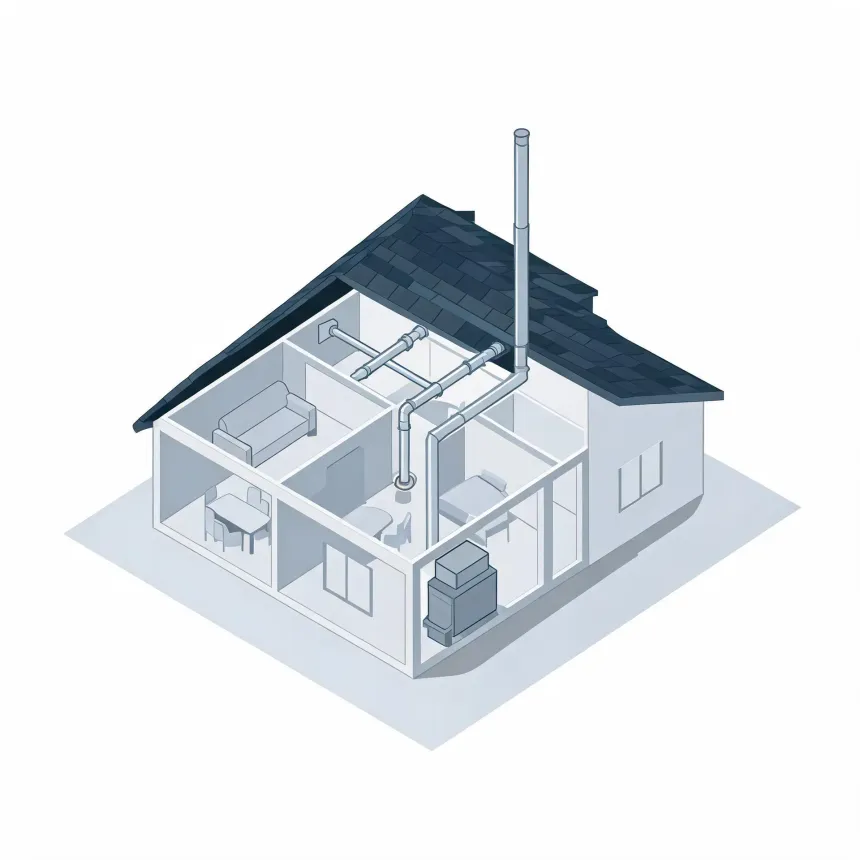
Isometric cutaway illustration of a single-story house showing interior rooms with furniture, ductwork and piping running to a tall vertical flue through the dark shingled roof, and a furnace-like appliance unit on the floor.
Your furnace works hardest from November through February.

NOAA nClimDiv, 1991–2020 normals

Furnaces in Muscogee County only run about five months a year, November through March.

A system that sits idle most of the year doesn't need to be the most powerful one on the lot.

Five months of use, so get it installed before November

Heat runs November through March
Climate zone 3A
Winter nights average 37°F

Electricity heats 56.5% of homes in Muscogee County, more than any other fuel. Utility gas comes in at 40.8%, and bottled or LP gas covers a small slice beyond that. If your house already runs on electric heat, a straight electric furnace replacement is the simplest path, since the wiring and setup are already there for it. Gas furnace installs are common here too, but they depend on a gas line already reaching the house. Worth checking which one yours has before you start comparing systems.

Plan for the outage before the furnace goes in

Install day is when the outdoor equipment's spot and the wiring get decided. Worth settling then how the system handles a long power cut, since most homes here heat with electricity and that means no furnace until power is back. That's easier to plan for now than to fix after the storm.

Find a contractor
A gray residential gas furnace installed in an unfinished basement, connected to sheet-metal ductwork and PVC pipes.

Five months a year means less wear, not no wear

November through March, then it shuts off for the year. That's a short run compared to what a furnace does farther north, and it shows up later as less wear on the heat exchanger and the blower motor. When something does go wrong with a furnace this age gets to light use, it's more often a part that sat too long than one that got run too hard. That's worth knowing when a repair call comes in: fixing it is usually the right call, not a sign the system is done.

A furnace sized wrong never runs right

A furnace too big for the house heats the air fast and shuts off before the rooms even out, so some stay cold while the thermostat reads satisfied. One too small runs long stretches without catching up on the coldest days and wears out chasing a setpoint it can't hold. Either way the ductwork and the burner take the abuse, not just the comfort.

Size comes from the house, not the price tag

A contractor works out the right size with a load calculation: square footage, ceiling height, window count and type, insulation, and how much outside air leaks in. Two houses the same size can need different furnaces if one has more glass or older insulation. Skipping that step and matching the new unit to whatever was there before just repeats the last owner's mistake, good or bad.

The old furnace doesn't get reused once the new one goes in. A tech disconnects the gas line or the electric circuit, pulls the unit out of the plenum or closet, and caps or reroutes whatever it was tied into. If it's a gas furnace, the flue or vent pipe comes out too, and that connection gets sealed properly so nothing vents where it shouldn't. The old ductwork usually stays, but the transition piece connecting it to the furnace often gets rebuilt to fit the new unit's dimensions, since cabinet sizes vary between models. Hauling away the old unit is typically part of the install, not something left for the homeowner to deal with. Refrigerant isn't a factor with a furnace swap the way it is with an AC change, so there's no recovery step needed there.

Muscogee County falls under zone 3A in the 2021 energy code, and that sets a floor on what a new furnace can be. Any gas furnace built from November 19, 2015 on has to turn at least 80 percent of the gas it burns into heat over the winter. That's the minimum here, not an upgrade option. Furnaces built from December 18, 2028 on have to hit 95 percent, so what counts as compliant is changing too. A contractor installing now will size and spec around whichever standard applies to the unit going in.