






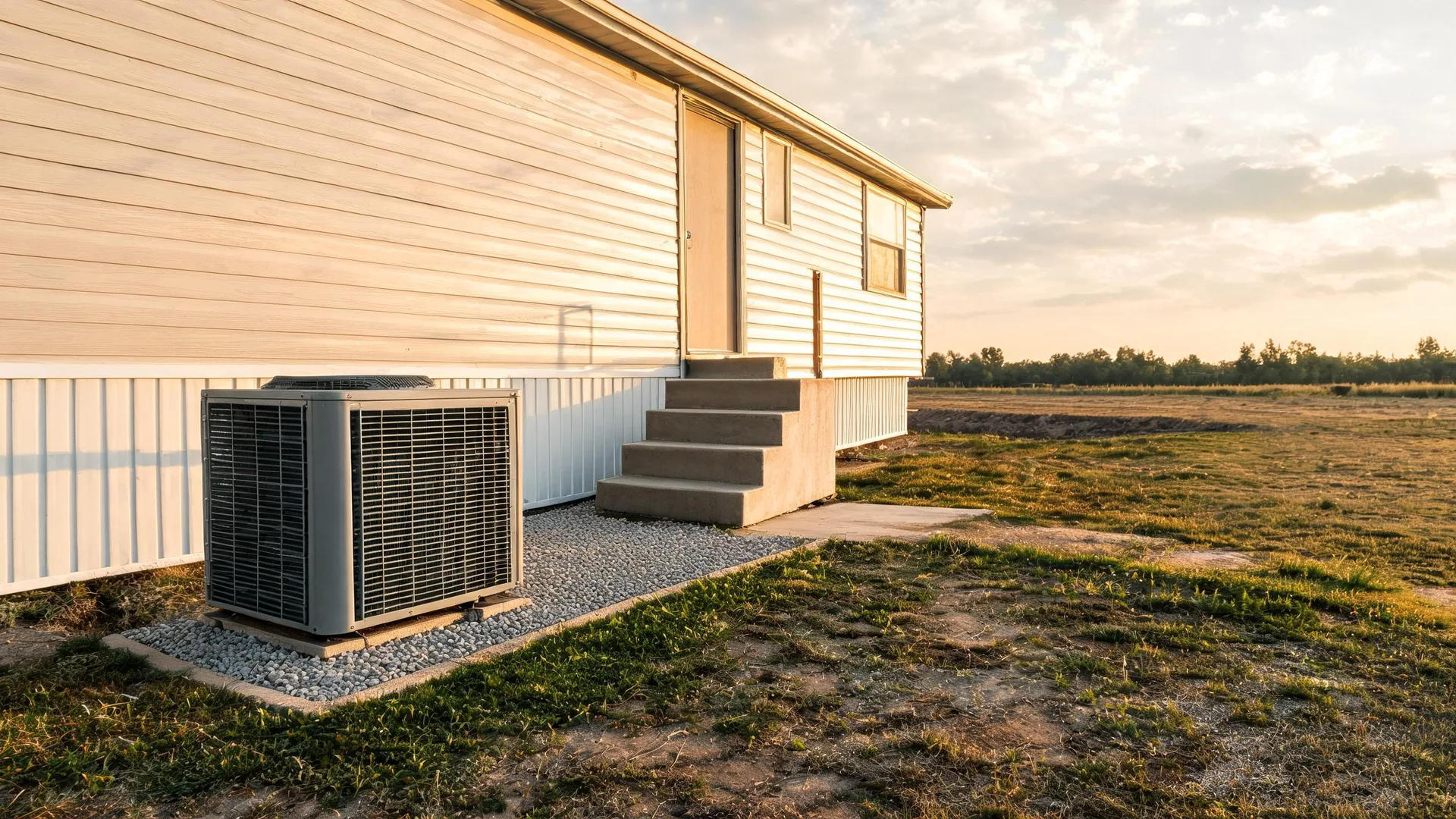
An outdoor HVAC condensing unit on a concrete pad next to a beige single-story house with a dark shingle roof.

Heat Pump Maintenance in Thomasville, GA

Tell us about the job

Takes about a minute. No obligation.

Tune-up, service, or cleaningHeat PumpThomas County, GA
Step 1 of 2

What ZIP code is the job in?

Thomas County saw 129 severe weather events between 2015 and 2024, and most of that was damaging wind. Your heat pump's outdoor unit sits right out in it, with the coil and fan exposed to whatever blows through. Hail and tornadoes have hit the county in that same stretch, and the cabinet or fan can take a hit even when the rest of the house comes through fine. A heat pump also stops cold when the power goes out, no way around that. Georgia households often lose power for a day or more after a bad storm, which is a long time to be without heat or air.

Half the homes in Thomas County were built in 1987 or later.

A heat pump that age still has years left in it, and a yearly check is what keeps it getting there.

October is the month to catch it, before heat runs hard in November

Cooling runs May through October
Heat runs November through March
Power costs 14.08 cents a kWh statewide
Check the outdoor unit before the next one hits104 damaging wind events in Thomas County between 2015 and 2024

Between visits, the filter is the one thing worth checking yourself, once a month, and swapping when it's gray. Keep the area around the outdoor unit clear, a couple feet on every side, so leaves and grass clippings don't pack against the coil or block the fan. After a storm, look at the outdoor cabinet for dents or a fan guard that's bent in far enough to touch the blades. Don't hose off the coil yourself if you're not sure how, water pushed the wrong way packs dirt deeper between the fins instead of clearing it. Indoors, keep the vents open and unblocked by furniture or rugs, since a heat pump pushes air at lower temperatures than a furnace and needs that airflow to keep up. If you hear a new rattle or the system starts running longer than it used to, that's worth a call before the next tune-up, not something to wait out.

Check it before storm season

Storm season beats up outdoor units here. Have it checked for damage and debris before you need it.

Find a contractor
A man seen from behind in a dark jacket and tan work pants climbs wooden porch steps toward a dark blue front door, carrying a worn canvas tool bag in his right hand, with a potted shrub in a blue planter beside the entry.
A gray heat pump condenser unit mounted on a concrete pad against the gray lap-siding exterior wall of a house.

It runs every day of the year, and wear doesn't wait for you to notice

A heat pump runs in both directions, all year, so the wear never really stops to let you notice it. The reversing valve shifts every time the system switches between heat and cool, and a valve that's starting to stick won't announce itself. It just makes the system work harder for the same result. Refrigerant charge drifts low a little at a time, not all at once, so the drop in comfort is too gradual to catch from inside the house. The outdoor coil loses airflow as it cakes up with dust and pollen, and a fan motor bearing wears quietly for a long time before it finally seizes. None of that shows up as a problem you can feel until the day the system can't keep up, usually on the day you need it most. A tune-up catches these things while the system is still running fine, because that's the only time you can measure what's normal against what's changed.

The system keeps running, just worse

A heat pump with a dirty filter or a caked outdoor coil doesn't usually quit outright. It keeps heating and cooling, pulling harder to get the same result, and that strain is what wears out the parts around it faster than it should.
Small problems wear on the parts around them

A refrigerant leak left alone doesn't stay small. The compressor keeps running low on charge, which runs it hotter than it's built for, and a compressor is the one part that turns a repair into a full replacement.

A real tune-up means the panels come off. A technician checks the refrigerant charge against what the system calls for, tests the capacitor under load, and tightens electrical connections that work themselves loose from vibration over time. The reversing valve gets checked in both directions, not just in the mode the system happens to be running when they arrive. A quick visit skips most of this. Someone glances at the outdoor unit, hoses off the coil, and calls it done without ever checking whether the charge is right or the contactor is pitted. The difference doesn't show up that day. It shows up months later, as a system that runs harder than it should and wears out parts that didn't need to wear.

The defrost cycle is where a lot of neglected heat pumps show their age. Outside, the coil frosts up in cold weather, the system reverses itself for a few minutes to melt it off, then switches back. A technician checks that the defrost board and sensor are actually timing that right, because a system stuck in defrost too long, or not triggering it at all, either wastes heat or lets ice build until airflow stops altogether. They also check the outdoor fan motor itself, not just the blades, since a bearing going bad will drag the motor down long before it seizes for good. Indoors, that means pulling the blower wheel and looking at it, not just the filter in front of it. A blower wheel caked with dust moves noticeably less air even when the filter is clean, and nothing about that is visible from the thermostat.