





Two illuminated white colonial-style houses with wrap-around porches, flanked by oak trees draped in Spanish moss, photographed at night.

Heat Pump Maintenance in Rincon, GA

Tell us about the job

Takes about a minute. No obligation.

Tune-up, service, or cleaningHeat PumpEffingham County, GA
Step 1 of 2

What ZIP code is the job in?

Effingham County logged 161 severe weather events between 2015 and 2024, and most of it was wind. That kind of weather drives branches and roof grit into an outdoor unit year after year. Hail and tornadoes hit here too, less often than wind but hard on a coil when they do. A heat pump that sits outside through all of that needs its coil and cabinet checked for damage you would not see from the kitchen window. Power matters as well. Close to a third of Georgia households went a full day or more without power in 2024, and a heat pump already worn down by storm damage will not get you through an outage like that.

Your heat pump switches over and starts working in both May and November.

October and April are when a storm-stressed unit gets checked before it has to carry the next season.

Half these homes are still young enough for upkeep to pay off

Half the homes here were built by 2001
116 damaging wind events from 2015 to 2024
Power costs 14.08 cents a kWh statewide
In Rincon, a heat pump earns its keepWind hit Effingham County 116 times between 2015 and 2024.

Have the outdoor unit opened up before storm season builds again, not just looked at from a few feet away. A tech can check the coil fins for bends and debris packed behind the fan guard, and check the cabinet for small dents that let water in where it shouldn't. Wind hit this county 116 times between 2015 and 2024, and that's the kind of weather that works branches and grit into a unit slowly, long before it knocks the unit out outright. Hail and tornadoes show up less often here, but they hit a coil hard when they do. Catching the damage on a maintenance visit is the whole point of doing it before the season builds, not after.

Keep a young system young

Half the heat pumps in Rincon are still young enough that a yearly check is worth doing, not just worth having. Get the coil and the refrigerant charge looked at while the system is in good shape, and it stays that way longer.

Find a contractor
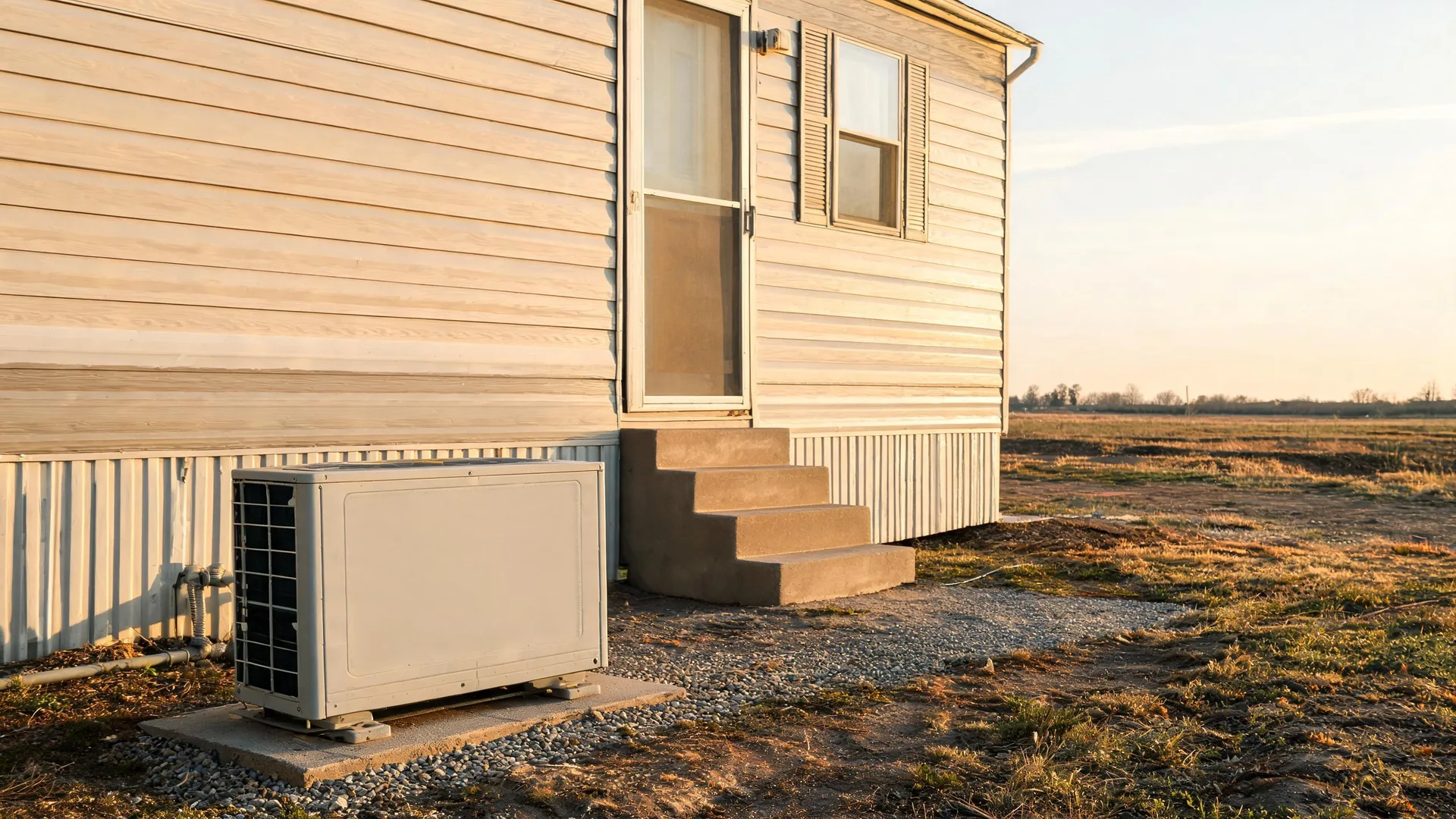
A gray outdoor HVAC unit mounted on a concrete pad beside a house with gray lap siding and a stone foundation.

One job in winter, the opposite in summer, no break between

The drain gets overlooked because it only matters when it fails. A heat pump pulls moisture off the indoor coil whenever it runs in cooling mode, and that water has to go somewhere. If the drain line clogs with algae or dirt, the water backs up into the pan under the coil and either trips a safety switch or spills out where it shouldn't. The coil itself does the opposite job depending on the season, giving up heat to the air in winter and pulling heat out of it in summer. A coil can only move that heat if air passes through it freely, which is why the filter sitting in front of it matters as much as anything in the cabinet. A dirty filter starves the coil of air, the coil gets colder than it should on the cooling side, and ice forms where it has no business forming. A clean filter protects the coil, a clean coil keeps the drain from working any harder than it has to, and a clear drain keeps a wet coil from turning into standing water nobody notices until it's a problem.

Keep the outdoor unit clear

Walk around the outdoor unit now and then and clear away leaves, grass clippings and anything piled against the cabinet. Keep plants cut back so air can move through the coil freely. A unit that can breathe doesn't have to work as hard to move heat in or out.
Check the filter yourself

Look at the filter every month and swap it when it's dirty. A clogged filter chokes airflow across the indoor coil, and a heat pump moving too little air can ice up or short cycle. This is the one piece of upkeep that doesn't need a tech, and it's also the one most owners forget.

Skip maintenance long enough and the small stuff turns into the reason the system quits. A refrigerant charge that's a little low won't stop a heat pump from running, but it makes the compressor work harder than it should, year after year, until something in it gives out. A coil caked with dirt can't give up heat or pull it in the way it's built to, so the unit runs longer to do the same job and wears faster doing it. The reversing valve that switches the system between heat and cool sits unused in one direction for months at a time, and a valve nobody's checked can stick right when the season turns and you need it to switch. None of this shows up as a breakdown at first. It shows up as a system that runs longer than it should to do the same job, and dies younger than it should have.

A real tune-up starts with the refrigerant charge, checked with gauges, not guessed at. Too little and the compressor strains to move heat that isn't there to move. The tech should pull the panels and look at the coil itself, not just glance at the cabinet, since dirt builds up between the fins where you can't see it. The reversing valve gets tested in both directions, because a valve that sits unused for long stretches is exactly the kind that sticks when the season turns. Electrical connections get checked too, since a loose wire at the contactor or capacitor runs hot and fails before anything else does. The outdoor fan motor should spin freely and sit balanced, not wobble on its mount. None of this takes long on a system that's been looked after. It takes a lot longer on one that hasn't.