A row of single-story houses, one brick and others with pale siding and covered porches, behind a trimmed hedge and lawn, under large oak trees draped with Spanish moss.

Heat Pump Maintenance in Jefferson, GA

Tell us about the job

Takes about a minute. No obligation.

Tune-up, service, or cleaningHeat PumpJackson County, GA
Step 1 of 2

What ZIP code is the job in?

Mild duty on the compressor

Jefferson sits in zone 3A, a warm zone with a long summer and a short, mild winter. A heat pump here does not fight hard freezes the way one does further north, and the heat it works against is not extreme either. That steady, moderate load is easier on the compressor and the outdoor coil than what the same machine would see in a harsher climate.


Humidity still asks something of it

Summer dew points here average 67°F across June, July and August, higher than most of the country sees. Pulling that moisture out of the air is part of the system's job all summer, whether or not the temperature itself is extreme. That steady demand on the coil and the drain line is exactly what a yearly check is for, catching a dirty coil or a slow drain before either one wears on the system.

A refrigerant charge can run low with no leak a homeowner can see or smell.

Gauges on the service ports show what the charge is doing, which is the only way to catch it early.

Half these homes are new enough that a yearly check still has years of system left to protect

Half the homes here were built by 2002
Climate zone 3A
Power here costs 14.03 cents per kilowatt-hour

A heat pump here switches over to heating in November and stays on it through April, six straight months, longer than the five it spends on cooling. That's the stretch worth booking a check before, in October while the system is still running easy. Overnight lows average 35°F through December, January and February, not a hard freeze, but cold enough that the system will lean on backup heat strips if the refrigerant charge or defrost cycle is off. Catching that in October, before the long run starts, is easier than catching it mid-winter when the machine is already working through the cold.

Keep a newer system working for years to come

A system built in 2002 or later still has plenty of working life ahead of it, and a yearly check is what keeps it running that whole stretch without a breakdown or an early replacement. That's true whether the unit came with the house or was put in more recently. Get it looked at while it's still running easy, before it has to carry the house through winter.

Find a contractor
A man in a cap, gray long-sleeve shirt and brown work pants walks up porch steps toward a dark blue front door, carrying a canvas tool bag with tools in its side pockets, beside a potted shrub.
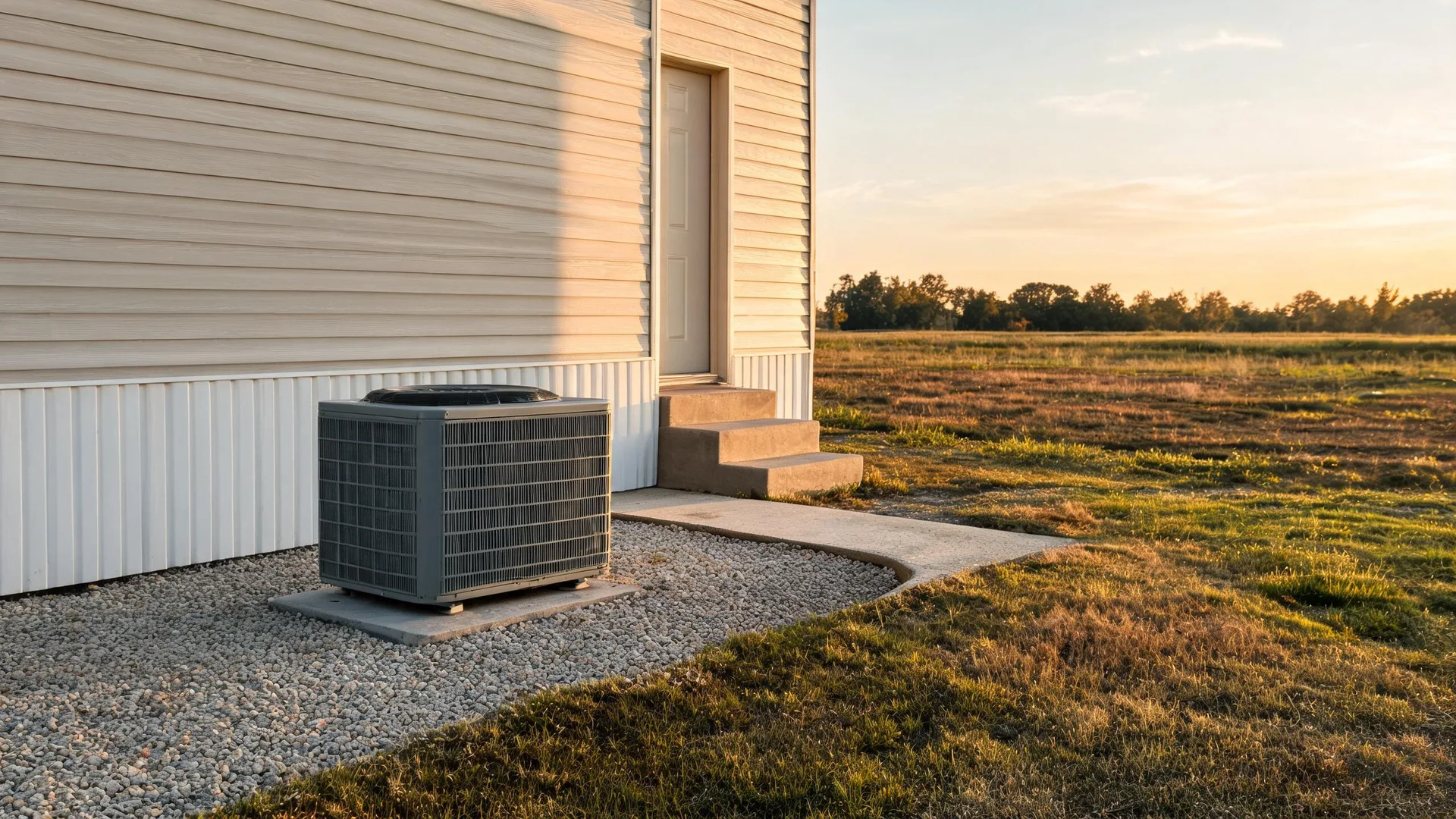
A residential heat pump outdoor unit mounted on a concrete pad next to a house with gray vinyl siding.

Easy duty, still worth checking every year

Right now this system is running cooling, mild duty as these things go. It'll do that most of the year here. A yearly check is what keeps a machine on steady, moderate duty from picking up problems anyway, a dirty coil, a drain line going slow, a charge that's drifted. None of that shows up as a breakdown right away. It shows up as a system working a little harder each month until one day it doesn't keep up.

The signs are easy to miss

A heat pump rarely quits without warning. It runs longer than it used to, or the air coming out doesn't feel as warm or as cool as it should. Ice builds up on the outdoor coil and the defrost cycle isn't clearing it. The indoor unit short cycles, shutting off a few minutes after it starts. Any of that points to a refrigerant charge that's drifted, a coil that's caked with dirt, or a reversing valve that's starting to stick. None of it looks urgent from the thermostat.

A check finds it before you feel it

A technician checks the refrigerant charge with gauges on the service ports, something no homeowner can eyeball. They'll pull the panel and look at the contactor and capacitor, clean the outdoor coil, and check that the defrost sensor is switching the system over when it should. Catching a weak part on a bench test beats finding out when it fails and leaves the house running on backup heat alone.

A quick visit usually means someone glances at the outdoor unit, checks that air is moving, and calls it done. A thorough one starts with gauges on the service ports, because refrigerant charge is the one thing nobody can judge by eye or by hand. The tech should pull the panel and look at the contactor and capacitor, not just listen for the unit running. The outdoor coil gets washed, not just looked at through the fan grille, since dirt packs in between the fins where you can't see it. The defrost sensor and the reversing valve get tested under load, actually switching the system between heating and cooling, not just checked for physical damage. If the visit takes less time than it takes to wash a coil by hand, something on that list got skipped.

Indoors, the job is just as specific. The tech pulls the filter and checks it, since a clogged one starves the whole system and makes the blower work harder than it needs to. They check the blower wheel for dust buildup, which cuts airflow the same way a dirty filter does. The thermostat gets tested to make sure it's calling for heat and cooling correctly, and talking to the outdoor unit the way it should. They'll check the condensate drain and pan too, especially on the cooling side, because a clogged drain backs up and can shut the system down on its own. None of this takes the place of the gauges and the coil wash outside. It's what has to happen alongside it.