






White two-story houses with wraparound porches and Spanish moss-draped oak trees photographed along a residential street at night.

Heat Pump Maintenance in Columbus, GA

Tell us about the job

Takes about a minute. No obligation.

Tune-up, service, or cleaningHeat PumpMuscogee County, GA
Step 1 of 2

What ZIP code is the job in?

A heat pump moves heat instead of making it, and that gets harder the thicker the air is. Summer dew points in Muscogee County average 69 degrees across June, July and August, which counts as heavy even next to most of the country. Heavy air holds more moisture, and the system has to pull more of it out of your house to keep up. That extra load falls on the same parts all season, the compressor, the coil, the fan motor. Worn parts do not wait for a convenient time to fail. Catching one early, before the heat sets in for good, is a lot simpler than catching it mid-July.

A heat pump that never gets looked at still runs, right up until the day the compressor seizes.

A tune-up catches the coil that's losing airflow or the contactor that's pitting before either one takes the whole system down.

Muscogee County sees a lot of severe weather, and your outdoor unit takes the brunt of it

74 severe weather events from 2015 to 2024
31% of homes statewide lost power a day or more in 2024
51 damaging wind events from 2015 to 2024
Two seasons, no real breakCooling starts in May and heat takes over in November, so book the heat pump check in April or October.

Before a tune-up, a technician can walk the outdoor unit and check what the last storm left behind. Hail dents the fins on the coil, and bent fins choke airflow the same way a dirty coil does. Wind-blown branches and grit collect in the cabinet and sit against the coil where you can't see them. None of that announces itself. The unit keeps running, just worse, until the day it doesn't. Clearing debris and checking the coil and fins is a normal part of the visit, and it costs nothing extra to ask for it.

Get the heat pump checked before summer puts the load on it

The compressor, coil and fan motor carry that extra load all summer, and a worn part usually gives out while it's working hardest. A tune-up now catches a weak one while the system is still running easy.

Find a contractor
A man in a cap and brown jacket, seen from behind, climbs porch steps toward a blue front door while carrying a canvas tool bag, with a potted shrub in a blue planter beside him.
A gray heat pump condenser unit mounted on a concrete pad against the gray lap-siding exterior wall of a house.

The system usually gives a warning first

A heat pump nearing a problem usually makes some noise about it before anything quits. The outdoor unit may start cycling on and off in short bursts instead of settling into a steady run. Air from the vents feels weaker or less cold than it should, even with the thermostat calling for it. One room stays off from the rest no matter how long the system runs. A clicking or humming at startup that wasn't there before is often a contactor or capacitor starting to go, not gone yet, just wearing. Ice on the outdoor coil outside of a normal defrost cycle means airflow or refrigerant charge is off. A musty smell from the vents points to a coil that's staying wet longer than it should drain. None of these mean the system is about to fail. They mean a part is drifting out of spec while the rest of the system is still carrying the load fine. Catching it at that point is the whole idea of a tune-up, before the part is the one thing standing between a working system and a dead one.

A full visit means hands on the equipment

A thorough tune-up has the technician pulling the panel off the outdoor unit, checking refrigerant charge against the manufacturer's numbers, and testing capacitor and contactor condition under load, not just by eye. Indoors, that means pulling the blower wheel to check for dirt buildup and checking static pressure in the ducts. A reversing valve gets tested both directions, since that's the part that lets the system heat in winter and cool in summer. Each of those takes time and the right gauges.
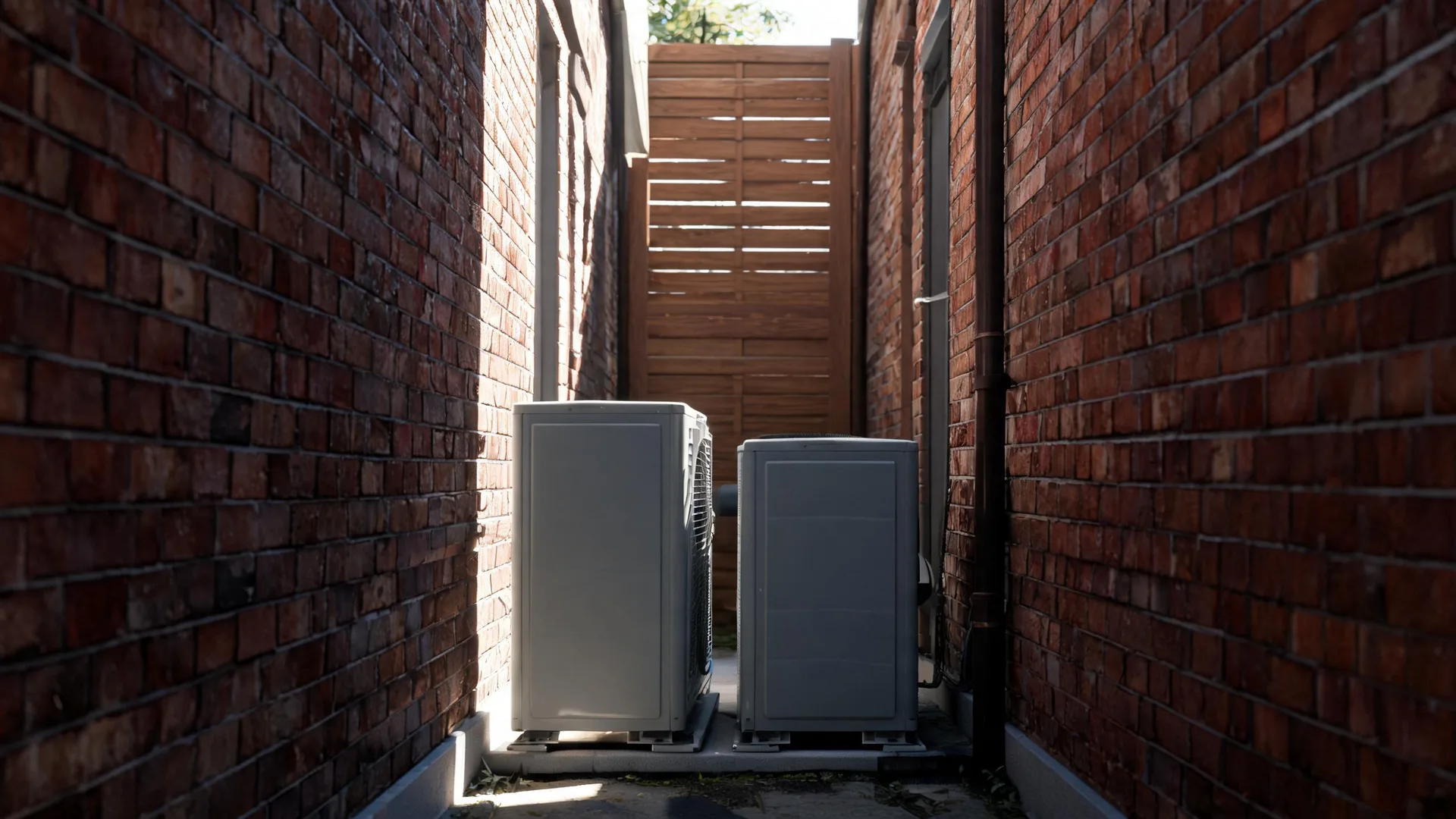
A quick visit skips the parts that catch problems early

A quick visit usually means a filter swap, a glance at the thermostat, and maybe a temperature check at the vent. That takes a few minutes and tells you almost nothing about whether the compressor or reversing valve are on their way out. The parts that actually fail, the capacitor losing capacitance, the contactor pitting, a refrigerant charge drifting low, don't show up unless someone tests for them directly. Ask what the visit actually checks before you book it.

Between visits, the filter is the one thing worth checking yourself. A dirty filter chokes airflow across the indoor coil, and the system has to run longer to move the same amount of air. Look at it every month or so and swap it when it's visibly gray or matted, more often if there are pets in the house. Outside, keep the area around the unit clear. Grass clippings, leaves and anything stacked against the cabinet block airflow across the outdoor coil the same way a dirty filter does indoors. Leave a clear space on all sides. Beyond that, leave it alone. The refrigerant charge, the reversing valve, the capacitors, none of that is something to open up or test at home, and a panel off the unit between visits is just one more way for debris to get where it shouldn't.

A tune-up starts with the nameplate data, not a guess. The technician checks refrigerant charge against what the manufacturer specifies for that model, not just a general feel for whether it's cold enough. Electrical connections get tightened, since a loose one heats up and that heat breaks the connection down further over time. The condensate drain gets checked and cleared, because a clogged drain backs up and the overflow can trip a float switch and shut the whole system down. Belts aren't part of it. Most of these systems drive the blower and outdoor fan directly off the motor shaft, so there's no belt to inspect or replace. The reversing valve gets tested in both directions, since a valve that sticks halfway leaves you heating when you wanted cooling or the other way around. None of this is guesswork. Each check has a number or a pass-fail attached to it, and a technician who skips the gauges is checking less than the job calls for.