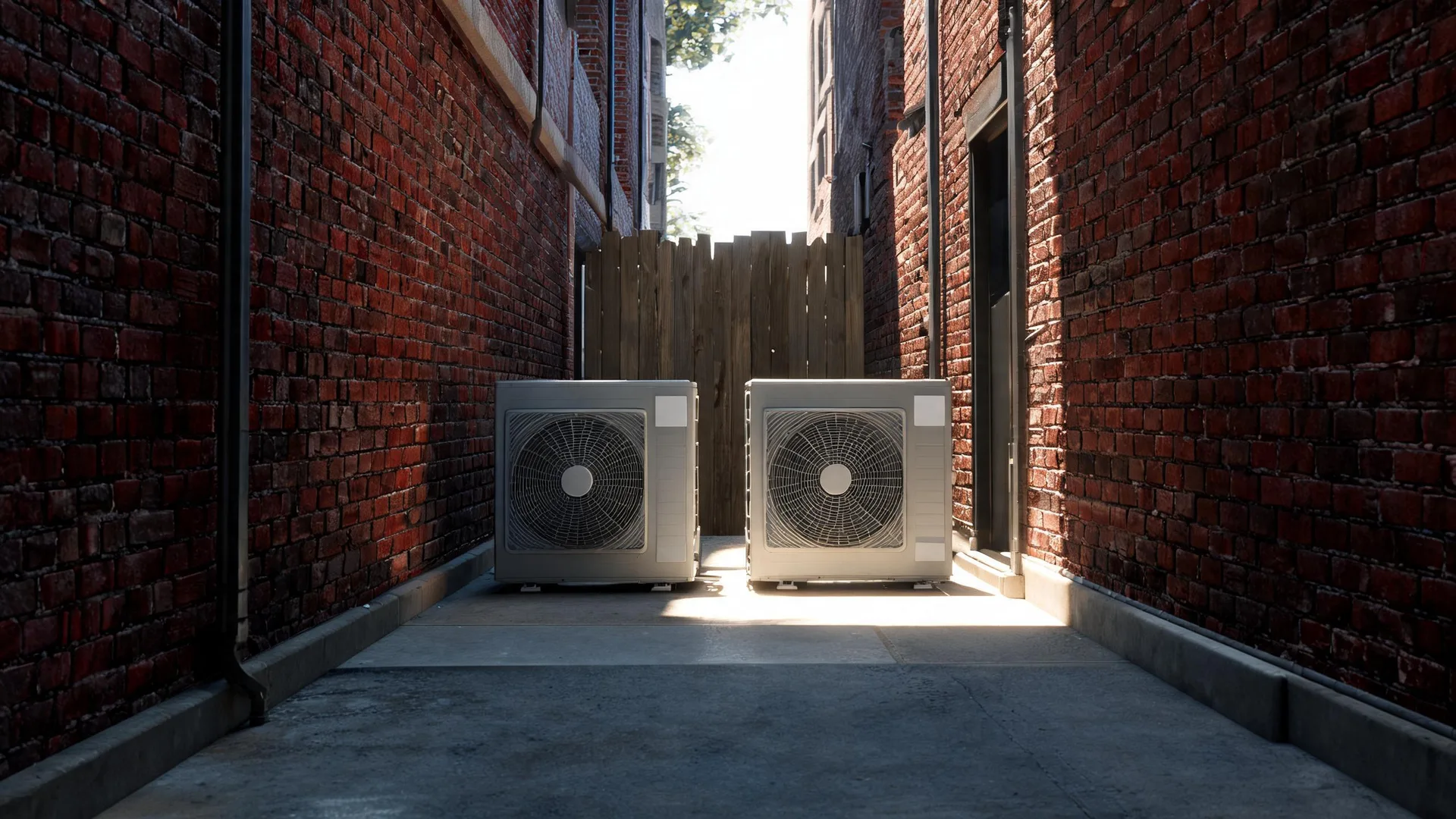
Storms come through here often
Dougherty County recorded 125 severe weather events between 2015 and 2024, including 105 damaging wind events, 11 hail events, and 2 tornadoes. That outdoor unit sits outside through all of it.

Takes about a minute. No obligation.
Dougherty County recorded 125 severe weather events between 2015 and 2024, including 105 damaging wind events, 11 hail events, and 2 tornadoes. That outdoor unit sits outside through all of it.
Wind drives debris into the coil and fan, and hail dents the cabinet. A unit that looks fine from the porch can have a bent fin or a cracked line hiding damage that cuts its output.
Summer air here sits at a dew point near 70 degrees, among the heaviest in the country.
Your heat pump runs long hours pulling that moisture out, and that kind of steady load wears parts down sooner.



A tune-up before the weather turns is worth more than one after. A technician can check the refrigerant charge, tighten electrical connections, and clear the coil while the unit is idle and easy to work on. That matters here because storms and downed lines cut power often, and when it comes back the unit should be coming back clean, not restarting with a problem that was already sitting there. A loose connection or a dirty coil found ahead of time is a quick fix. The same problem found after a storm, with the unit already stressed, takes longer to sort out.
A tune-up catches a bent fin or a loose connection before the next storm front comes through. When Georgia households lose power, close to a third go at least a day without it, so the unit should be in good shape when it comes back on, not starting up already compromised. Have the outdoor unit checked now, while it's idle.
Find a contractor
A heat pump doesn't get a season off. It runs to move heat out in warm weather and runs the other way to bring heat in when it's cold, so the compressor and both coils are working nearly year round. That kind of duty cycle wears parts on a schedule: the contactor points pit a little each time they close, the fan motor bearings dry out, the capacitor loses its charge over time. None of that announces itself. The system keeps running, just worse, until something trips. A yearly check catches the capacitor reading low before it fails outright, or the contactor arcing before it welds shut. Left alone, those small failures take the compressor down with them, and that's the expensive part to replace.
Grass clippings, leaves, and pine straw build up against the cabinet and get pulled into the coil fins. Keep the area around the unit clear and rinse the coil off with a garden hose when it looks dusty or matted. Don't use a pressure washer. It bends the fins instead of cleaning them.
A dirty filter chokes airflow across the indoor coil, and a heat pump that can't move air works harder in both directions, heating and cooling. Check it monthly and swap it before it looks gray and packed. A clean filter is the one thing between visits that actually protects the compressor.
A quick visit usually means someone checks pressure on a gauge, looks at the outdoor unit, and leaves. A thorough one goes further. The technician should measure the refrigerant charge against what the system calls for, not just glance at it, and check the temperature split between the air going into the indoor coil and the air coming out. They should check amp draw on the compressor and fan motor, since a motor pulling more current than it should is wearing out even if it still runs fine today. The contactor gets inspected for pitting, the capacitor gets tested under load rather than just eyeballed, and electrical connections get tightened, because a loose one generates heat that degrades the wire over time. The coil gets cleaned, not just looked at. If the visit skips the gauges and the amp readings, it's a once-over, not a tune-up.
A reversing valve is worth a look too, since it's the part that lets the system switch between heating and cooling and it only gets exercised twice a year at the changeover. If it's going to stick, nobody finds out until the season it's needed. The technician should also check the defrost control, the sensor and board that tell the outdoor coil to shed frost in cold weather. A defrost cycle that doesn't trigger right leaves ice building on the coil until the unit can't pull heat from the air at all. These are easy to check with the panels off and the system running, and hard to diagnose after the fact when all you know is the house isn't heating.