A white Southern-style house with a wraparound porch photographed at night, surrounded by Spanish moss-draped oak trees lit by landscape lights.

Heat Pump Installation in Peachtree City, GA

Tell us about the job

Takes about a minute. No obligation.

New system or replacementHeat PumpFayette County, GA
Step 1 of 2

What ZIP code is the job in?

Weather here does damage

Fayette County recorded 87 severe weather events between 2015 and 2024. Most of that was damaging wind, 72 times in that span, with 7 hail events and 3 tornadoes mixed in. A heat pump's outdoor unit sits outside in all of it, with coils and fan blades exposed to whatever comes through.


Power doesn't always hold

Close to a third of Georgia households, 31%, went at least 24 hours without power in 2024. A heat pump needs electricity to run, for heat and for cooling both. Where the outdoor unit sits and what backs it up matters more here than in a county that rarely loses power.

5 months
November through March, your system heats
5 months
May through September, it cools
35°F
the average winter night it heats against
89°F
the average summer afternoon it cools against
Isometric cutaway illustration of a single-story house with a dark gabled roof, showing interior rooms with ductwork leading to an indoor air handler and an outdoor condenser unit connected by lines on the ground outside.
Your system heats November through March and cools May through September.

NOAA nClimDiv, 1991–2020 normals

Gas heats 63.5% of homes in Fayette County, more than electric and propane combined.

A heat pump replacing a gas furnace is still adding the county's first real exposure to a long power cut.

Cheap power here means payback is slow. Reliability is what you're really buying.

Power here costs 14.47 cents per kilowatt-hour
72 damaging wind events from 2015 to 2024
Climate zone 3A

Fayette County falls in climate zone 3A, and any split-system heat pump installed here has to clear federal minimums built for that zone: 14.3 SEER2 for cooling and 7.5 HSPF2 for heating. Central air systems installed on their own face the same floor, 14.3 SEER2 under 45,000 Btu/h and 13.8 SEER2 above it, the Southeast's regional standard rather than the lower number allowed elsewhere in the country. These are floors, not targets a contractor is aiming for. A unit can be rated higher, but nothing sold and installed here can legally rate lower. That narrows what shows up on a quote, and it's worth checking the SEER2 and HSPF2 numbers on anything you're comparing against these minimums.

Plan for the outage before the installer shows up

Decide now where the outdoor unit goes and what happens to heat and hot water when the power drops. That's a conversation to have during installation, not after a storm takes the power out. Ask what backup options make sense for your home while the system is already being designed.

Find a contractor
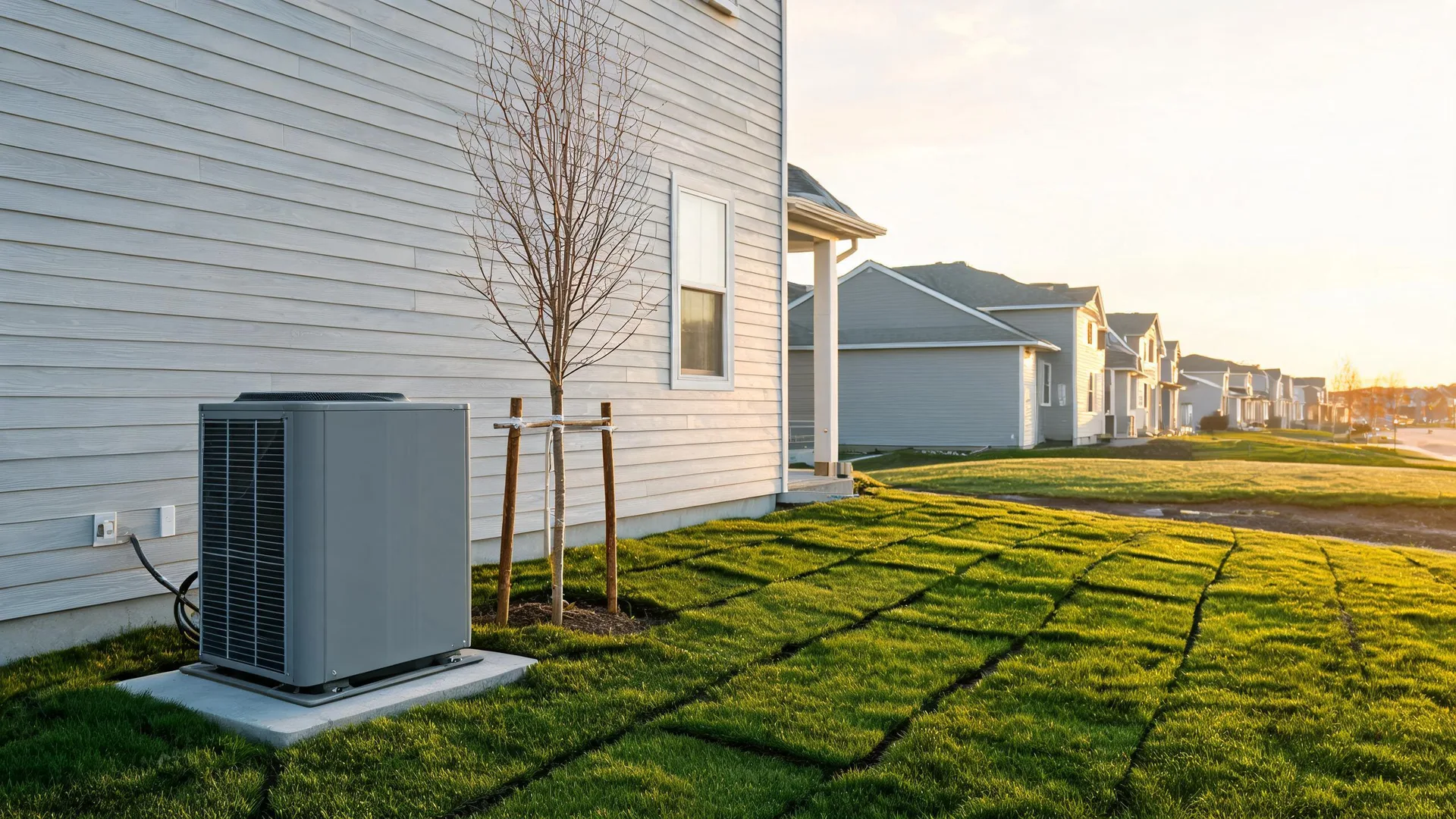
A gray air-source heat pump mounted on a concrete pad next to a house with gray vinyl siding, surrounded by gravel and flanked by green shrubs and white hydrangea flowers.

Install in April or October, not mid-season

This machine runs May through September for cooling and November through March for heat, about five months each way. April and October sit just before each season starts, and that's when an installer has time to work through the details instead of squeezing the job between emergency calls. Wait until the first hot week or the first cold snap and the choice gets made in a hurry, with whatever is available. Overnight lows average 35°F across December, January and February here, cold enough that the heat pump is doing real work in winter, not just summer. Installing in the slow months means the outdoor unit placement and the backup plan get settled ahead of the first real test, not during it.

The number is two ratings, not one

SEER2 covers cooling and HSPF2 covers heat, and they come from a full season of operation, not the hottest or coldest day. A unit rated well can still struggle on the single worst afternoon of summer if it's sized wrong for the house. The rating tells you how it performs averaged out, not how it handles the extreme.

A higher number changes what's in the cabinet

Getting above the minimum usually means a variable-speed compressor instead of one that's simply on or off, and a larger coil to move the same heat with less work. That's more parts that can wear and more refrigerant charge to get right at installation. The rating on the label is only accurate if the system was charged and set up to match it.

A quote isn't just a price and a SEER2 number. Ask what size the contractor is proposing and how they got there, because a heat pump sized from a room count or a rule of thumb can run constantly in mild weather and still fall short on the extreme days. A load calculation done room by room is the only way to know the number is right for this house, not a generic one. Ask what refrigerant line set is being reused versus replaced, since an old line set sized for a different unit can choke performance no matter what the label promises. Ask how the contractor handles a compressor that's two-stage or variable-speed versus one that's simply on or off, because the installed setup, not just the equipment, determines whether that extra capability ever shows up in the house. And ask what the warranty actually covers: parts, labor, or both, and for how many years each, since those two numbers are often different and the gap is where a repair bill shows up later.

Since the payback math doesn't favor the high end of the range, put the money into getting the install right instead of chasing a higher SEER2 number. That means the load calculation, the line set, and where the outdoor unit sits through a storm. A contractor who spends time on those gets you a system that holds up and runs the way it's supposed to, which matters more here than shaving a few dollars off a power bill that's already low. If two quotes show similar ratings, the difference between them is in that work, not on the label.