A red brick single-story house with a covered porch and a nearby cream-colored house with a wraparound porch, seen across a lawn behind a trimmed hedge, framed by large moss-draped oak branches.

Furnace Repair in Savannah, GA

Tell us about the job

Takes about a minute. No obligation.

RepairFurnace or heatingChatham County, GA
Step 1 of 2

What ZIP code is the job in?

A cracked heat exchanger gets worse under heat

Every time the furnace fires, the heat exchanger expands, and a small crack opens wider under that stress. Run it another week and the crack that was tight enough to pass inspection may not be. This is the one failure where shutting the furnace off until someone looks at it is the right call.

A dirty flame sensor will eventually stop the furnace itself

A flame sensor coated in residue reads the flame weaker than it is, and the control board shuts the gas valve off as a safety measure. Keep resetting it and running the furnace, and the sensor keeps collecting residue until the furnace won't stay lit at all. What starts as a nuisance ends as a no-heat call.

5 months
November through March, your furnace is on duty
42°F
the average winter night it heats against
2 winter storms
in ten years, the nights a failure hurts most
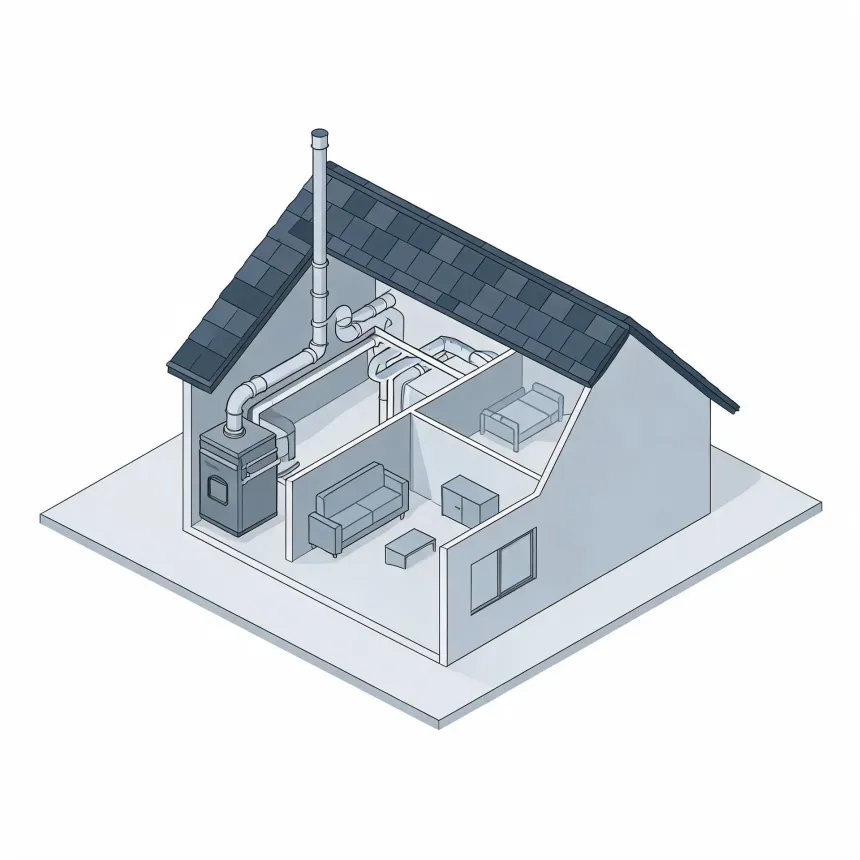
Isometric cutaway illustration of a small gabled house showing a furnace with flue pipe and ductwork connecting to interior rooms containing a sofa, bed, and cabinets.
Your furnace works hardest from December through February.

NOAA nClimDiv, 1991–2020 normals

Furnaces in Chatham County sit idle most of the year and start up again in November.

October is when a worn igniter or weak flame sensor should get caught, before that first run of the season asks the furnace to work.

Furnaces here aren't working hard. Five months of heat a year, and overnight lows in December through February average 42 degrees, which is mild as winter lows go. Most nights it's a few hours of mild warmth, not a furnace fighting single digits until morning. That kind of light use means a furnace that's acting up is more likely dealing with a worn part or a few years of light neglect than a system that's been run into the ground. Worth keeping in mind when you're deciding whether a repair makes sense.

Get it looked at early

Problems tend to show up in the first weeks of the season, when the load hits a part that was already weak.

Find a contractor
A man in a dark long-sleeved shirt and tan work pants, seen from behind, carries a canvas tool bag up porch steps toward a blue front door beside a potted shrub.
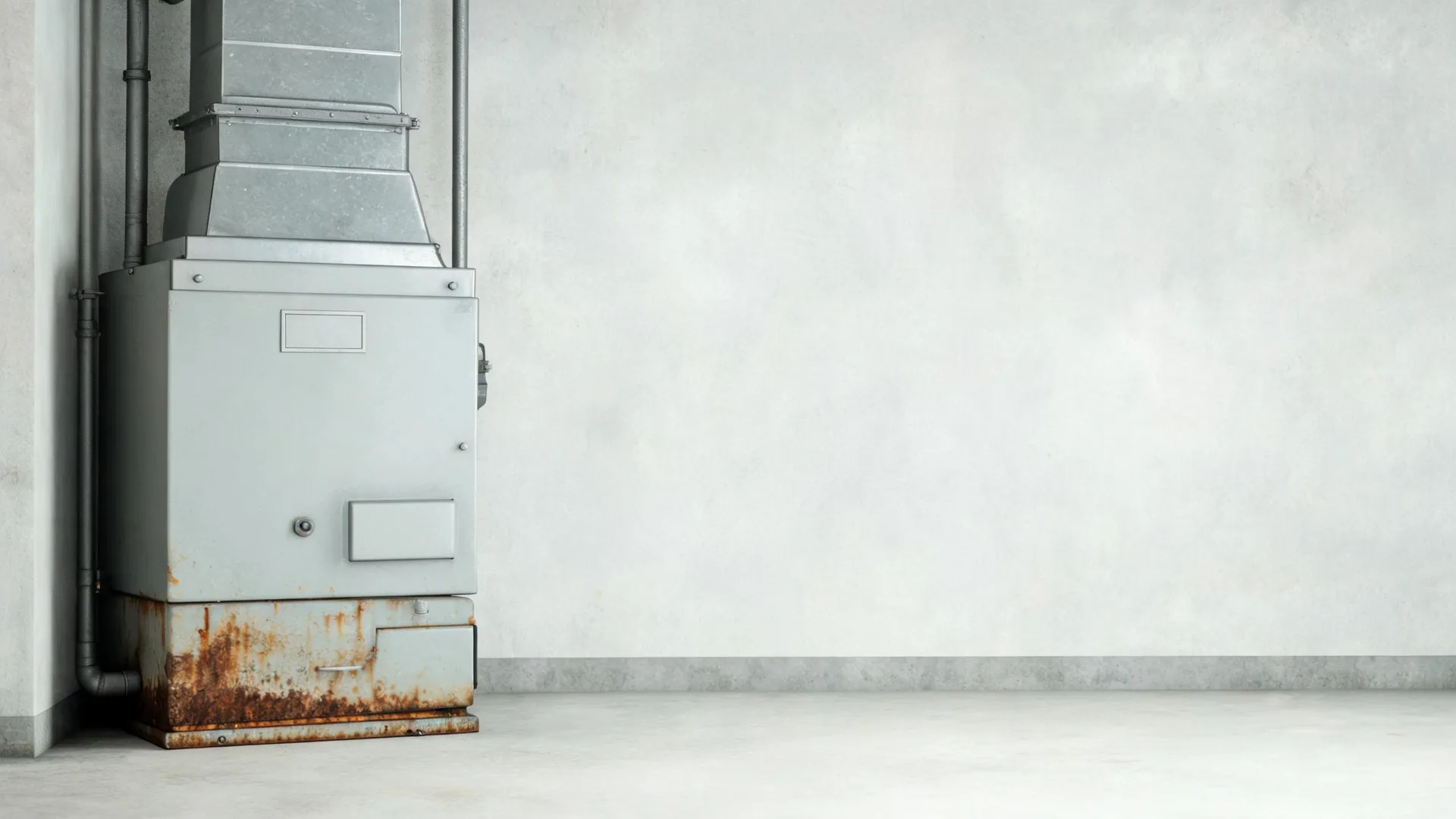
A gas furnace with attached ductwork, gas piping, and condensate lines installed in a concrete-block basement.

Light use most of the year, so repair is usually the right call

A furnace that's only asked to run five months a year, on nights that rarely get cold, is usually still in working order underneath whatever's acting up. That's the case for calling someone out instead of planning around a replacement. A worn igniter, a dirty flame sensor, a failed inducer motor, these get fixed on their own, separate from whatever shape the rest of the furnace is in.

Short cycling means something is cutting the furnace off early

A furnace that fires up, runs a couple minutes, then quits before the house gets warm isn't choosing to shut off short. Something is stopping it. A flame sensor losing its signal, a limit switch tripping from restricted airflow, a cracked heat exchanger tripping a safety sensor. Any of these will cut a cycle short, and none of them get better left alone.

New noise is the inducer motor or the blower, not the ductwork

A rattle, a grinding sound, or a bang when the burners light points to a specific part. A loose inducer wheel. A blower motor losing a bearing. Gas building up and igniting all at once instead of lighting clean. The noise gets worse the longer it runs, not better, until that part is replaced.

Check the thermostat is set to heat and the setting is a few degrees above room temperature, not just sitting at it. Look at the furnace switch too, the one that looks like a light switch near the unit or on the basement stairs, and make sure it's on. If the furnace runs but the air feels cool, check the filter. A filter clogged with dust chokes airflow and can cut a cycle short on its own, and it's a pull-and-look job, no tools needed. Check the breaker next. A furnace that trips its breaker once might have had a bad moment, but one that keeps tripping it is telling you something is wrong, and resetting it again and again just to see risks tripping it while something's actually drawing too much current. If you smell gas, don't check anything. Get out and call the gas company from outside the house.

Most of what fails in a furnace is one part wearing out, not the furnace itself giving out. An igniter weakens, a flame sensor builds up residue, a motor bearing starts to go. None of that reaches the heat exchanger or the gas valve or the rest of what makes the furnace work. Replacing the one part that failed brings back a furnace that's otherwise fine. The furnace earns real doubt when the failures stop being one part and start being several, each one a different system wearing down on its own schedule, close enough together that fixing one just clears the way for the next. That pattern, not any single repair, is what makes replacement worth weighing.