Warm air, not hot air
An electric furnace heats air to around 90 to 100 degrees, well below skin temperature of a gas unit. It can run fine and still feel weak near a draft or a cold window.

The furnace runs, air comes out of the vents, and the house still doesn't feel warm. Most homes in Georgia heat with electricity, and electric furnaces push air at a lower temperature than a gas furnace would, so if a room still feels cold you're likely dealing with warm air that never gets hot enough, or air that never reaches the room at all. A failing heating element will blow air that barely feels warm. A blower running nonstop on low can mean the same thing. Sometimes the furnace itself is fine and the problem is a duct that's come loose, or a thermostat reading the wrong temperature and shutting the system off before the room catches up. The fix depends on which of these it is, and that's not something to guess at while the people in the house stay cold.


An electric furnace heats air to around 90 to 100 degrees, well below skin temperature of a gas unit. It can run fine and still feel weak near a draft or a cold window.
A local contractor who services electric furnaces all winter can tell you quickly whether it's the heat strip, the thermostat, or airflow, instead of you explaining the problem to company after company.

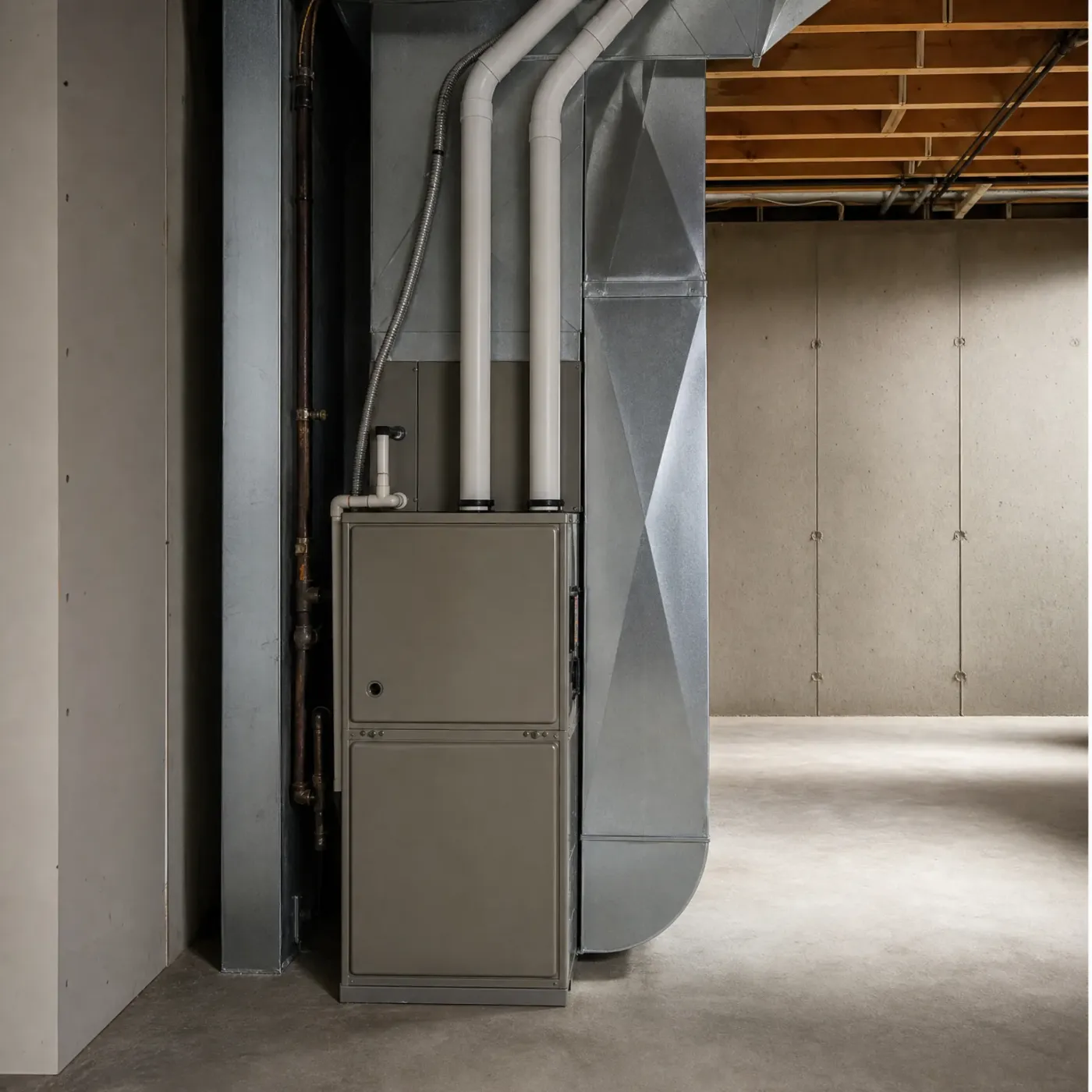
This is what a furnace in good shape looks like, ductwork tight on one side, gas lines on the other, everything connected and dry. Air moves through the system without resistance and reaches every room near the set temperature.

Moisture staining on the walls around a furnace like this is worth a second look. It doesn't mean the unit is failing, but a contractor checking a cold house should check the space around it too, not just the furnace itself.

If the furnace keeps cycling and the living room still won't hold heat, you end up managing it by hand. A space heater in the corner, another blanket on the bed, the thermostat pushed up a few degrees to chase a room that never catches up. That's more electricity going through a system that isn't actually fixing the problem, and it still leaves someone cold in the meantime.
A weak heat strip, a blower not moving enough air, or a thermostat reading the wrong temperature can all look like this from the vent. Sorting out which one it is isn't something to guess at over the phone with three different companies. One local contractor who works on electric furnaces can look at yours, tell you what's actually wrong, and fix it, instead of you explaining the same symptoms to every name you find searching around.





Only one pro gets your request, so you hear from one company.
No fee to send it, and nothing to sign.
The furnace is doing its job. It runs on command, the heat strip or coil draws power, and the air coming out of the vents is genuinely warm. The house feels cold anyway because that's how electric heat works in a room with a draft or a cold window nearby.
The furnace is not doing its job. A tripped limit switch, a failing heat strip, or a blower running at the wrong speed will all leave you with air that's barely warm, or warm air that never reaches the far end of the house. That calls for a repair, not another blanket.


If the house stays cold in the same rooms every time the furnace runs, or the thermostat never quite reaches the set temperature, something in the system isn't working right. A clogged filter, a failing blower motor, or a heat strip that isn't drawing power the way it should can all leave you with warm air that never adds up to a warm house. A contractor who works on electric furnaces all winter can check the heat strips, the blower, and the airflow in an hour and tell you which one it is.
If the air at the register feels warm but not hot, and the cold spot is near a window or an exterior door, that's probably the furnace working as designed. Electric furnaces push air out around 90 to 100 degrees, well under skin temperature, so a room with a draft can feel cool even while the system runs correctly and the thermostat is satisfied everywhere else. Closing a door, sealing a draft, or adding a space heater to one room may do more than a repair would.
Most houses on your street are probably heating with electricity too, same as yours. That matters here because electric furnaces run cooler air than gas ones do, so the cold spots you're chasing room to room are likely normal for the system, not a sign it's broken.
ACS 2020-2024 5-year B25040
The furnace running and the house still feeling cold isn't a contradiction. It's usually one part carrying weight it shouldn't have to, while something else in the system falls short of doing its share. A filter restricting airflow, a blower motor losing speed, a heat strip not pulling full power. Any one of these can leave warm air coming out of the vents while the rooms farthest from the furnace never catch up.
What tells you whether it's worth a call is repetition. A room that runs cold once, when it's windy or the door's been open, is just a room. A room that runs cold every single cycle is the system telling you something specific, and that's worth having someone look at before it gets worse.
The contractor who gets the call matters less for credentials than for familiarity. Someone local who works on electric furnaces through the winter has likely already seen this exact complaint on this exact kind of equipment, maybe a few houses over. That's one visit, one person looking at your ductwork and your heat strip firsthand, instead of describing the same cold bedroom to several companies and hoping one of them has seen it before.
Once the actual part gets fixed, the difference shows up fast. Not just warm air from the vents, but a house that actually reaches the number on the thermostat.